The healthcare buyer pays the most expensive clicks on the internet and converts them the slowest. That tension is the whole story.
Healthcare paid-search CPC averages $5.64 per click in 2024, up roughly 6% year-over-year (LocaliQ Healthcare Search Ads Benchmarks). Hospital keywords spike to $90 per click. Cosmetic surgery cost-per-lead hits $134.29. Orthodontics CPC is $8.76. Hearing aids $8.00. Emergency dentistry $7.85. Even the bottom of the range — physical therapy, chiropractic, dental cleanings — sits at $3–$5 per click. Average healthcare cost-per-lead is $53.53 across the LocaliQ benchmark set; the Hospitals & Clinics segment is the cheapest at $32.14 and Cosmetic Surgery is the priciest at $134.29. The conversion rate that justifies a $32 CPL is structurally different from the one that justifies a $134 CPL. Healthcare LPs are not optional optimization targets. They are the financial ledger of every paid campaign.
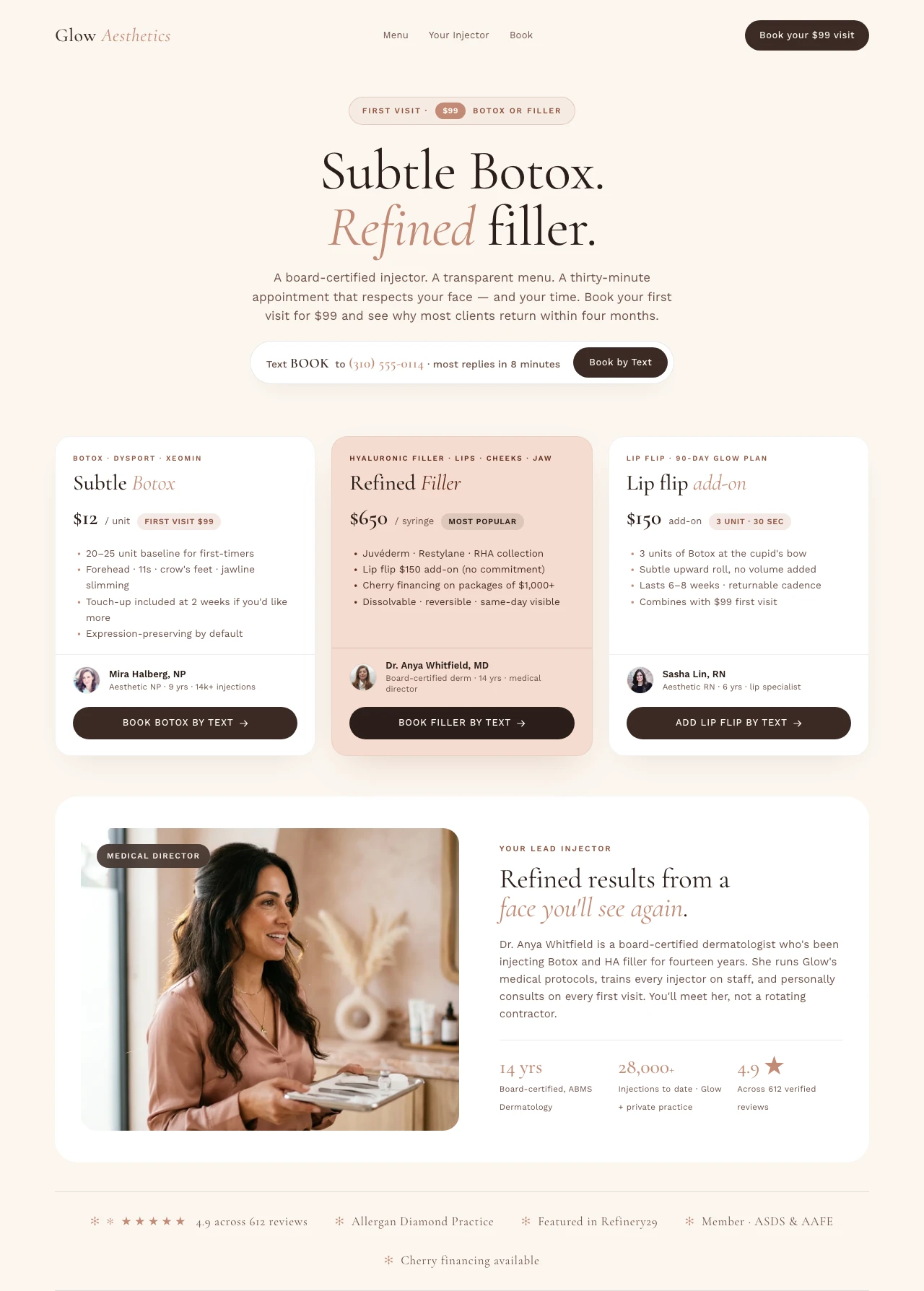
The conversion math is unforgiving. Median healthcare landing-page conversion rate is 3.6%; mean is 7.4%; top performers reach 8–21% (First Page Sage 2025 Patient Conversion Rate by Practice Type). Wellness-vertical pages convert at a median of 8.2%; dental at 4.3%; cosmetic surgery around 3.92%; hospital service lines closer to 3%. The spread between a top-quartile telehealth page at 14% and a bottom-quartile hospital page at 2.5% is not luck or budget. It's structural — trust architecture above the fold, accepted-insurance display at thumb's reach, click-to-call sticky in the mobile thumb zone, form length calibrated to funnel stage, real-doctor headshots with full names, accreditation badges where the eye lands. The same paid-search dollar buys 6x the conversion volume on the right page.
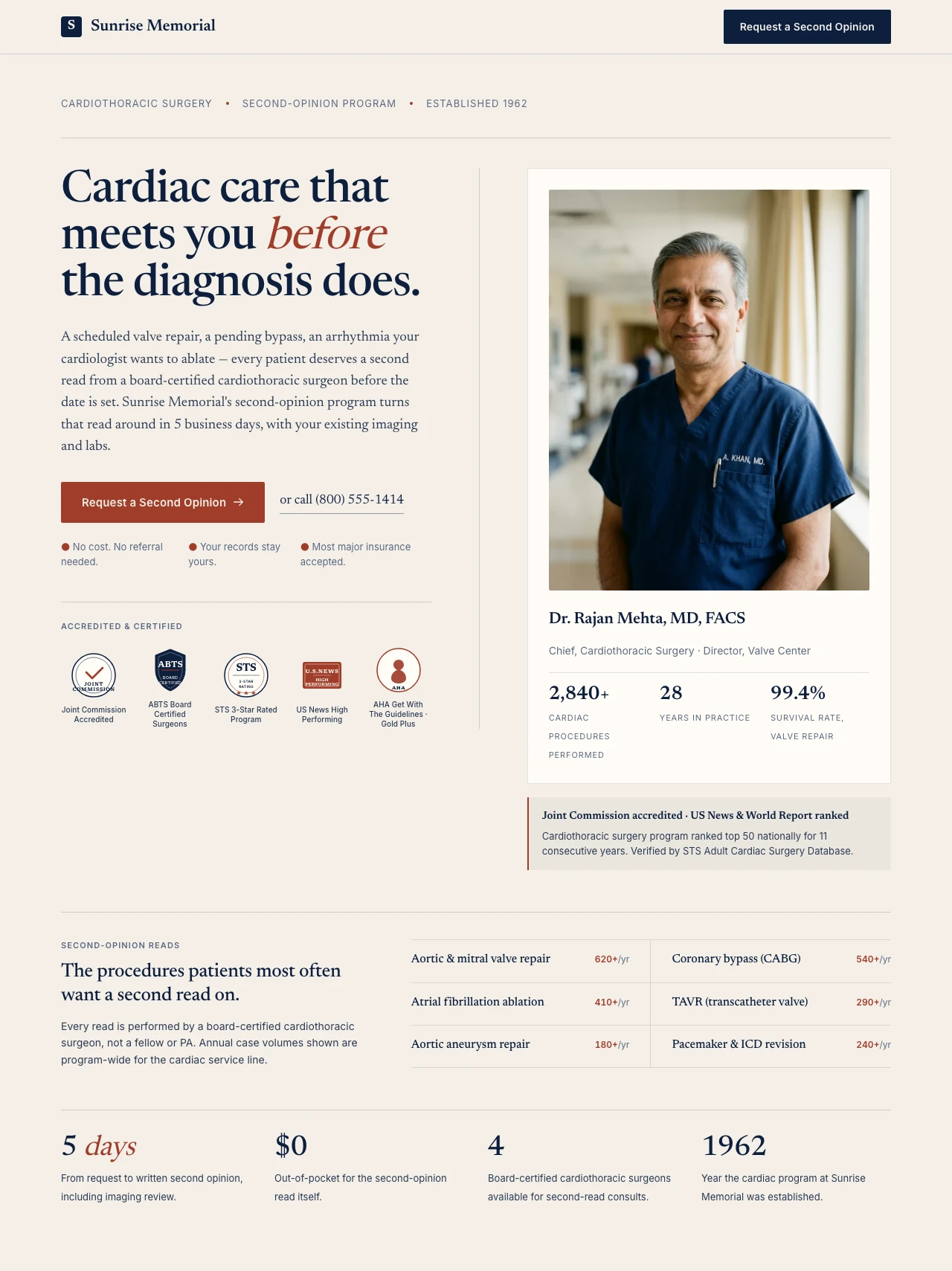
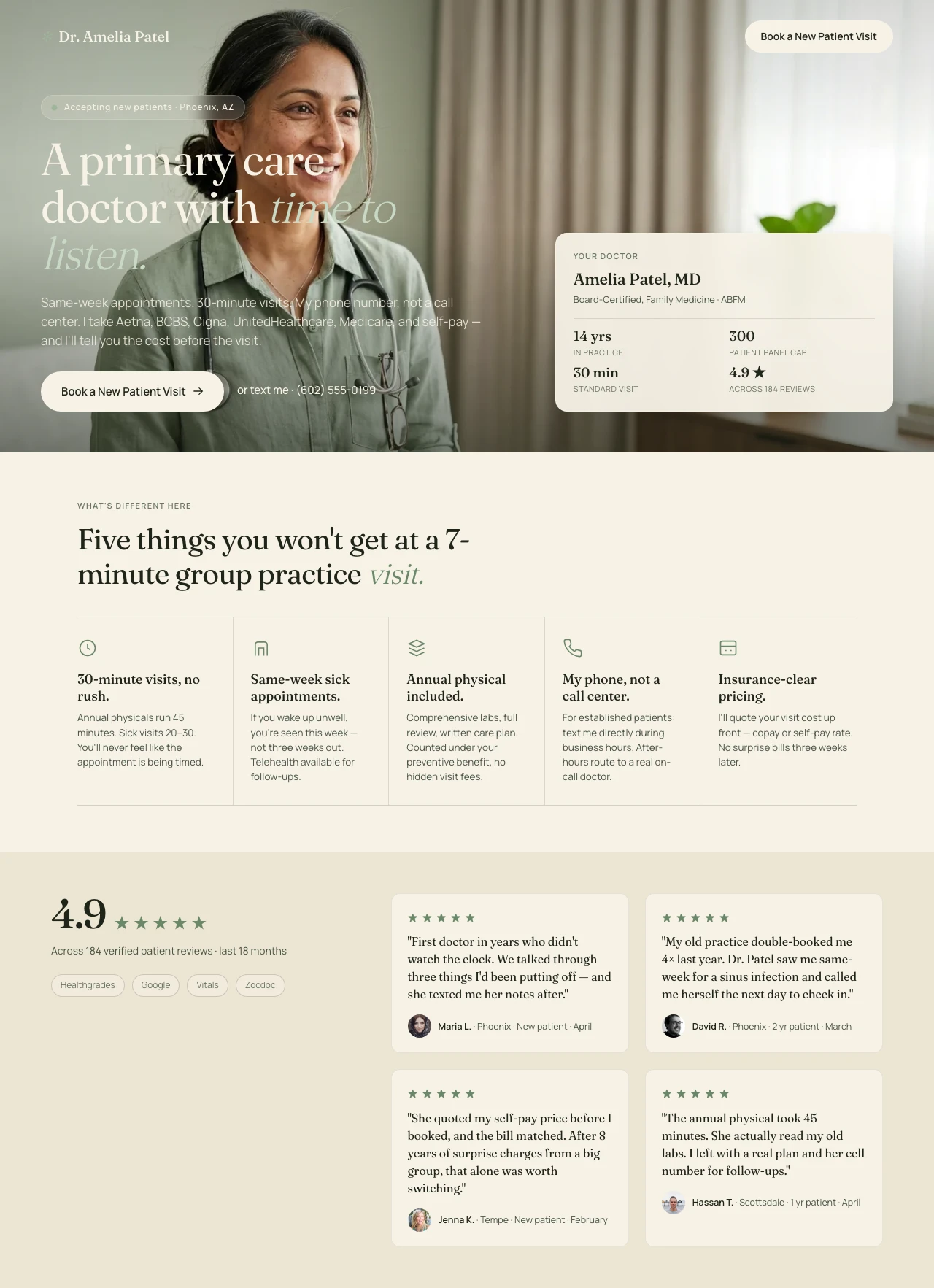
The trust stack matters more than in any other vertical. 80% of patients who switched providers cited poor digital experience — "hard to do business with" — as the reason for switching (Accenture 2024 Patient Loyalty Survey, ~18,000 US respondents). 84% of patients check online reviews before booking care; 77% begin their search on Google (rater8 / RepuGen 2025). The page is the patient's first read on whether the practice is legitimate, current, and trustworthy. A SaaS landing page can substitute logos for credibility; a healthcare landing page substitutes credentials. Board certifications, accreditations (Joint Commission for hospitals, AAAHC for ambulatory care, CARF for behavioral health, NCQA for managed care), real-doctor portraits with names and years in practice, accepted-insurance grids, and voluntary patient reviews with consent are not embellishments — they are the conversion infrastructure.
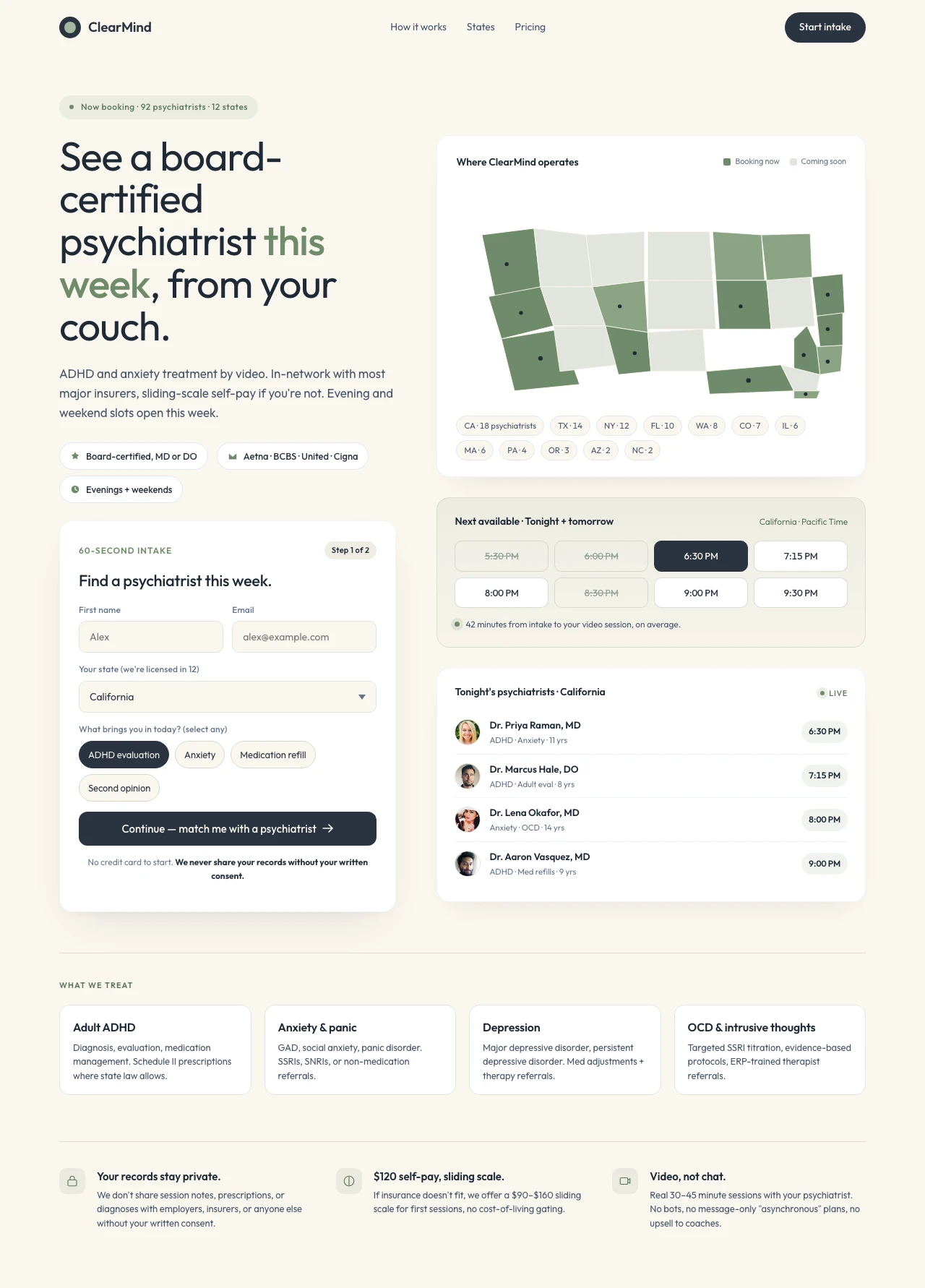
The HIPAA layer is where most healthcare LP advice goes wrong. The moment a form field collects health information alongside contact information — a symptom, a condition, a reason for visit, a medication, a date of birth paired with a name — the form processor must operate under a signed Business Associate Agreement (BAA) under 45 CFR 164.502(e). The BAA threshold is crossed the moment a vendor's script transmits Protected Health Information (PHI) from the user's browser to the vendor's servers. Most general-purpose landing-page and form builders do not sign BAAs. That's not a flaw of any one tool; it's how the entire marketing-LP category is built. The practical resolution: build the LP form around the safe non-PHI fields that actually drive conversion (name, phone, email, preferred contact time, insurance carrier name, ZIP), and route any condition-level intake to the next step — a phone callback or a BAA-covered intake form, or a practice-management portal behind authentication. The LP earns the phone call; the phone call does the intake. Full safe-fields breakdown in FAQ #3.
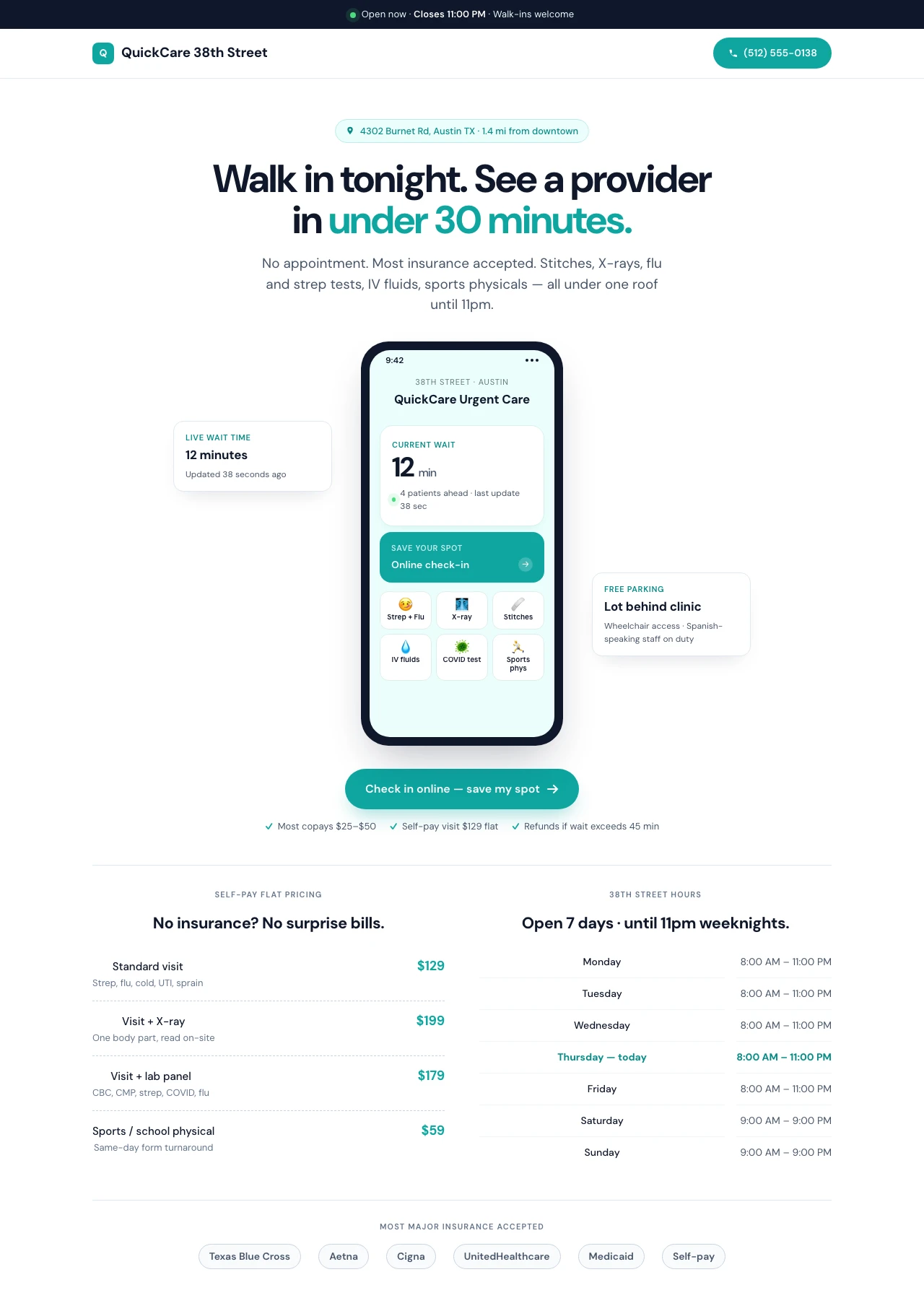
The mobile-and-local layer compounds the difficulty. 46% of all Google searches have local intent. 32% of patients have used voice search to find a provider. 17% of local healthcare searches lead to purchase intent within 24 hours (Think with Google, BrightLocal Local SEO Statistics 2024). 53% of mobile users abandon at >3 seconds; healthcare websites average 5.6 seconds load time (WP Rocket / Sitebuilder Report). A 1-second mobile delay drops conversion by up to 20%. For a $90-CPC hospital click landing on a 5.6-second mobile page, more than half the budget is wasted before the patient sees the headline. Multi-location chains stack a second problem on top of this: a single LP per city is required for local SEO ranking, but Google penalizes "doorway" pages where only the city name swaps. The buyer needs to spin up 5–50 location variants without each one being a duplicate-content liability.
The speed-to-lead layer is where revenue actually leaks. Leads contacted in 5 minutes are 21x more likely to qualify than leads contacted after 30 minutes. Practices calling within 12 minutes convert ~65% of leads to consultations versus 8% at 9 hours. The healthcare industry averages 2 hours 5 minutes to first response — the slowest of any industry (InfluxMD 2025). The LP itself can't ring the phone, but it can capture lead data cleanly, fire to a CRM and an SMS-alert stack, and tell the front desk a lead is waiting. Lead Care Team data shows top-performing practices respond in near-real time while average performers take 45 minutes — and that 45-minute lag reduces conversion probability by over 80%. Revenue per interaction at top responders runs $420 versus $185 at average ones — a 127% gap. The page is the front door to the speed-to-lead system. If the LP captures a lead and the practice answers in 5 minutes, the funnel works. If the LP captures a lead and the answering service calls back tomorrow, the $90 click was lit on fire.
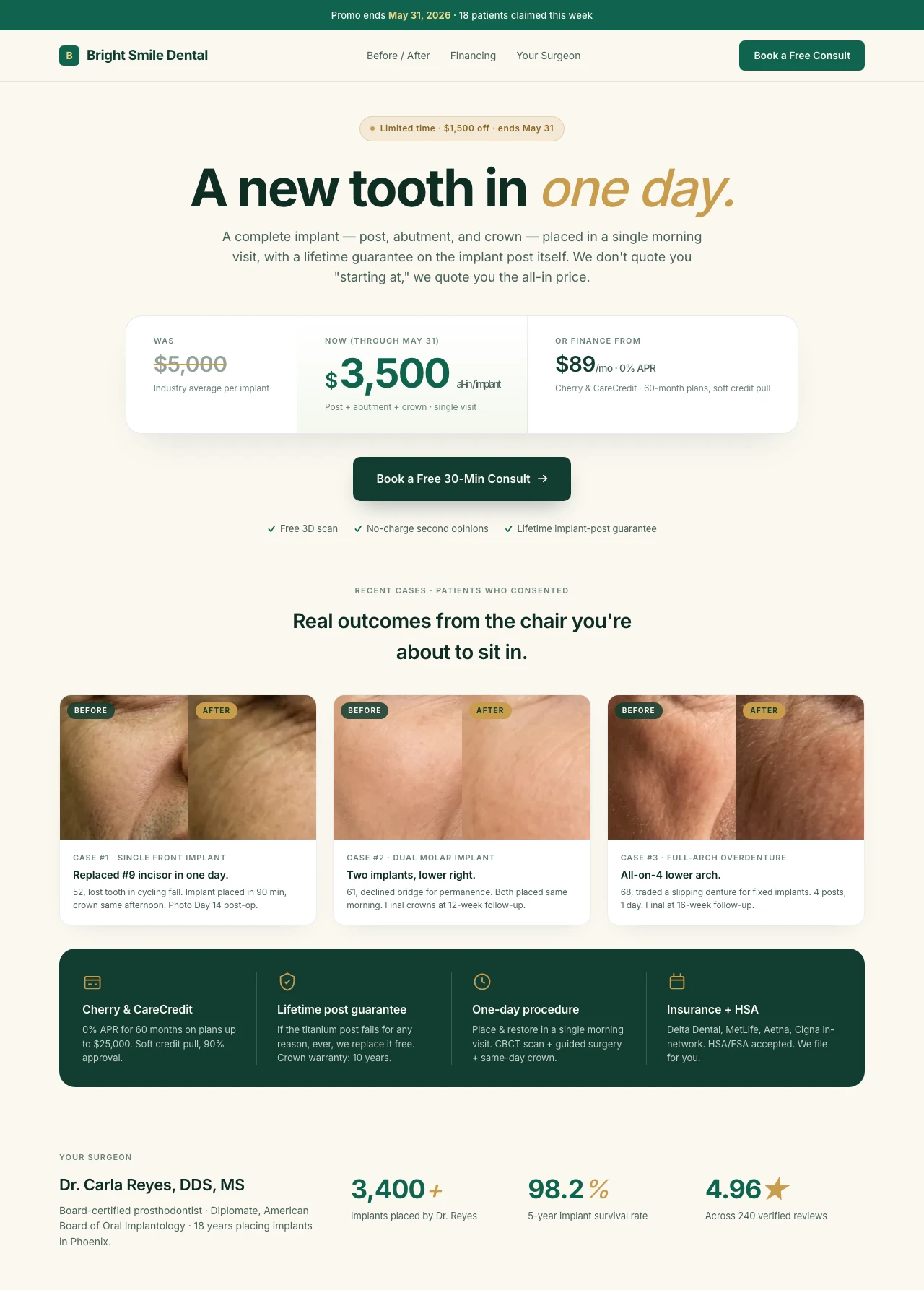
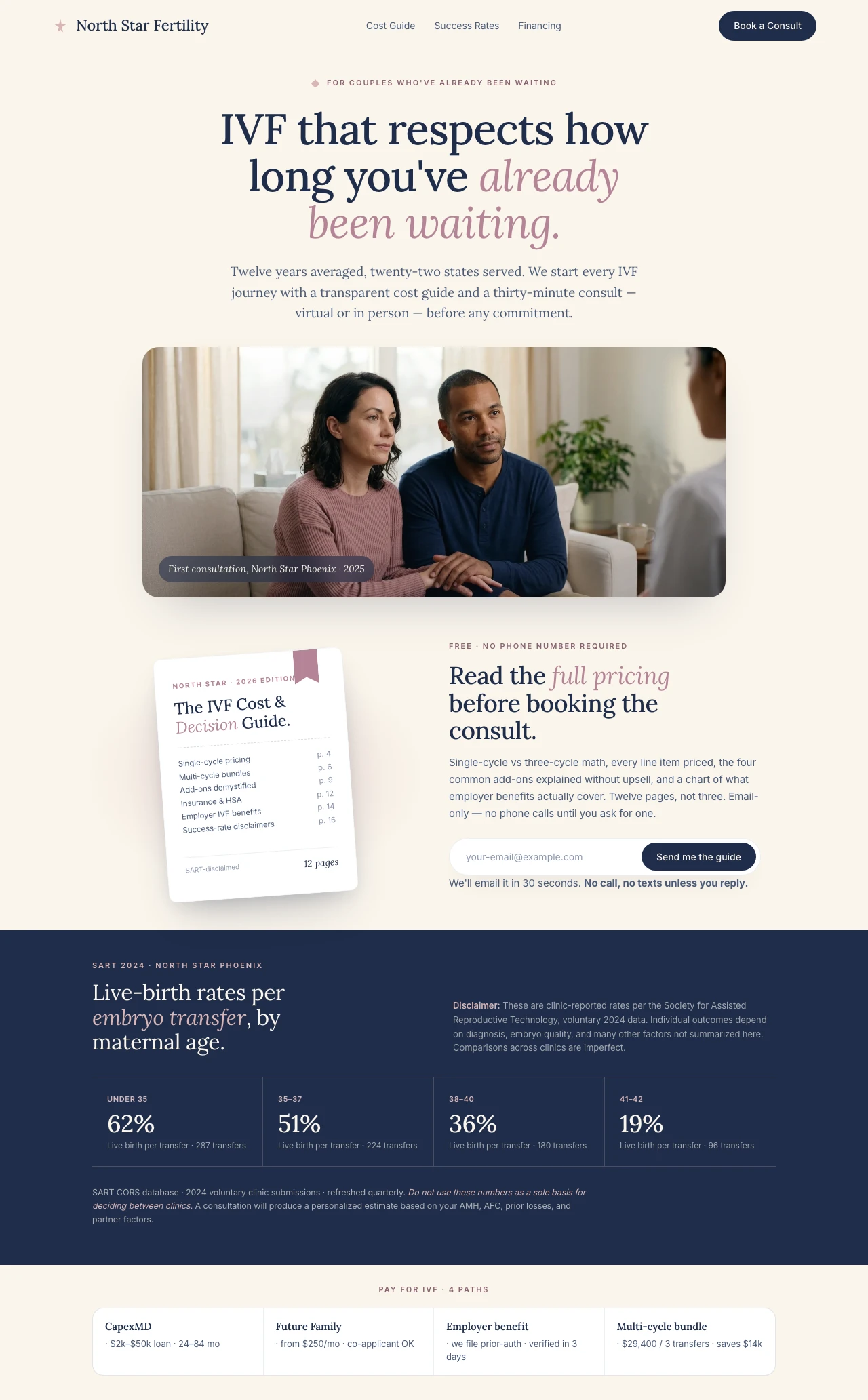
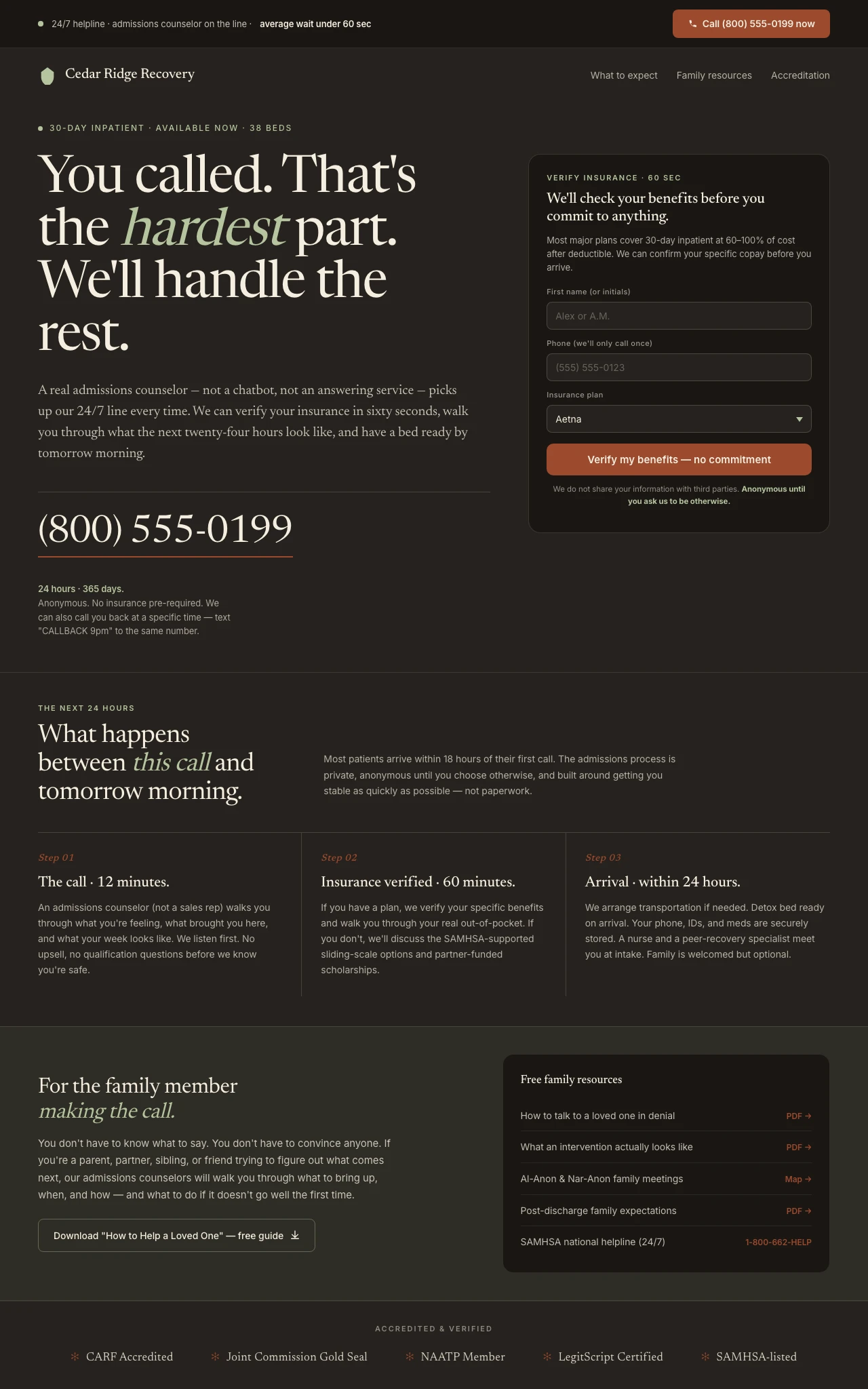
The high-ticket-procedure segment runs a different funnel still. LASIK, IVF, dental implants, orthodontics, addiction recovery, plastic surgery, fertility, and oncology second opinions are not "Book Now" purchases. Buyers research for weeks. The LP earns one of three next steps: a downloaded cost guide, an email-gated educational video, or a booked virtual consult. One IVF lead can be worth $5,000–$50,000 in lifetime revenue depending on cycle count and add-ons. The LP for high-ticket procedures isn't selling a single click-to-buy — it's earning permission to nurture for 4–12 weeks. A nurture-friendly LP runs a different form (email-gated lead magnet plus phone-optional), a different proof stack (success rates with disclaimers, financing partnerships, real patient stories with consent), and a different CTA stack (download the guide vs book the consult vs verify insurance). Treating the high-ticket page like a trial-class booking page is one of the most expensive mistakes in healthcare marketing.
And the multi-location-chain math clarifies why speed-to-publish matters commercially. A traditional LP build for a single hospital service line — kick-off, legal review, design, copy, dev, QA, accessibility audit — runs 40–60 hours per page at a $150/hr blended rate, or $6,000–$9,000 in execution cost per page. A 12-clinic urgent-care chain ships 12 page variants for $72,000–$108,000 per service-line campaign. AI-assisted page building collapses that into 2–3 hours per location variant at execution cost in the low hundreds. A regional dental DSO building 30 location-specific implant-promo pages for a Q1 campaign goes from a $180,000 design-and-dev contract to a two-week sprint. That's the compounding yield the traditional agency model has been leaving on the table.
Worth reading before your next paid-search flight: Swipe Pages' High-Converting PPC Landing Pages guide covers single-CTA discipline, message-match against ad creative, and form-length calibration. The Landing Page Optimization playbook and the Lead Generation inspiration gallery cover patient-intake patterns adjacent to healthcare even where a healthcare-specific gallery isn't yet published.
The hospitals, clinics, practices, telehealth platforms, and specialty groups winning 2026 aren't the ones with the largest paid-search budget. They're the ones who stopped sending $90-CPC clicks at outdated WordPress homepages, who ship a dedicated, care-episode-specific LP per campaign, who put accreditation and insurance-accepted above the fold, who calibrate the form to funnel stage, who run server-side A/B tests at intake cadence, and who answer the lead in 5 minutes — not 2 hours and 5. Demand isn't the bottleneck in healthcare. One in five US adults switched a healthcare provider in the past year (Accenture 2024). Conversion architecture is what decides who they switch to. That's the compounding yield AI-assisted page building is quietly giving back.
Worth reading before you greenlight the next paid-search flight.


Trusted by 7,000+ teams worldwide
"From zero experience with landing page builders, i was able to create a completely working landing page using swipepages in less than a day!"
Peter L.
BDM · Capterra
"Swipe Pages is my go-to when I need landing pages up and running quickly for my PPC clients."
David P.
Marketing Consultant · G2
"Multivariate or A/B tests can be created with the click of a button, and the analytics to determine winners/losers are clear and simple to understand."
David P.
Marketing Consultant · G2
"We typically run ads for clients, but conversion rates usually aren't satisfactory unless the landing page is well-designed for conversions. I'm happy to say SwipePages is one of the few that loads really quickly and conversions have never been higher on our client accounts."
Joshua L.
Managing Director · G2
"Even for people with no prior web design experience. Its drag and drop interface makes creating beautiful, professional-looking websites simple and fast."
Aditya S.
Proprietor · G2
"SwipePages has proven to be a surprisingly simple and efficient tool for creating stunning landing pages. I can consistently complete a page in 5-10 minutes."
Dietitian Amandeep S.
Founder · G2
"I have been able to create very highly converted landing pages for my courses, and feedbacks from users / students are simply unbelievable, thanks a lot to SwipePages."
Hoang P.
Director · G2
"Great tool for our agency to build high-performing landing pages for 30+ clients. We mainly use it for lead generation, priming, giveaways etc."
Agency Owner
TrustPilot
"Support is the best that I've ever seen. They will get back to you with an answer, usually within 24 hours. THEY GAVE ME DETAILED INFORMATION whenever I had an issue."
David S.
President/CEO · Capterra