Landing Page Builder

Create a Digital Marketing Landing Page

Message-matched landing pages for every Meta, Google, LinkedIn, TikTok, and email campaign you run — built in minutes, not sprints. Ship a dedicated page for every ad set, every offer, every audience — without waiting on dev, design, or your agency's ticket queue.

No credit card required · 14-day free trial

Examples

Digital marketing landing pages built with one prompt

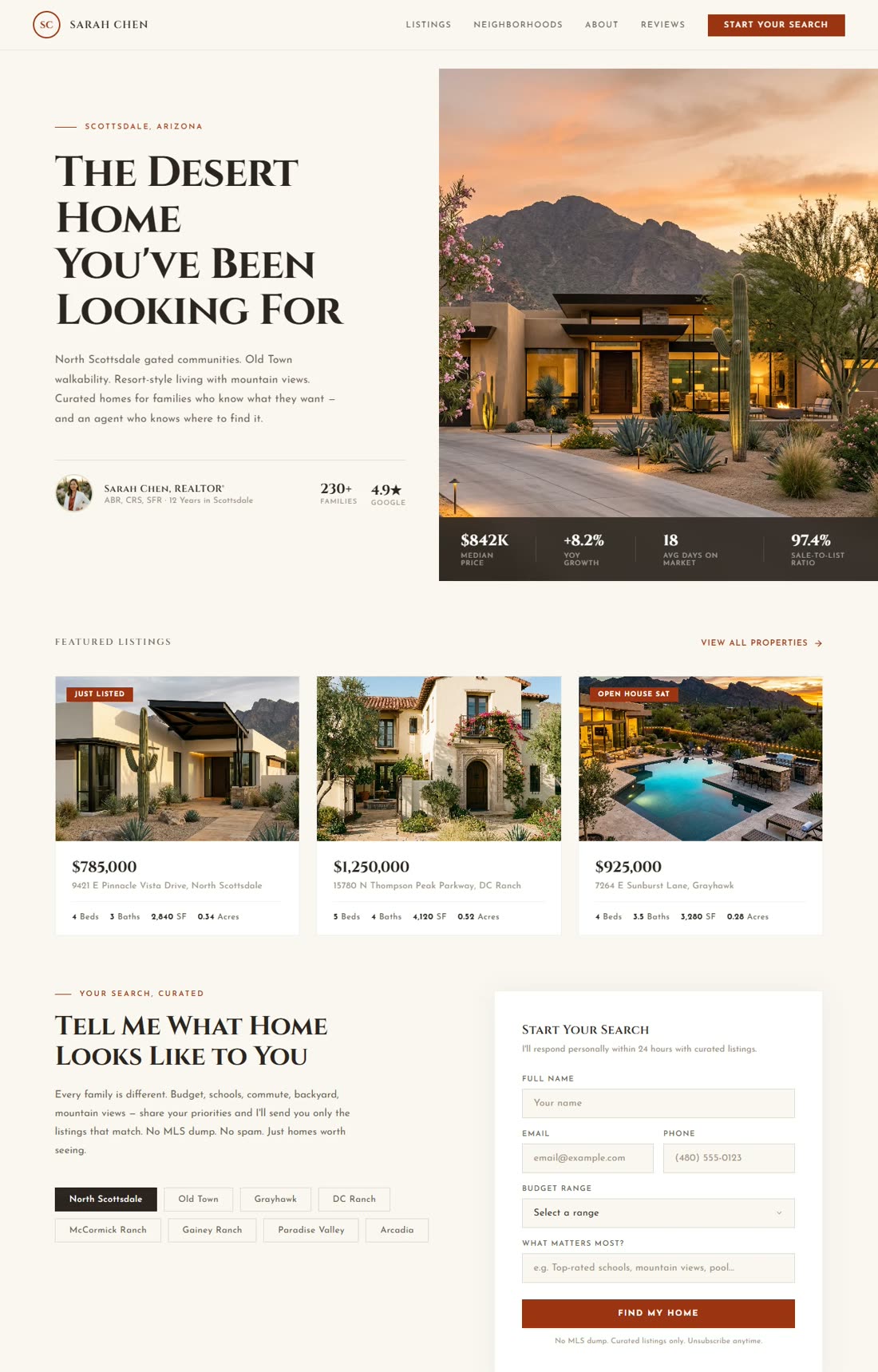
Eight real digital-marketing plays, one page each — because a cold Meta lead ad and a warm email retargeting LP aren't the same page. Every example below matches a specific channel, funnel stage, and audience motion.

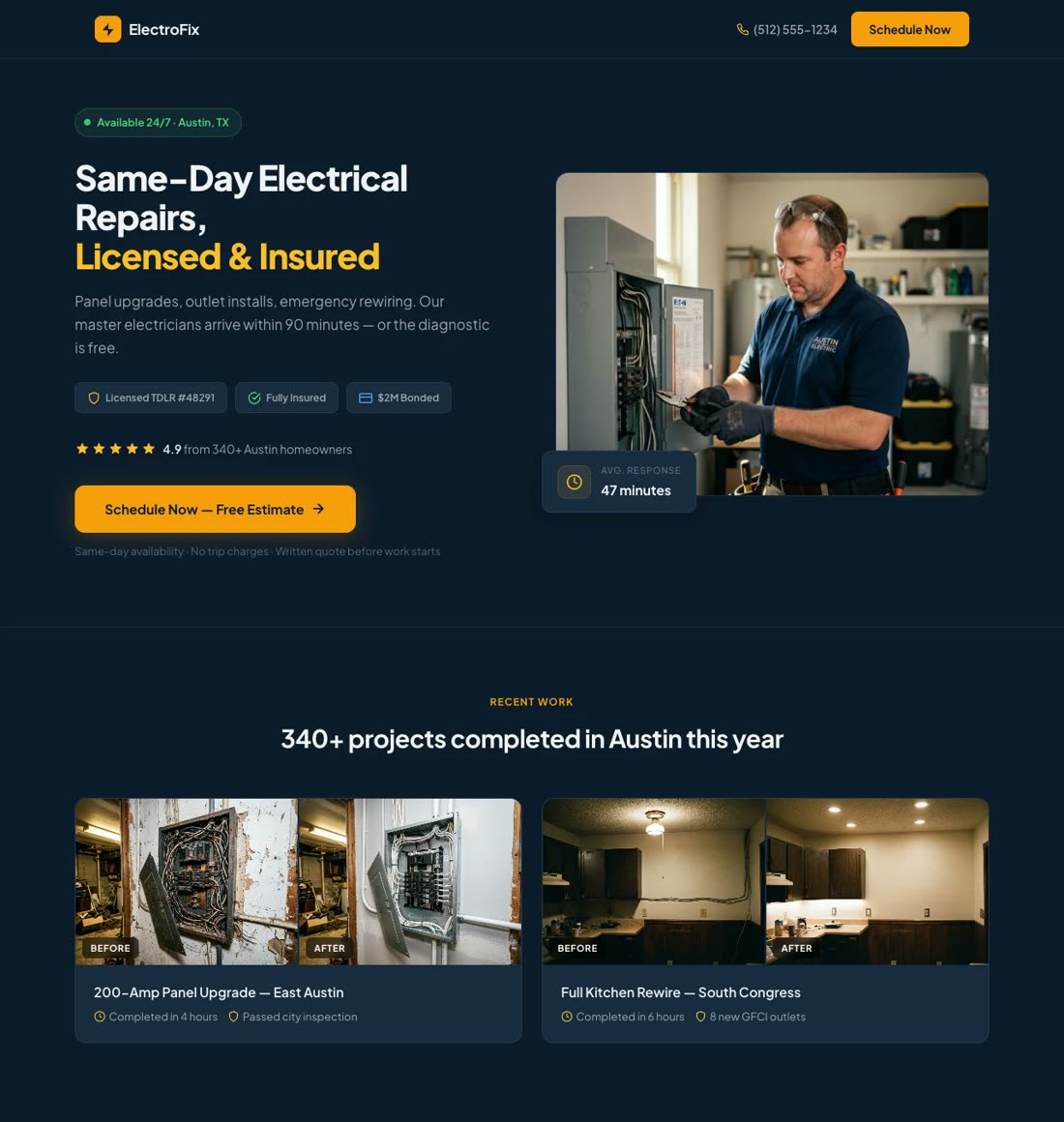
Meta Lead Ad

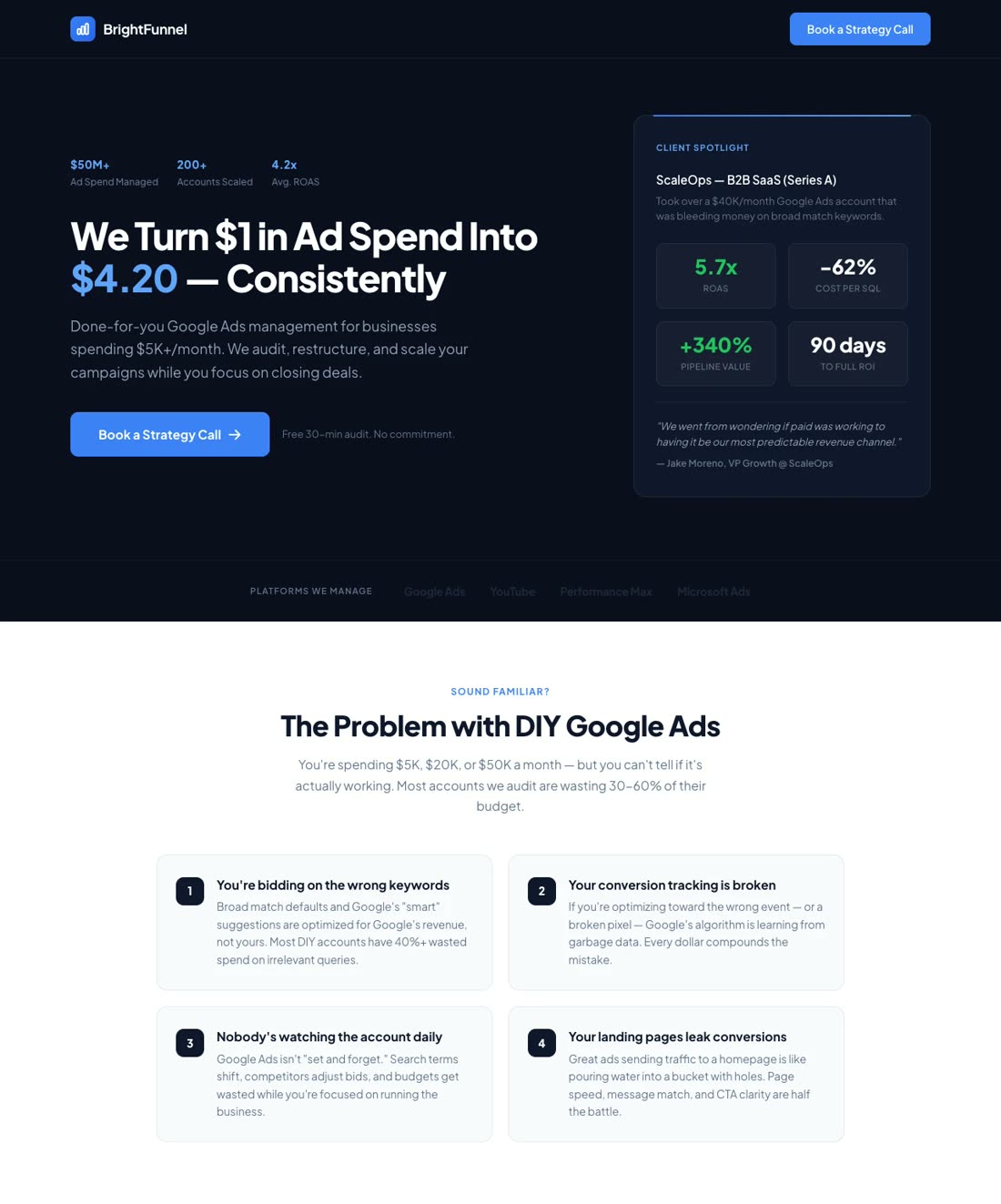
"Landing page for a Meta ad driving demo bookings for a mid-market HR SaaS: Cut onboarding time 40% without adding headcount. 60s walkthrough video, 3-field form..."

B2B SaaS Demo Booking

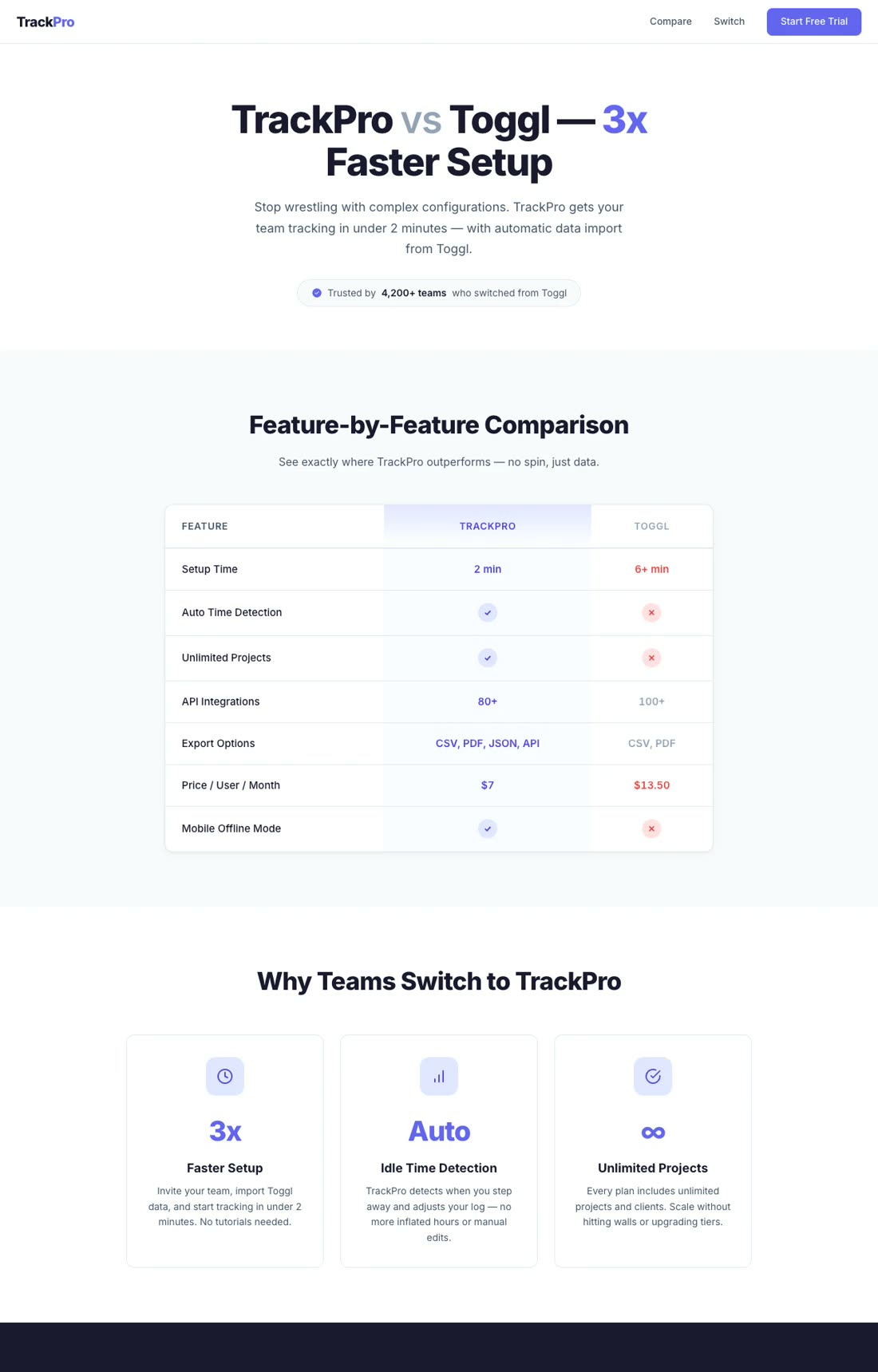
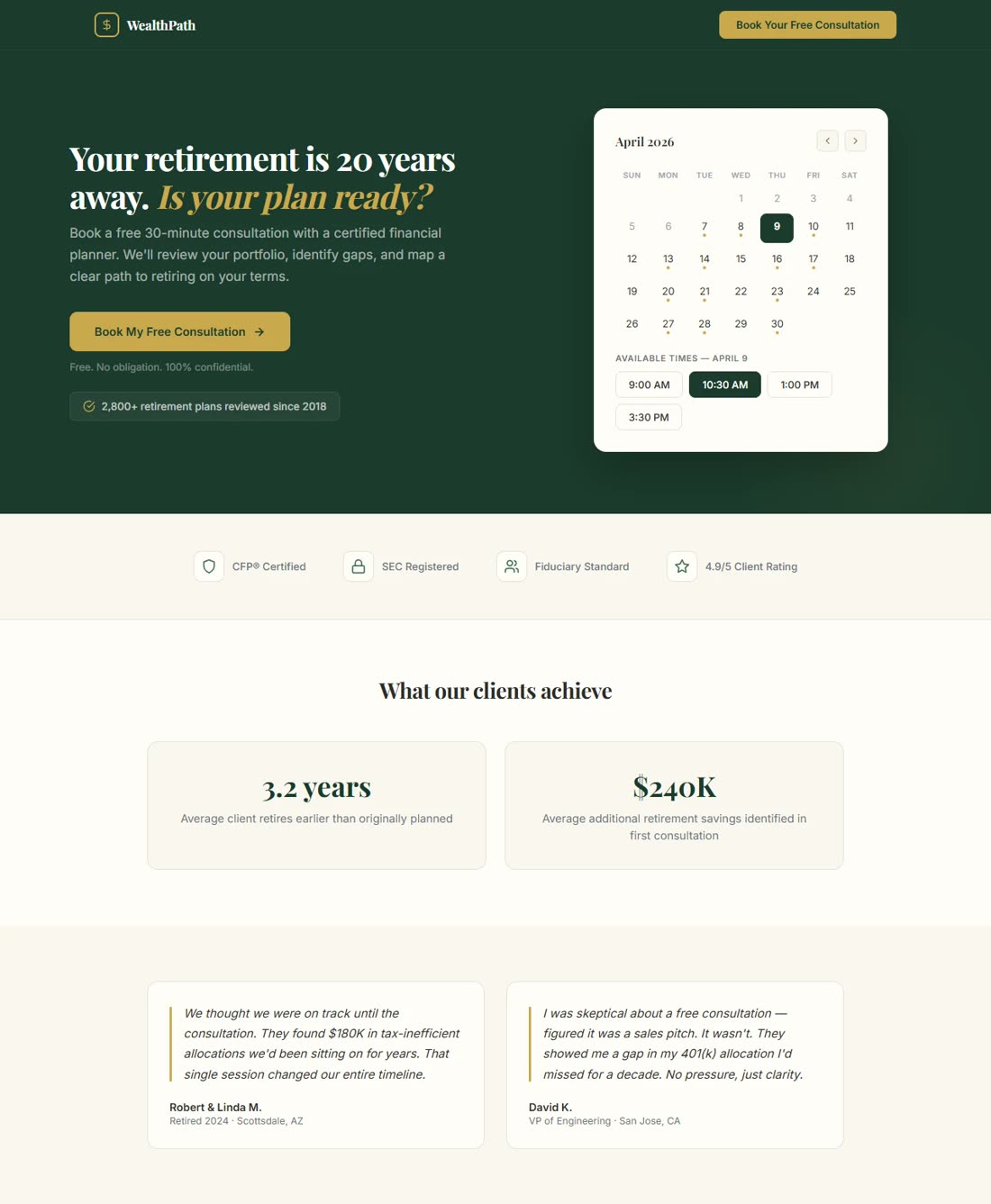
Google Search PPC

"Landing page for a Google Search ad matching 'project management software free trial.' Start your 14-day free trial, no credit card, no calls. 2-field signup..."

High-Intent Trial Signup

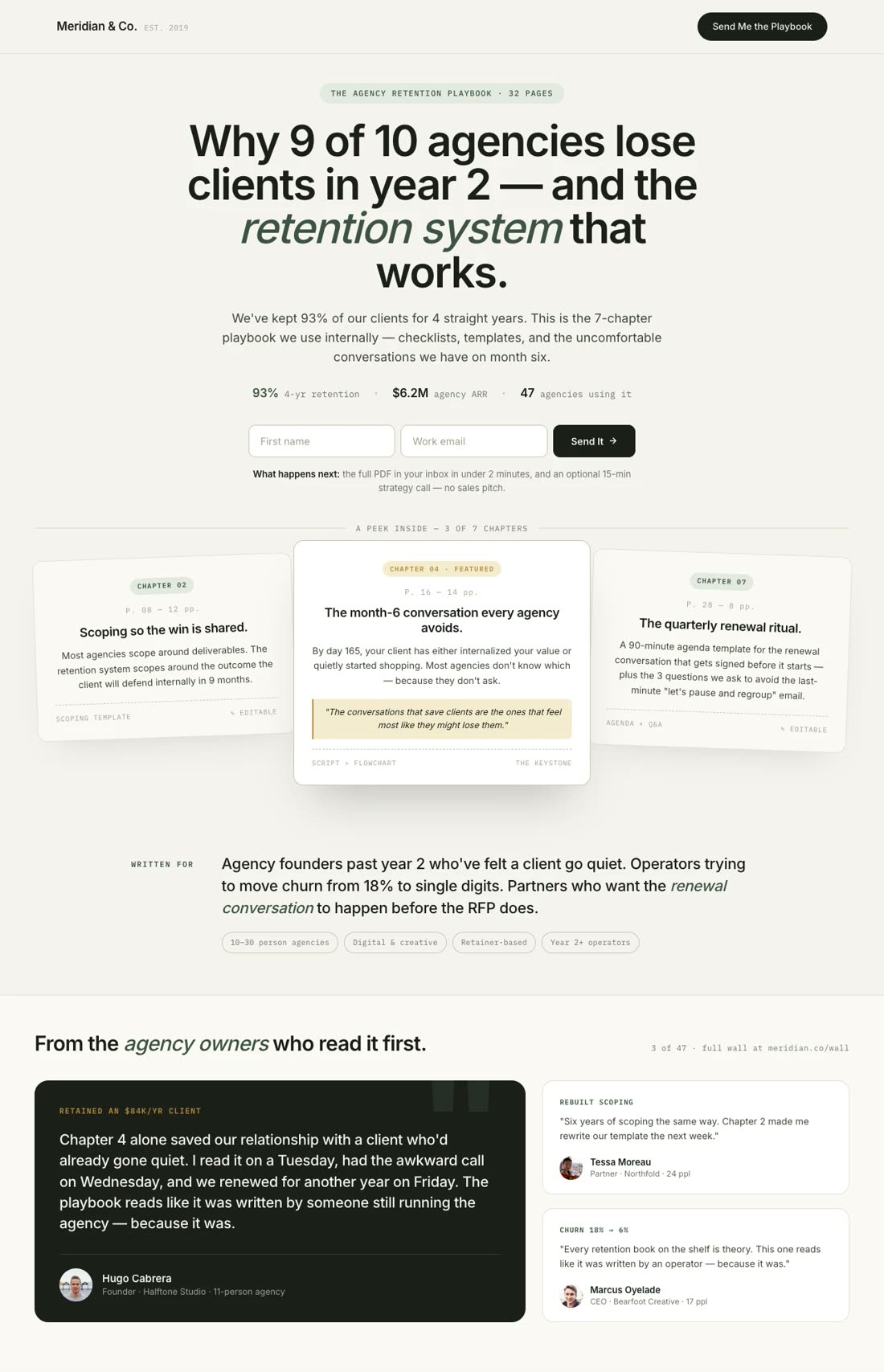
LinkedIn Whitepaper

"Landing page for a LinkedIn Sponsored Content campaign promoting a B2B whitepaper: The 2026 RevOps Benchmark Report, 1,200+ SaaS companies, 40 pages, gated form..."

B2B Whitepaper Gate

TikTok Creator

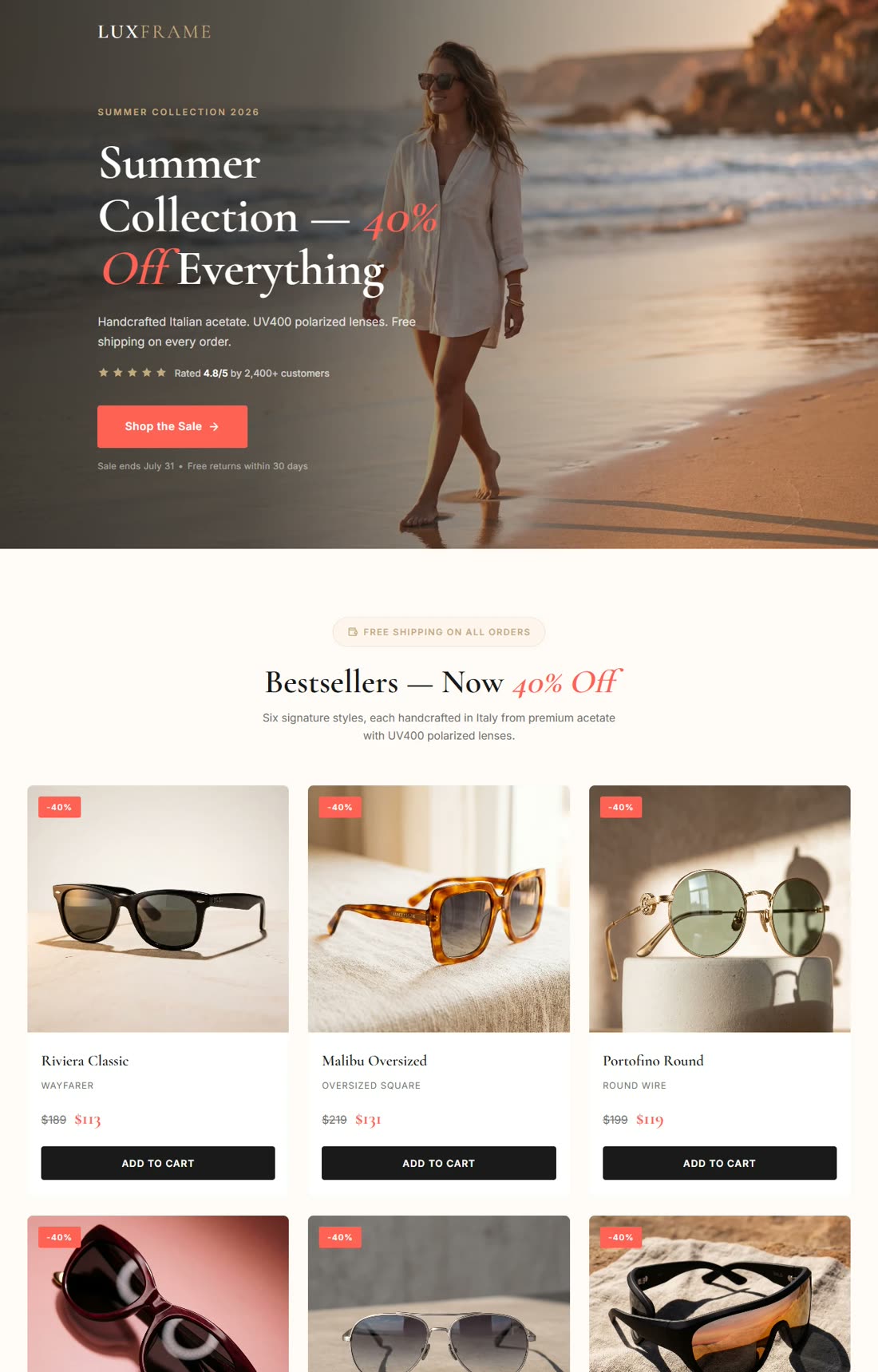
"Landing page for a TikTok Shop ad running a creator-led beauty drop: The Serum That's Trending, 10,000 units restocked today, autoplay video, 1-tap Apple Pay..."

DTC Beauty Drop

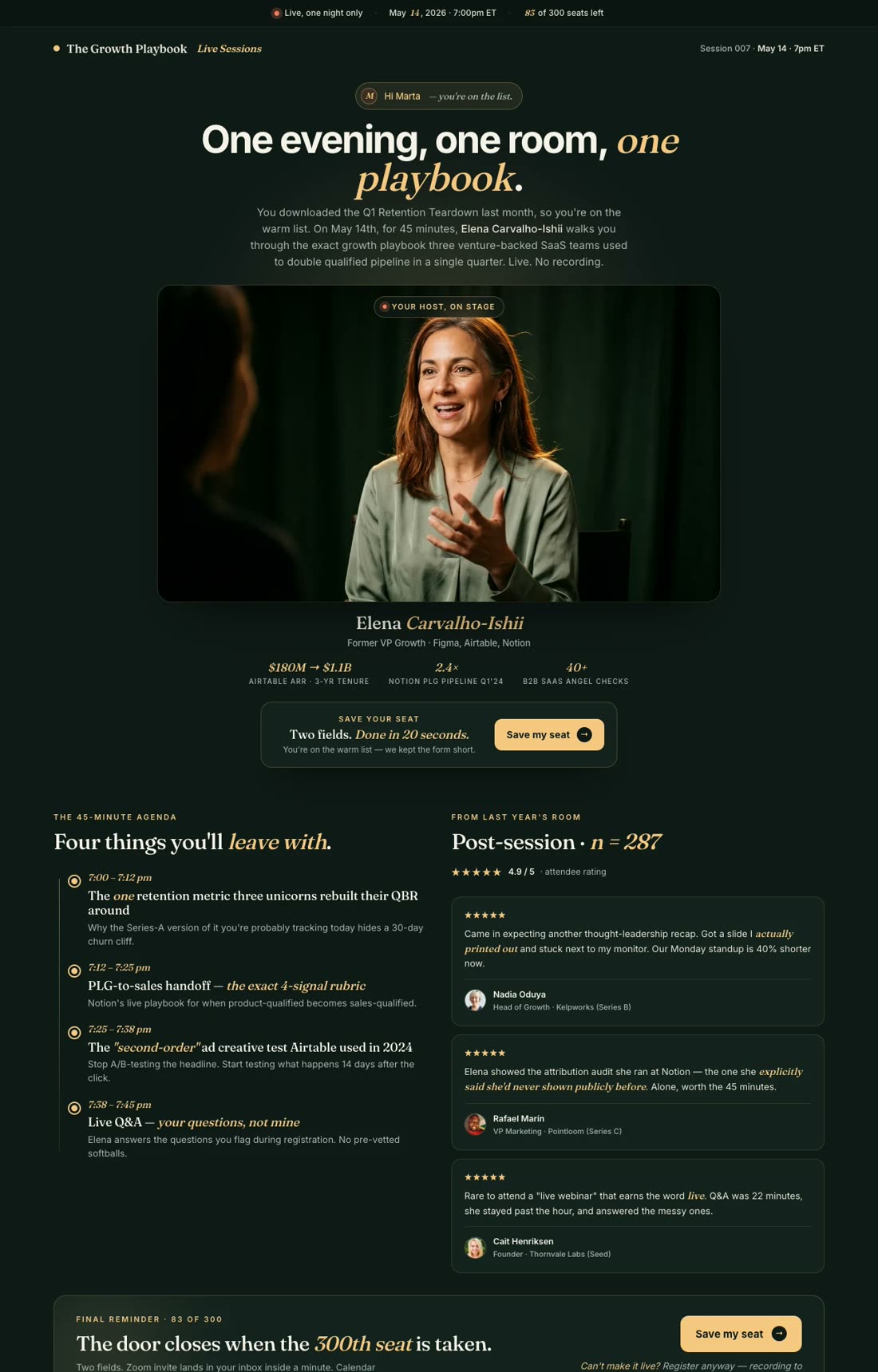
Email Nurture

"Landing page for a nurture-email campaign inviting subscribers to a live webinar: The Growth Marketing Playbook, Live May 14 2026, 300 seats, first-name merge..."

Warm Audience Webinar

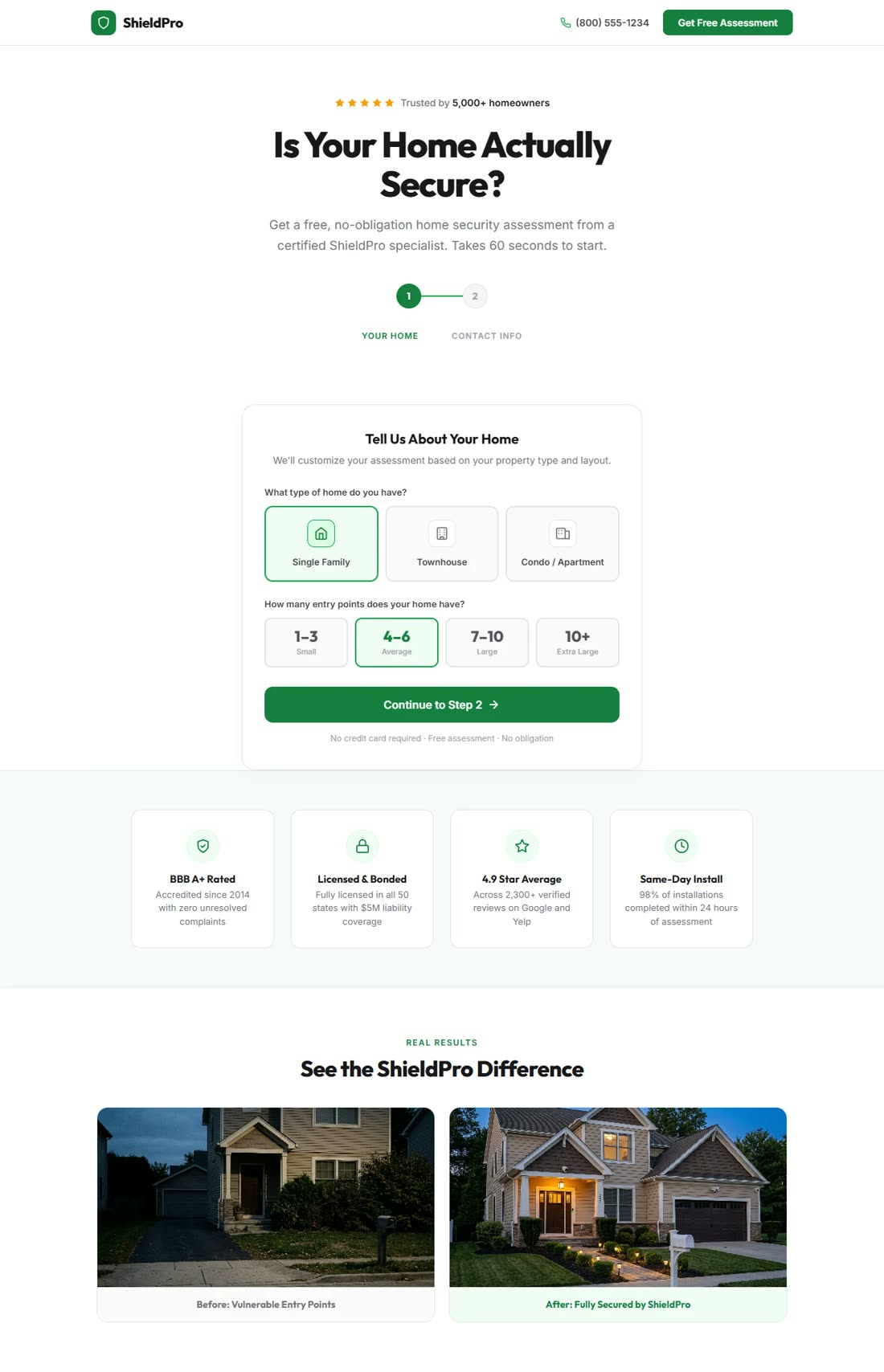
Retargeting Cart

"Landing page for a Meta + Google retargeting campaign targeting cart abandoners for a DTC supplement brand: We saved your 30-day supply, 15% off to finish, 2-hour countdown..."

Abandoned Cart Recovery

YouTube Pre-Roll

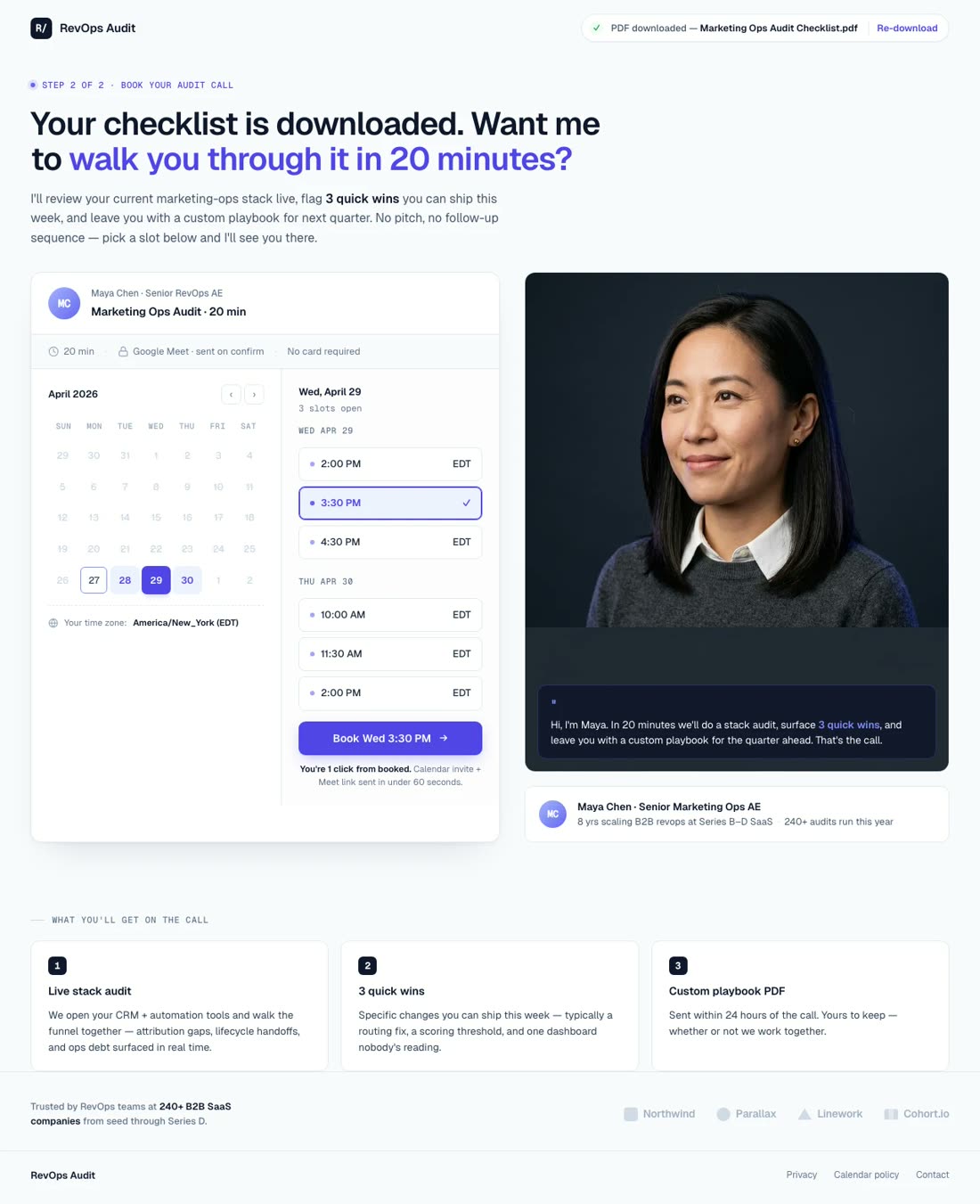
"Landing page for a YouTube pre-roll ad running on marketing-ops tutorial channels: Continue watching + see how we measured $2.1M in dark-social revenue, 3-up case study..."

B2B Demo Request

Agency Retainer

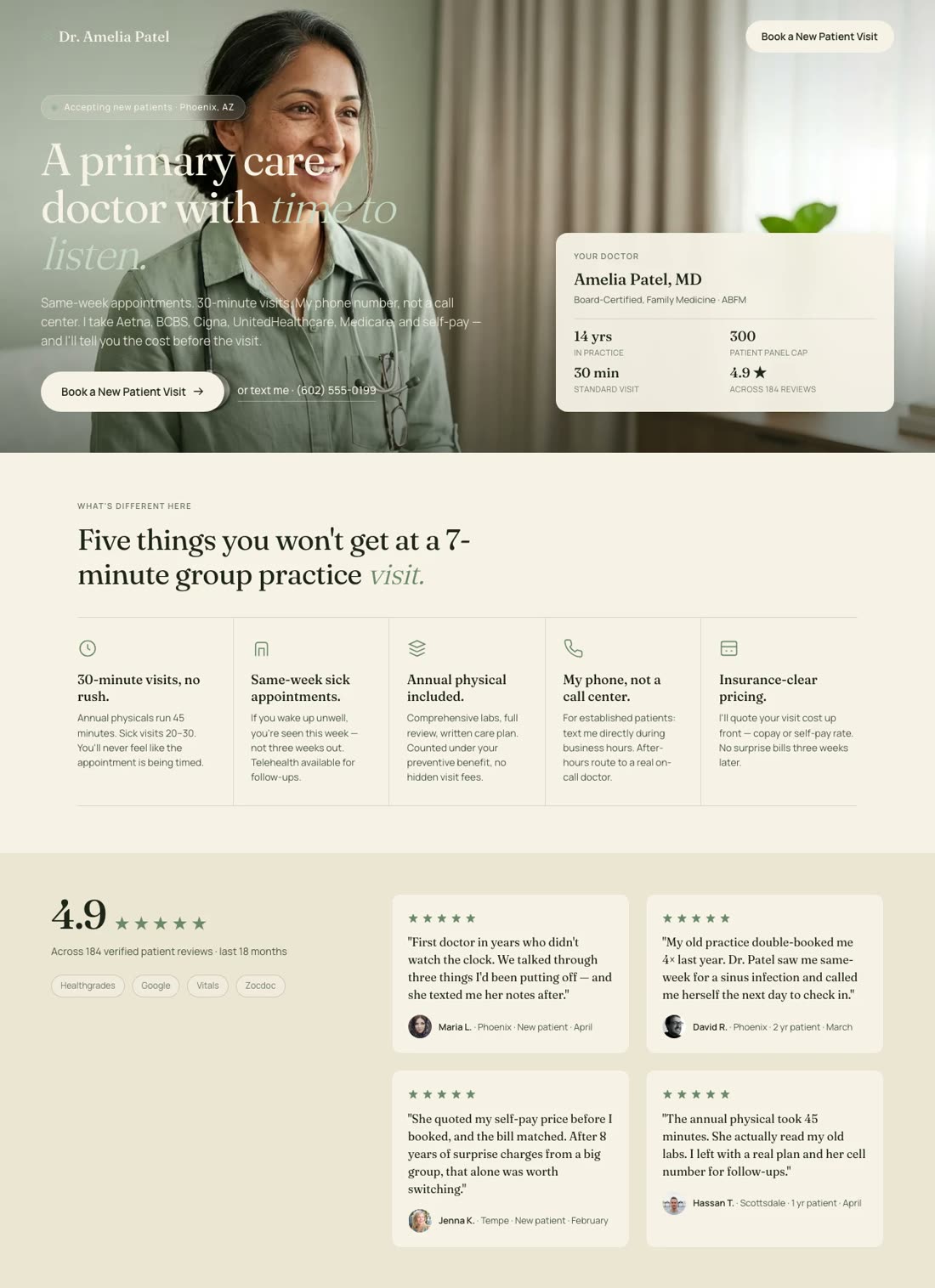
"Landing page for a performance-marketing agency pitching mid-market DTC brands: We manage $180M in paid media across 40 DTC brands, 3-tier retainer, calendar embed..."

Multi-Client Agency Pitch

Build Your Digital Marketing Landing Page

No Credit Card Required | Try for Free

How It Works

How to create a digital marketing landing page

01

Pick the Channel + Funnel Stage

A cold Meta lead ad and a warm email retargeting LP share maybe 20% of the same building blocks. Pick the channel (Meta, Google, LinkedIn, TikTok, YouTube, email, retargeting) and the funnel stage (awareness, consideration, conversion, retargeting, upsell). Those two choices dictate the hero, form length, CTA verb, and layout. One channel, one stage, one page.

02

Feed the AI the Campaign Brief

The ad creative and verbatim ad headline (message-match is a Google Ads Quality Score signal — 10–25% lower CPC, 15–30% higher CTR). The audience, the offer, the form destination (HubSpot / Salesforce / Klaviyo), the funnel-stage target CVR. Ten minutes of prep saves a three-day rebuild.

03

Watch the AI Build Your Page

Message-matched headline, CTA above fold and repeated below (+31% conversion vs above-fold only — CXL). Layout tuned to the channel: video-first for TikTok, centered single-column for Google Search, split-form for Meta lead, zero-form-direct-to-checkout for retargeting. Mobile-first. Stack wired.

04

A/B Test at Campaign Cadence

Only 17% of marketers A/B test — those who do see 37% conversion gains (Foundry CRO 2026). The bottleneck is variant-build speed. Spin up version B in 5 minutes, run server-side against A with zero mobile flicker, let the CRO agent flag the winner, promote, repeat.

Worth reading before you greenlight the next campaign

Why message-matched landing pages are the only ad spend that compounds

77% of campaign traffic still lands on homepages.

Digital marketing isn't a media-buying problem anymore. It's a page problem. Global digital ad spend hit $740 billion in 2025 and is projected to surpass $850 billion in 2026. For the first time ever, Meta will surpass Google in net worldwide ad revenue in 2026 — $243.46B to Google's $239.54B (eMarketer 2026 Global Ad Forecast). Meta, Google, and Amazon together will represent 62.3% of total worldwide digital ad spending next year. The spend is compounding. What isn't compounding — for most brands — is the conversion yield on that spend, because the page the ad points at is doing maybe 30% of its job.

The benchmark data is unambiguous. Average landing page CVR sits at ~6.6%; top-quartile LPs hit 11.45%+ (Smart Insights 2025, Foundry CRO 2026). Average ecommerce LP CVR ~2.35%; top-decile 10%+ — a 4× spread. Dedicated landing pages outperform homepages by 4–10× on conversion. Yet 77% of landing pages used for campaigns are actually homepages (Landing Page Statistics aggregate, 2026). Every dollar of Meta, Google, LinkedIn, or TikTok spend routed to a homepage is earning roughly a quarter of what it could earn on a dedicated, message-matched page. That's not an ad-spend problem. That's a page problem.

Message-match is load-bearing — and it has moved from "best practice" to "auction mechanic." Google Ads' Landing Page Experience is a core Quality Score signal — pages matched 1:1 to the ad earn Quality Score jumps of 1–2 points, translating to 10–25% lower CPCs and 15–30% higher CTR. Meta enforces similar logic through relevance score; pages with 1:1 message match see relevance scores 1–2 points higher, dropping CPM 10–20%. On a $100K monthly paid-social spend, that's $10K–$20K back every month from headline work alone. The PPC Landing Pages guide walks through the mechanics.

The form is the other lever. Single-field forms (email only) convert at 18.2%, the highest rate observed. Multi-step forms with progress bars convert at 28–35% because they spread perceived effort. Short 3–5 field forms convert at ~25%; long 7+ field forms convert at ~12% (Zuko 2025, Foundry CRO 2026). Field type matters more than count — dropdown selects and large text areas cause abandonment spikes. Digital marketers rebuilding forms rarely lose conversions; they usually find +15–25% sitting in 2 dropped fields.

Speed is quieter but decisive. Amazon's benchmark — every 100ms of latency costs 1% in sales — compounds under paid-traffic loads. Mobile accounts for 65%+ of digital marketing campaign traffic. Pages loading in 1s convert 3× higher than pages that take 5s (Cloudflare 2025). Most campaign LPs load slower than the ad-account review window allows for fast iteration. Speed isn't a feature — it's the price of being allowed to A/B test at all, because page-speed variance breaks statistical significance. The Anatomy of a High-Converting Lead Generation Page and Landing Page Optimization playbook cover the mechanics.

The agency math clarifies why everything above matters commercially. A traditional agency LP build is 25–35 hours per page. At a $150/hr blended rate, that's $3,750–$5,250 in execution cost per page. Agencies charging $1,500–$3,000 per LP on retainer operate at break-even. Swap the build workflow for AI-assisted tooling and it becomes ~2 hours per page at ~$300 in execution cost. An account manager previously producing 1 LP per fortnight now produces 2 per week. The $36K–$108K/year margin recovery per account manager is real; the 5–10× LP throughput without hiring is real. The agencies shipping the most pages in 2026 aren't the ones with the biggest design teams — they're the ones who automated the page build. That's the compounding yield traditional agencies left on the table — and the one teams with AI-assisted builders are quietly claiming.

Features

Everything a digital marketing team needs to ship message-matched landing pages at campaign speed. Nothing you don't.

Create a Meta lead ad landing page for our B2B SaaS demo

Any Campaign Page — One Prompt Away

Meta lead ads, Google Search PPC, LinkedIn whitepaper gates, TikTok creator drops, YouTube pre-roll demos, email nurture LPs, retargeting cart recovery, agency retainer pitches. Every channel, every funnel stage, every audience — one prompt away.

Brand Match
Colors
Font Newsreader

Personalization at Scale

One campaign, ten audiences. Swap the hero for cold Meta vs warm retargeting. Swap the form for LinkedIn VP vs SMB owner. Swap the CTA verb for Gen Z vs B2B exec. Same budget, ten message-matched pages, no agency retainer.

Audit Complete

Idea: LinkedIn audience bouncing above fold — try outcome-framed hero to lift CVR ~12%.

Apply
Dismiss

CRO AI Agent

Campaigns run on 7–14-day windows. Traditional "run it 2 weeks, pick a winner" testing barely fits. The agent watches CTA clicks, scroll depth, and form drop-off in real time and flags "mobile CTA below fold on iOS Safari" or "LinkedIn traffic bouncing above fold — try outcome-framed hero."

Winner
14.2%
Variant A
vs
8.5%
Variant B

A/B Testing & Analytics

Only 17% of marketers actively A/B test, and those that do see 37% conversion gains. Server-side split tests with zero mobile flicker, statistical significance baked in, variant build in under 5 minutes. Form length, hero framing, CTA verb — test the decisions the campaign is already designed for.

SP

HubSpot, Salesforce, Klaviyo & 30+ CRM Integrations

HubSpot, Salesforce, ActiveCampaign, Mailchimp, Klaviyo, Zapier, Pipedrive, Intercom. Meta CAPI, Google Ads, LinkedIn Insight Tag, TikTok Pixel. Every capture fires to your CRM and every pixel fires to your ad platform — instantly, server-side, no client-side flicker.

99

Sub-Second Mobile Load

Amazon: every 100ms of latency costs 1% of conversions. Mobile = 65%+ of digital marketing traffic. Pages loading in 1s convert 3× higher than pages taking 5s (Cloudflare 2025). Global CDN, edge caching, mobile-budget LCP under 150KB.

Competitor Search
M
Meta Ad Library
A
Ahrefs Keyword Map

AI-Powered Research

Competitor ad analysis, audience voice-of-customer extraction, offer benchmarking, keyword surface — done in seconds. Your Meta Ad Library research, Ahrefs sweep, and landing-page teardown compressed into one call.

500K visits · mo
Workspace
23 active pages
A
Alpine DTC
K
Kova SaaS
L
Lumen Lab
M
Meadow Co
N
Nova RevOps
OwnerEditorViewer

Agency Scale — 500K Visitors, Unlimited Subaccounts

Built for agencies running 10–50 client accounts with 10–40 new campaigns per month. 500K visitors, unlimited domains, unlimited subaccounts, role-based permissions, white-label preview. One workspace, every client, no per-seat surcharges.

Startup
$29
Marketer
$69
/mo

Flat Pricing — No Per-Lead, No Per-Visit Penalty

Start at $29/mo. Agencies: flat pricing across 500K visitors and unlimited subaccounts. Campaign traffic spikes don't trigger surcharges. Ship 20 LPs per month without your tooling line-item outgrowing your retainer.

What's your role?
In-House Marketer
Agency Account Lead

Smart Forms & Multi-Step Capture

Single-field forms convert at 18.2%. Multi-step forms with progress bars hit 28–35%. Long 7+ field forms drop to 12%. Pick the form the funnel stage rewards — 2-field for cold Meta, multi-step for B2B demo, zero-form-direct-to-checkout for retargeting.

Social Proof

Trusted by 7,000+ teams running digital marketing campaigns

4.8
★★★★★
G2
4.9
★★★★★
Capterra
300+ reviews
Agency Scale
★★★★★

"A Game-Changer for my digital marketing agency! The amount of time this remarkable SaaS has saved me equals hundreds of paid man hours saved!"

Graham

Agency Owner · TrustPilot

Multi-Client Workflow
★★★★★

"Great tool for our agency to build high-performing landing pages for 30+ clients. We mainly use it for lead generation, priming, giveaways etc."

Agency Owner

TrustPilot

Agency Campaign Deployment
★★★★★

"We love Swipe Pages in our digital marketing agency. It allows us to deploy landing pages for client campaigns quickly and effectively."

Damien E.

Managing Director · Capterra

PPC Speed
★★★★★

"Swipe Pages is my go-to when I need landing pages up and running quickly for my PPC clients."

David P.

Marketing Consultant · G2

A/B Testing Workflow
★★★★★

"When creating new Ads campaigns, I always use Swipepages: I start by creating a landing page with an AB test. After a while, loser version is deactivated and I create a version C to challenge version B, and so on."

Eric F.

Lead Acquisition Strategist · G2

Agency Conversion Results
★★★★★

"We typically run ads for clients, but conversion rates usually aren't satisfactory unless the landing page is well-designed for conversions. I'm happy to say SwipePages is one of the few that loads really quickly and conversions have never been higher on our client accounts."

Joshua L.

Managing Director · G2

High Conversion Rate
★★★★★

"Swipepages got me to 60-100% CR. Been using for over a year now. I've used ClickFunnels and GoHighLevel — and I've never had such high conversion rates."

Jordon Schwann

TrustPilot

Dynamic Text + Optimization
★★★★★

"They have made it extremely easy to AB Test, optimized campaigns and use advanced features like dynamic text."

Chris S.

Director of Digital Production · G2

Agency Campaign Value
★★★★★

"Cost effective landing pages for any size company. Many of our clients were worried about paying $150 to $299 for CF. After we shift to SP, many of our clients were able to afford."

Agency Owner

G2

FAQ

Frequently asked questions

A digital marketing landing page is a single-purpose page built to receive one specific campaign's traffic — one Meta ad set, one Google Search keyword, one LinkedIn sponsored post, one TikTok creator video, one email nurture broadcast — and convert that specific visitor into one specific action. No site navigation, no product menus, no "explore our blog" sidebar, no second CTA. Just the offer, the proof, the form or checkout, and a single action.

A homepage is built for discovery. It has nav links, product tiles, a footer sitemap, and an invitation to keep exploring. That design is exactly wrong for paid traffic — every link that isn't the CTA is a leak. The benchmark data: dedicated landing pages convert 4–10x better than homepages (Foundry CRO 2026, Waypoint Converts). Average LP CVR across industries is ~6.6%; top-quartile LPs hit 11.45%+. Homepages run at homepage CVR — closer to 2% — because they're optimized for navigation, not conversion.

A product page sits in between. It's built for browsing a specific item, with cross-sells, related products, and reviews. Campaign-specific LPs drop all of that: one offer, one CTA, message-matched to the ad. Product pages average 2–5% CVR; campaign LPs average 6–9% CVR. The difference is structural, not cosmetic. The PPC Landing Pages guide covers this single-CTA discipline in depth.

And this isn't a minor-optimization story. 77% of landing pages used for campaigns are actually homepages (Landing Page Statistics aggregate, 2026). Every dollar of Meta, Google, LinkedIn, or TikTok spend routed to a homepage earns a fraction of what it could earn on a dedicated page. On a $50K monthly ad budget, that's $30K–$40K of conversion yield left on the floor, every month, indefinitely, because building dedicated LPs at campaign cadence was too slow. That's what a dedicated digital marketing LP fixes — and it's what the AI-assisted page build eliminates the excuse for.

Different channels reward fundamentally different page patterns — the campaign's channel dictates the page's shape, not the other way around.

Meta (Facebook + Instagram) Ads reward UGC-style or creator-led video creative, and the LP should continue that context. Hero: 15-second video loop or creator-tagged photo carousel. Form: 2–3 fields for cold traffic; multi-step acceptable for warm retargeting. CTA: offer-specific verb ("Claim 20% Off," "Lock In Free Shipping"), not generic "Learn More." Benchmark: lead ads average 7.72% CVR (WordStream 2025).

Google Search Ads reward high-intent message match. The LP headline must match the ad headline — which must match the user's search query — verbatim. Layout: centered single-column, benefit-first, no video distraction. Form: 1–2 fields for cold search; trial signups need email + password. CTA: action-oriented, repeated above and below fold. Benchmark: Search ads average 3.75% CVR. Quality Score failure inflates CPC 15–30%, so message mismatch is a direct budget leak.

LinkedIn Ads reward outcome-framed B2B copy. Headline: specific, role-targeted, quantified outcome ("Reduce onboarding time by 40%"). Form: pre-filled from LinkedIn profile if using native; if external, expect 5–8% CVR. Trust stack: customer logos, case study excerpt, # of customers. CTA: "Book Demo," "Get Audit," "Download Report." Benchmark: B2B 2–5% on external LPs, 5–8% on native lead forms.

TikTok Ads reward authenticity and mobile-native UX. The LP must match the creator's voice and tone — corporate copy on a TikTok LP breaks the trust chain. Hero: autoplay video (same clip as the ad), one-tap checkout (Apple Pay + Shop Pay + Klarna), live stock counter if ecom. Form: minimal (email + phone); Apple ID / Google Sign-In preferred. Mobile-first vertical orientation non-negotiable. TikTok Shop 2025 holiday period hit $500M+ GMV, +45% YoY; live shopping +84% YoY (TikTok Newsroom, Dec 2025).

YouTube Ads reward continuation. Visitors arrive with context from the pre-roll or mid-roll video — the LP should reinforce, not restart. Hero: reinforcement of the video's key claim (don't re-pitch the offer). Form: 2–3 fields. CTA: "Watch Full Version," "Book Walkthrough," depending on funnel stage.

Email + SMS nurture LPs reward personalization. First-name merge in hero, prior-purchase reference, segment-specific offer. Zero forms (direct to product or checkout). CTA: "Claim Your Offer," urgency-framed if deadline is real. Abandoned cart SMS CVR: 24.6–39.4% (Klaviyo 2025 holiday recap).

Retargeting LPs reward low-friction completion, not discovery. Zero forms, pre-populated cart, 10–15% incentive under the CTA, countdown tied to the incentive. Target CVR: 15–25% from warm audiences.

Every campaign launches a channel. Every channel rewards a shape. The AI picks the shape based on the brief — you don't need seven LP builders, you need one that knows the seven shapes.

Shorter than you think, but the real answer is stage-dependent — and field type matters more than field count.

Single-field forms (email only) convert at 18.2% — the highest rate observed in any form-benchmark study (Zuko 2025). That's the top of the range; use it for awareness-stage cold traffic where the only ask is "let us email you." Multi-step forms with progress bars hit 28–35% — counterintuitively higher than single-step, because they spread perceived effort across multiple decisions and the progress bar creates completion commitment. Short 3–5-field single-step forms convert at ~25%. Long 7+-field forms drop to ~12%. (Foundry CRO 2026)

So if shorter is almost always better, why does every B2B form still ask for 8 fields? Because sales wants qualification data, and no one measured the CVR cost. The math: a 7-field form running at 12% vs a 3-field form running at 25% means doubling the raw lead count; the 2–3% of "wrong-fit" leads you filter out post-form is vastly cheaper than missing half the right-fit leads. Qualification belongs in nurture, not at the form.

Field type trumps field count. Dropdown selects cause abandonment spikes — especially on mobile, where iOS and Android render them differently. Large text-area fields ("Tell us about your project") kill completion on mobile more than any other single element. Radio-button groups with 5+ options create decision paralysis. The form pattern that works on digital marketing LPs: email → name (if warm) → one qualification radio (3 options max) → submit. Every additional friction element compounds.

Stage dictates length. Awareness: 1 field (email). Consideration: 2–3 fields (email + company + role). Conversion: 2–3 fields for high-intent traffic (trial signup with email + password), 3–5 fields for enterprise demo (email + company + size + timeline). Retargeting: zero fields, direct-to-checkout. The form length should match the value the visitor expects from filling it — a free ebook doesn't need 5 fields, and a $50K enterprise software demo does. The Anatomy of a High-Converting Lead Generation Page covers form patterns that move CVR 15–25%.

Rebuild the form. Shorter almost always wins — and the right shorter, not just "remove fields randomly," wins more.

Run them server-side, on variants built in minutes, with statistical significance calculated automatically. That's the short answer. The longer answer is about what NOT to do.

Don't run client-side A/B tests on paid traffic. Tools that inject variants via JavaScript on page load cause a "flash of unstyled content" (FOUC) that tanks LCP (Largest Contentful Paint), which is a core Google Ads Quality Score and Google Search ranking signal. Clients see your page render the control, flicker, then re-render to the variant. On mobile — where 65%+ of paid traffic lives — this flicker is visible to the naked eye and destroys credibility on the first 300ms.

Don't split by URL. Some teams run A/B tests by sending traffic to /landing-page-a and /landing-page-b. This breaks UTM parameter tracking in ad platforms (Meta, Google, TikTok attribute conversions to the URL, not the variant), pollutes analytics with duplicate pageviews, and requires manual rebalancing. Server-side variants serve the same URL with different HTML per session — the attribution stays clean.

Do run single-variable tests first. Form length (2 vs 3 fields) typically moves CVR +20%. Hero framing (benefit vs outcome vs fear vs curiosity) moves CVR +15%. CTA verb ("Get Started" vs "Book Demo" vs "Claim Offer") moves CTR +10–20%. Social proof placement (above fold vs below fold) moves CVR +10–15%. Headline message-match tightness moves Quality Score (which moves CPC and CTR, not just CVR — the second-order win is bigger). Start with the single variable that has the biggest historical lift in your vertical, run it to 95% significance, promote the winner, then challenge with variant C.

Do build variants in minutes, not days. The reason only 17% of marketers actively A/B test (Foundry CRO 2026) isn't skepticism — it's build time. A copywriter rewriting the hero + a designer regenerating the layout + dev pushing the variant = 6–8 hours minimum. By that time the campaign is already mid-flight and the variant is stale. With AI-assisted page generation, the hero-variant build takes 5 minutes, the dev handoff is zero, and the test launches on the same day the idea landed. Teams A/B testing at proper velocity see 37% conversion gains on average — and the winner isn't always obvious before the test. That's the point. The Landing Page Optimization playbook covers test prioritization and stat-sig calculation.

Do let the CRO agent flag anomalies live. Statistical significance alone isn't the full story — "the mobile CTA is scrolling below fold on iOS Safari" or "LinkedIn audience is bouncing above fold" are anomalies a pure split-test doesn't surface. An always-on agent watching CTA click-rate, scroll depth, form drop-off per segment catches the "why" behind a losing variant while the test is still live.

Test the form, the hero, the CTA. Ship the winner. Test again. That's the digital-marketing loop — and it works when the variant-build friction gets designed out.

Digital marketing runs on a short list of non-negotiable variables: channel-specific page patterns, message-match tightness, form-funnel calibration, sub-second mobile load, A/B testing at campaign cadence, and an integration stack that doesn't leak data between CRM and pixel. Swipe Pages is built for exactly that workflow.

An AI that builds a campaign page from your brief. Paste the channel (Meta, Google Search, LinkedIn, TikTok, YouTube, email, retargeting), the offer, the audience, the funnel stage — the AI writes a message-matched headline, picks the layout the channel rewards (video-hero for TikTok, centered single-column for Google Search, split-form for Meta lead, zero-form-direct-to-checkout for retargeting), calibrates form length to the funnel stage, drops in trust signals adjacent to the CTA, wires your CRM + pixel stack, and builds mobile-first. A page that would take an agency 25–35 hours takes 15 minutes.

Every digital marketing play, one prompt away. Meta lead ads, Google Search PPC, LinkedIn whitepaper gates, TikTok creator drops, YouTube pre-roll demos, email nurture LPs, retargeting cart recovery, agency retainer pitches. You don't need eight LP builders — you need one that knows the eight shapes. The PPC Landing Pages guide and Lead Generation Page anatomy cover the specific shapes each channel rewards.

Personalization at scale — one campaign, ten audiences. Swap the hero for cold Meta vs warm retargeting. Swap the form for LinkedIn VP vs SMB owner. Swap the CTA verb for Gen Z vs B2B exec. Same budget, ten message-matched pages, ten times the message-match advantage. No agency retainer required.

Sub-second mobile load on a global CDN. Amazon's "100ms = 1% of sales" rule, compounded by paid-traffic loads, is exactly the cost this platform eliminates. 65%+ of digital marketing traffic is mobile; pages loading in 1s convert 3x higher than pages taking 5s. Your page renders before the thumb reaches the CTA.

Smart forms + funnel-calibrated capture. Single-field forms for cold awareness traffic (18.2% CVR). Multi-step forms with progress bars for B2B demo (28–35% CVR). Zero-form-direct-to-checkout for retargeting. Field-type awareness built in — dropdowns and large text areas flagged, not rendered by default.

Server-side A/B testing, zero flicker. Client-side A/B tools break mobile LCP and tank Quality Score — you can't afford that on paid traffic. Swipe Pages runs server-side variants with statistical significance baked in, variant builds in 5 minutes, and a CRO agent watching for anomalies live. The 17% of marketers who test end up with 37% conversion gains — and this is the tooling that makes testing feasible at campaign cadence.

Native integrations for the full digital marketing stack. HubSpot, Salesforce, ActiveCampaign, Mailchimp, Klaviyo, Pipedrive, Intercom. Meta CAPI, Google Ads, LinkedIn Insight Tag, TikTok Pixel. Zapier, Stripe. Every form capture fires to your CRM and every pageview fires to your ad platform — instantly, server-side, attribution-clean.

Agency scale — 500K visitors, unlimited subaccounts. For agencies running 10–50 client accounts with 10–40 new campaigns per month: one workspace, unlimited domains, unlimited subaccounts, role-based permissions, white-label preview. No per-seat surcharges, no per-client licensing dance.

CRO agent for real-time campaign optimization. Traditional "run it 2 weeks, pick a winner" rarely fits campaign flight windows. The agent watches CTA click-rate, scroll depth, and form drop-off per channel and segment in real time. "LinkedIn audience bouncing above fold — try outcome-framed hero." "Mobile CTA below fold on iOS Safari — move sticky to thumb zone." An always-on performance analyst that never sleeps through a campaign launch.

Flat pricing — no per-lead, no per-visit penalty. Start at $29/mo. Agency tiers priced flat across 500K visitors and unlimited subaccounts. Campaign traffic spikes don't trigger surcharges. Ship 20 LPs per month for an agency without your tooling line-item outgrowing your retainer.

7,000+ customers. 300+ reviews at 4.8–4.9 average. 14-day free trial, no credit card required. For performance agencies running 10–40 campaigns per month, in-house digital marketing teams building 2–3 LPs per week, and freelance consultants shipping client pages in a day — this is the builder designed for the tempo digital marketing actually runs at.

Start building your digital marketing landing page

Every Meta, Google, LinkedIn, TikTok, and email campaign deserves a dedicated, message-matched landing page — not a homepage shared with every other ad. Build one in 15 minutes, test the form on day two, ship the winner on day three. 14-day free trial, no credit card required.

No credit card required · Instant setup