Landing Page Builder

Create a Personal Landing Page

Go from idea to a professional personal landing page in minutes — freelance services, portfolio, creator brand, or link-in-bio, all generated by AI

No credit card required · 14-day free trial

Examples

Personal landing pages built with one prompt

From freelancer portfolios to creator link-in-bio hubs and speaker one-sheets — see what the AI creates for real personal brands.

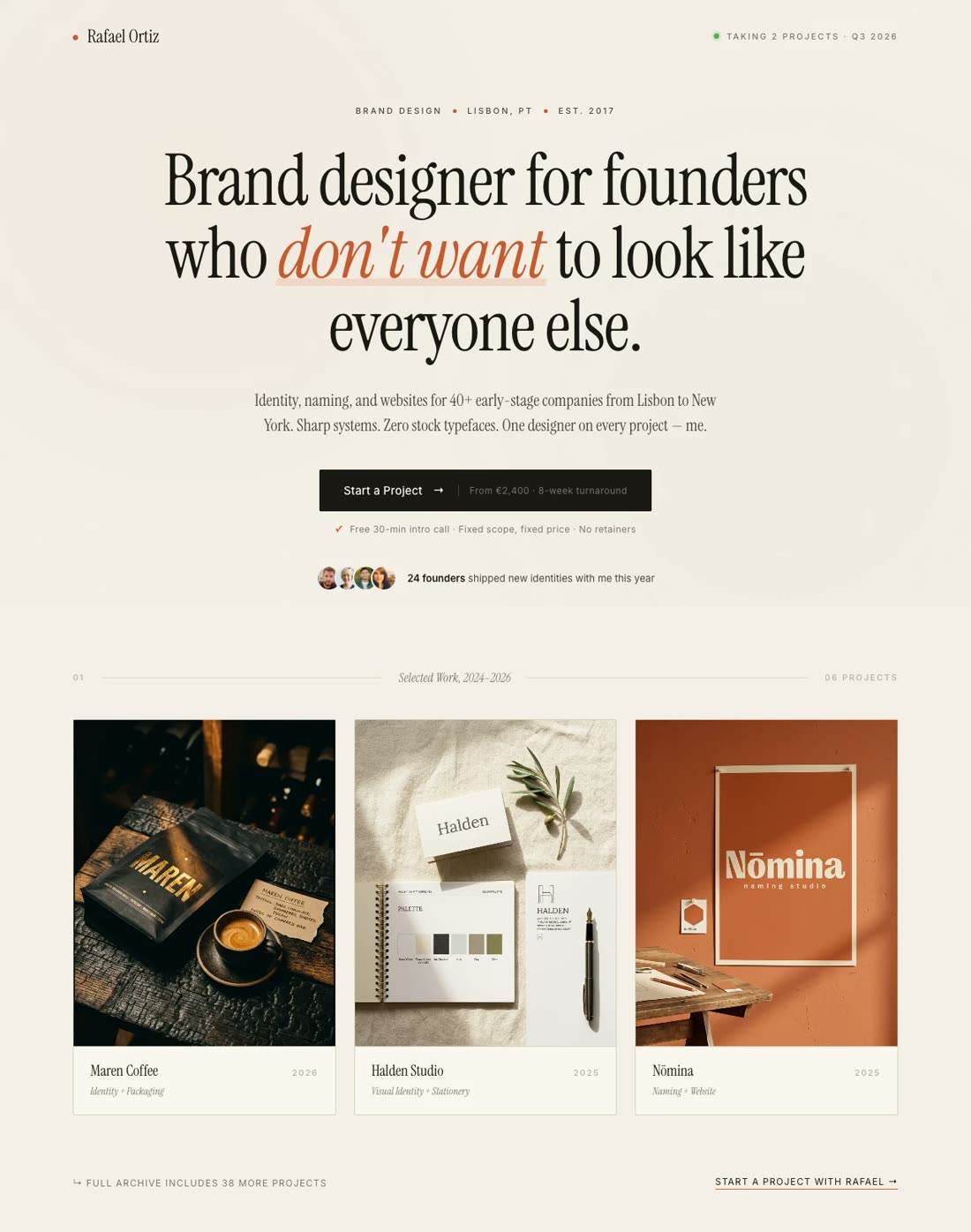
Freelancer Portfolio

"Create a personal landing page for Rafael Ortiz, a freelance brand designer based in Lisbon. Editorial-portfolio feel with off-white background and large serif display type..."

Lisbon Brand Designer

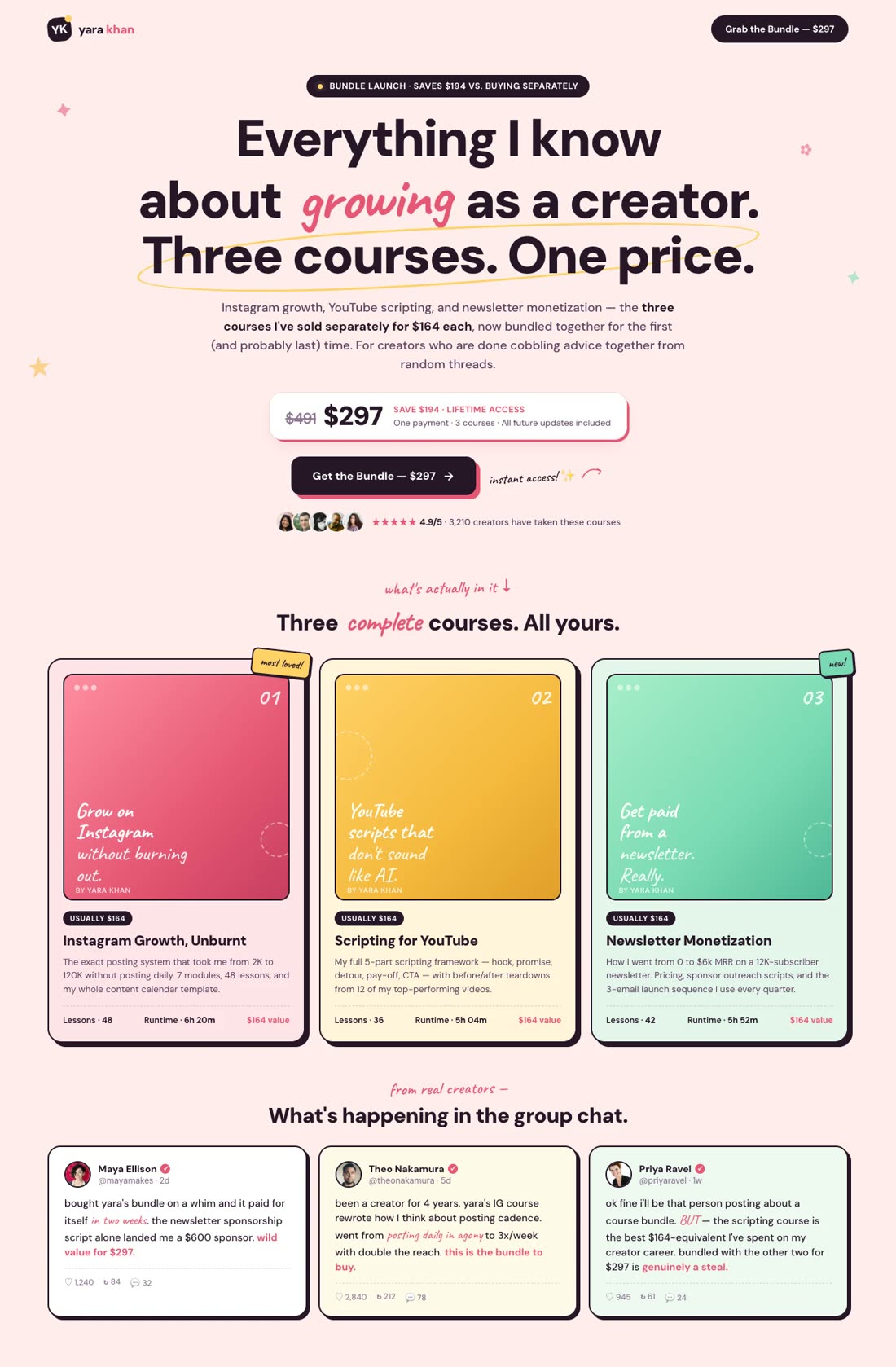
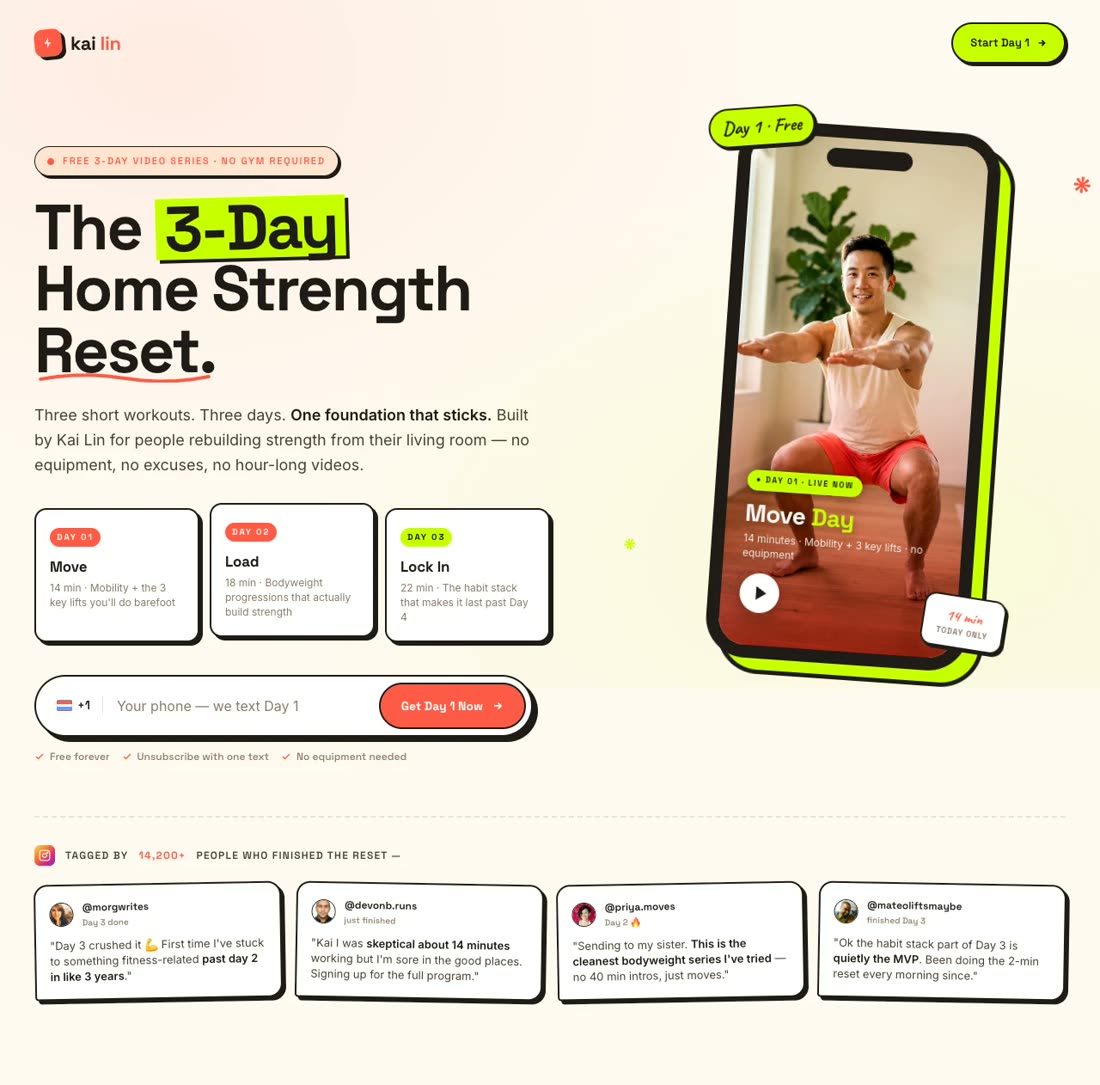
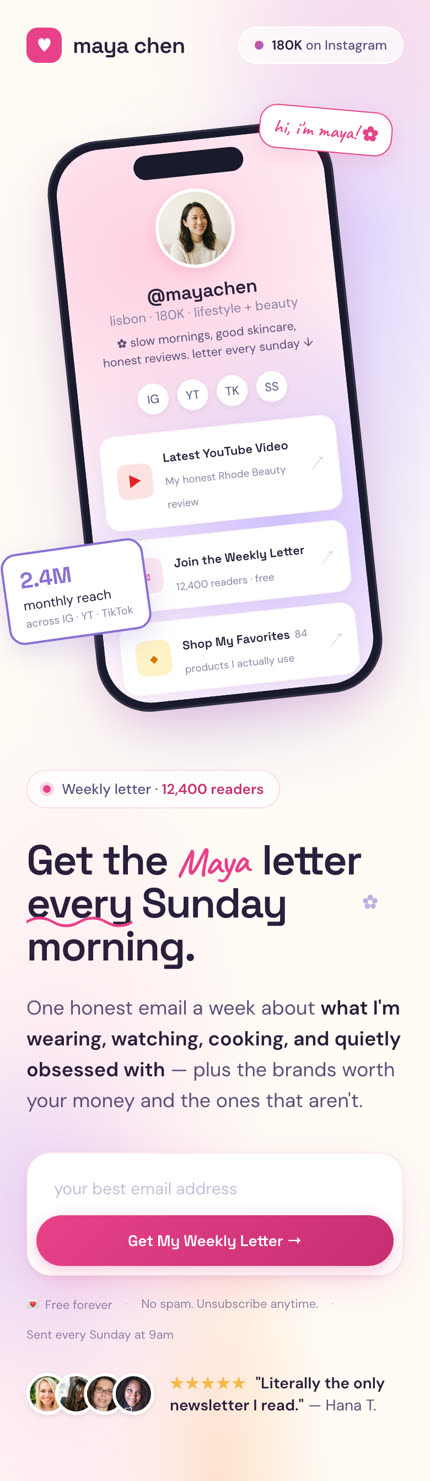
Creator Link-in-Bio

"Design a personal landing page for Maya Chen, a lifestyle creator on Instagram and YouTube with 180K followers. Playful creator feel with pastel pink and lavender, photo-led hero..."

Lifestyle Creator Hub

Executive Coach

"Build a personal landing page for Dr. Elena Vasquez, a senior leadership coach working with VP-level clients at Fortune 500 companies. Premium corporate feel with deep navy and cream..."

Fortune 500 Leadership Coach

Developer Freelance

"Create a personal landing page for Sam Kim, a senior software engineer open to freelance and consulting work. Technical minimalist with dark background, monospace typography..."

Senior Engineer for Hire

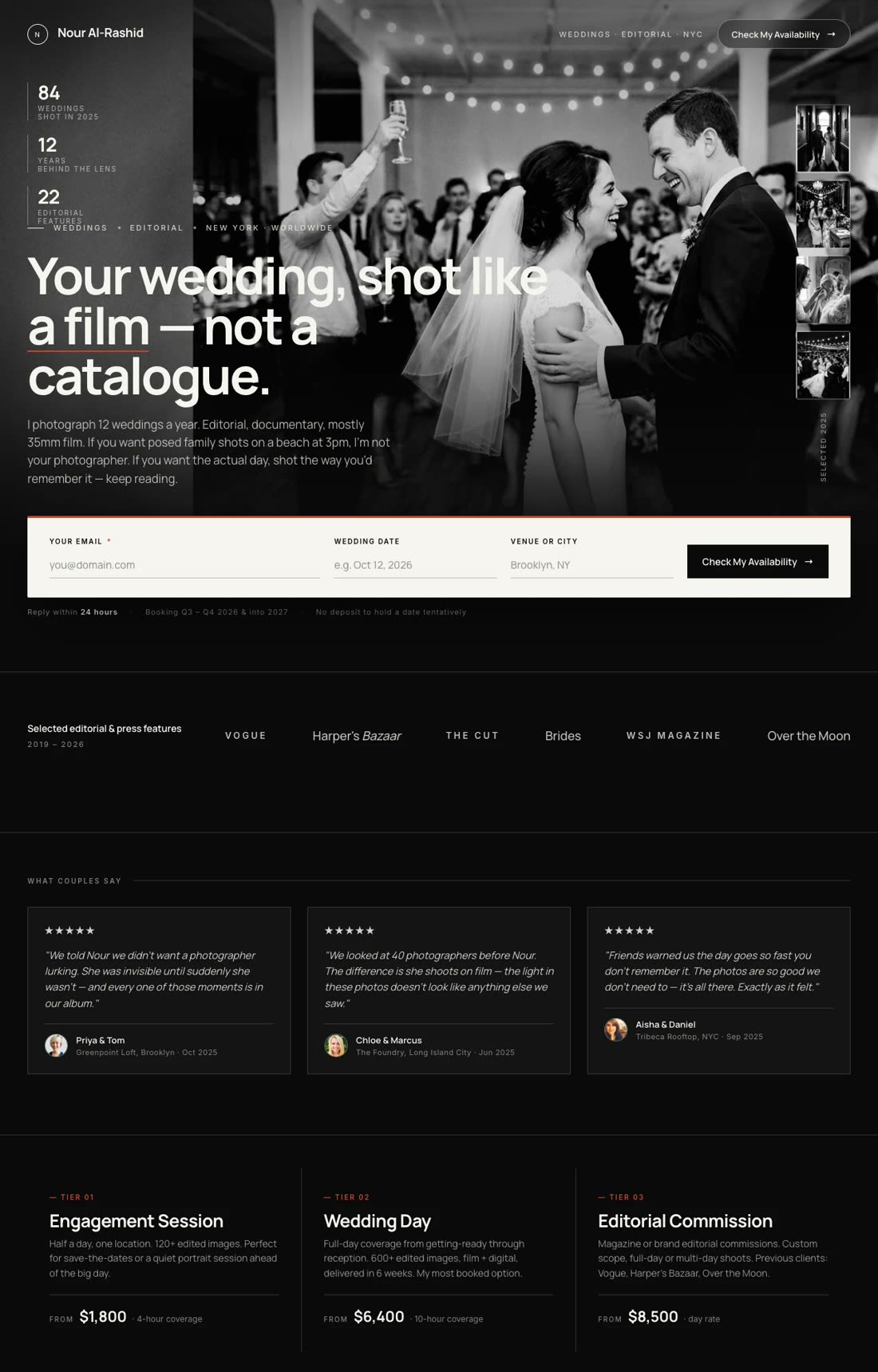
Photographer Portfolio

"Design a personal landing page for Nour Al-Rashid, a wedding and editorial photographer in NYC. Visual-first, full-bleed image carousel hero with Nour's best shots..."

NYC Wedding Photographer

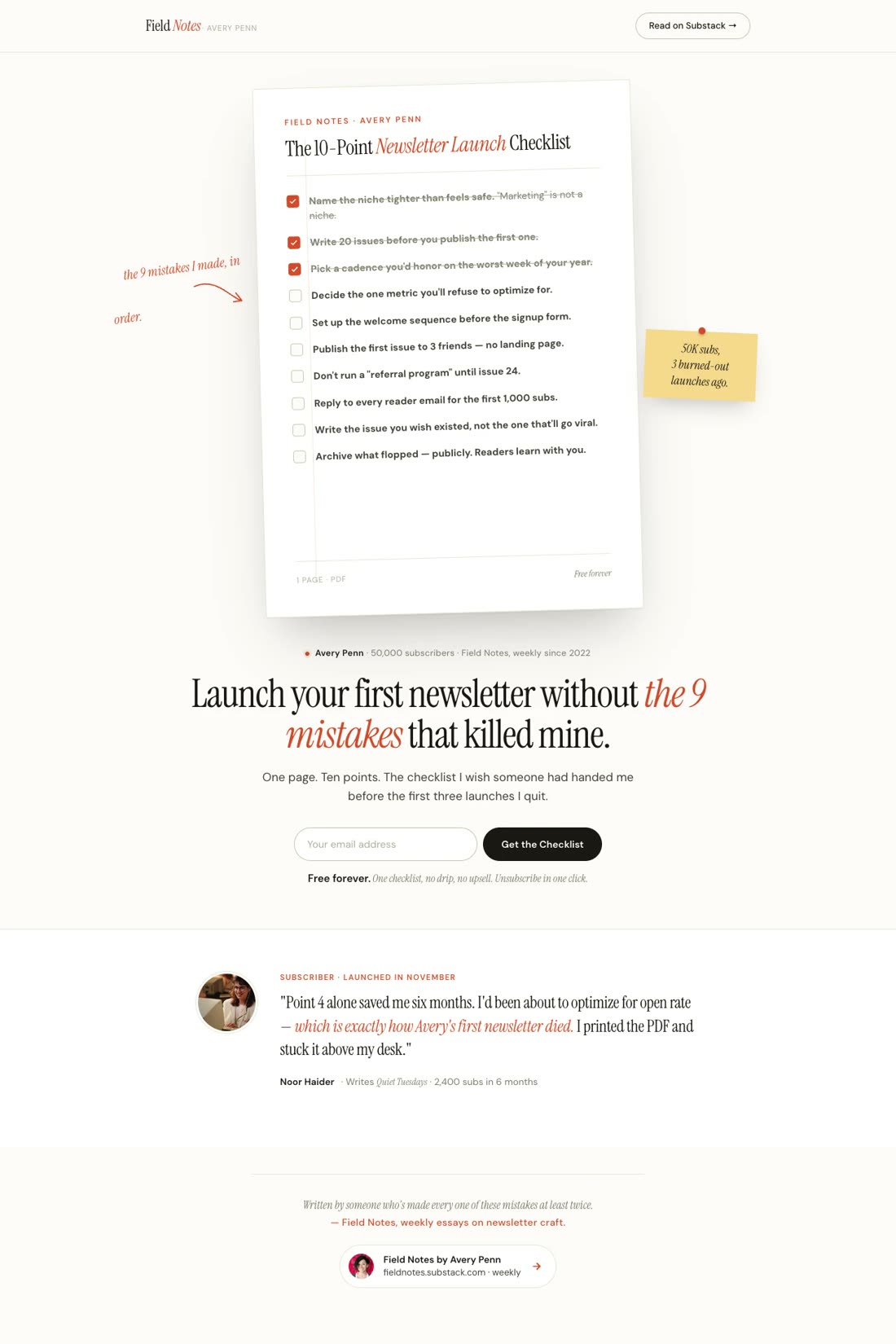
Journalist Press Page

"Build a personal landing page for James Holt, an independent journalist writing about tech policy — previously at The Atlantic and Wired. Literary feel with warm cream and deep red accent..."

Independent Tech Journalist

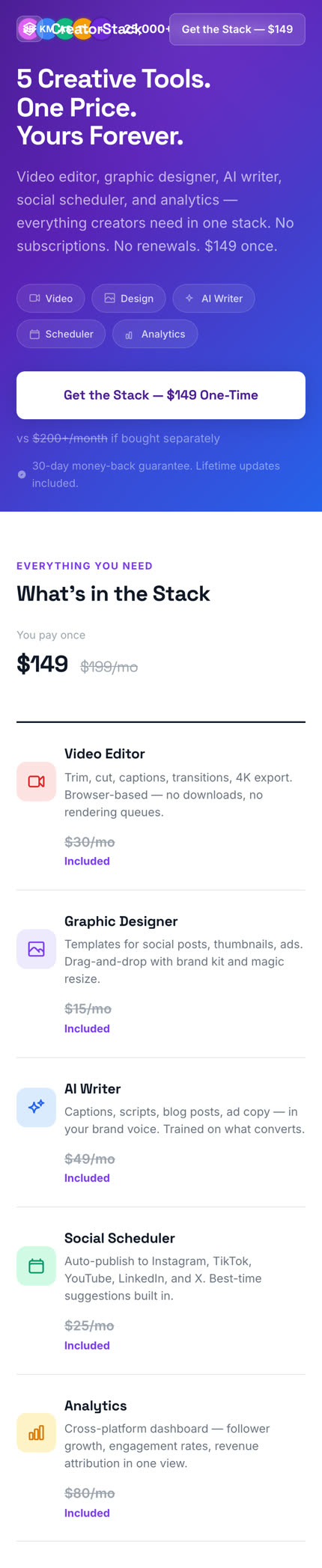
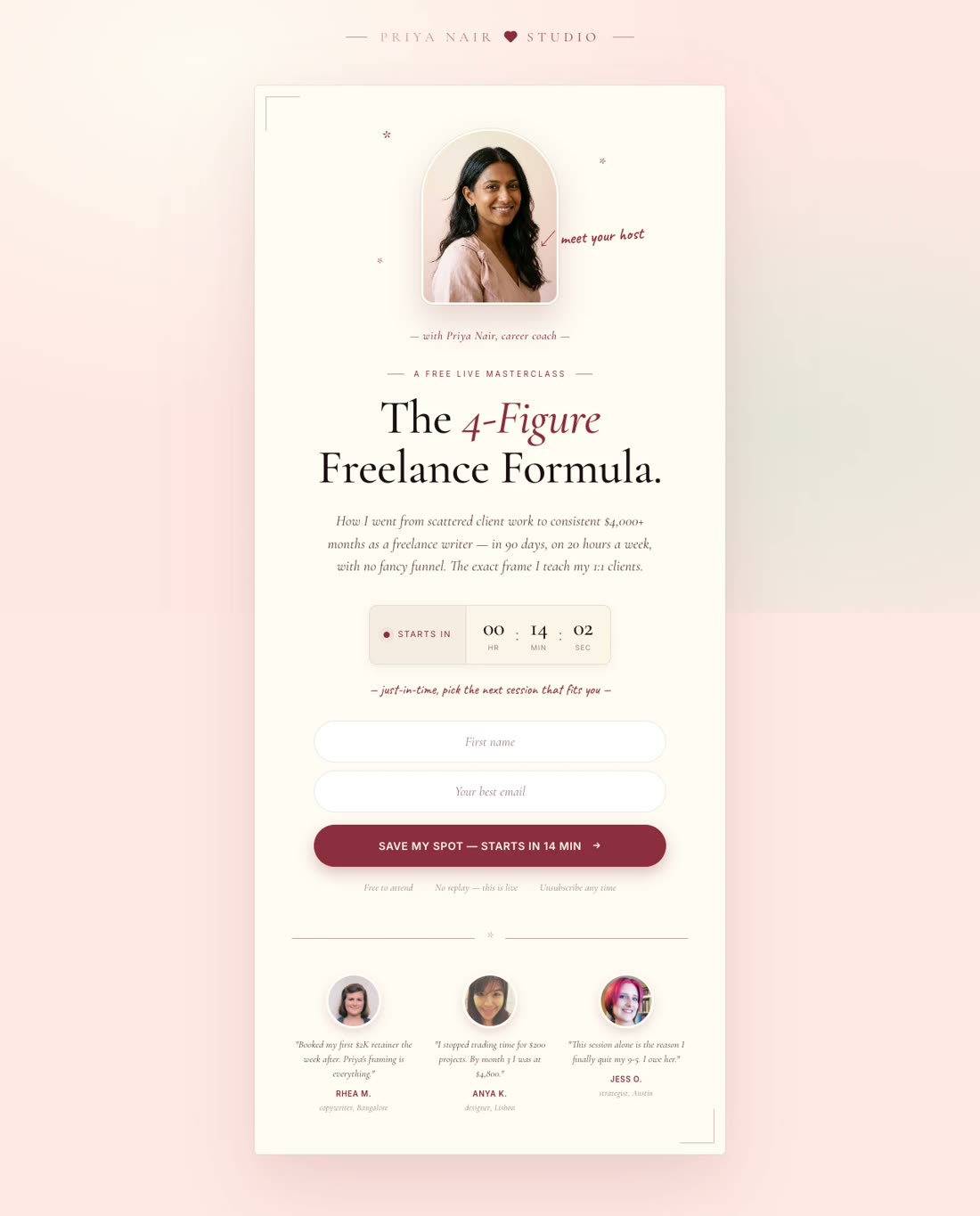
Career Coach Booking

"Create a personal landing page for Priya Desai, a career coach specializing in tech career transitions. Modern professional feel with soft sage and warm white..."

Tech Career Coach

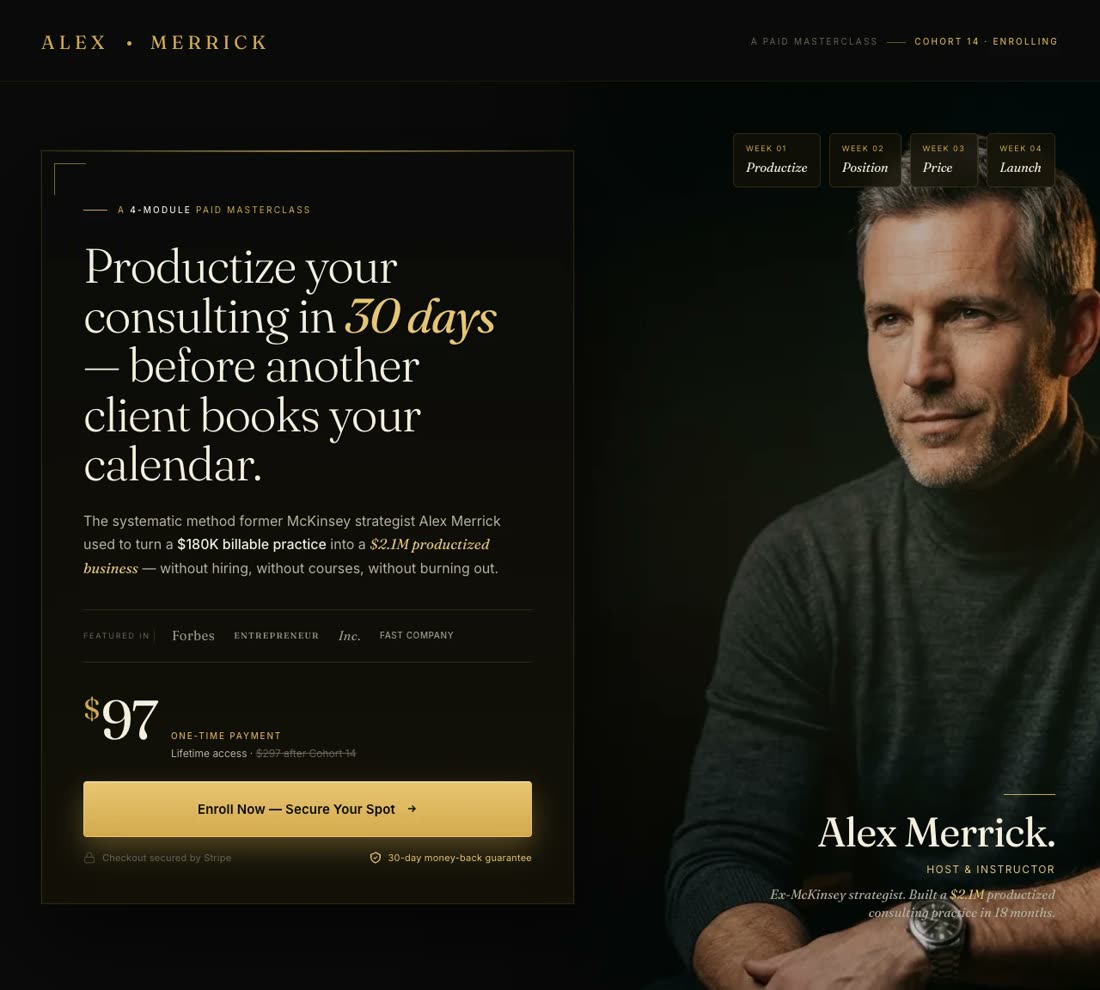
Keynote Speaker

"Build a personal landing page for Marcus Lindqvist, a keynote speaker on AI and the future of work — previously a partner at McKinsey. Conference-ready feel with deep black and gold accents..."

AI Keynote Speaker

Build Your Personal Landing Page

No Credit Card Required | Try for Free

How It Works

How to create a personal landing page

01

Describe Who You Are & What You Do

Share your role, services or content, target audience, and what you want the page to accomplish — bookings, inquiries, portfolio views, newsletter signups, or link-in-bio clicks.

02

Match Your Brand Style

Pick a design preset or let the AI pull your brand identity automatically — your existing website, a color palette, or just a photo of you.

03

Watch Swipe Pages AI Create Your Personal Page

The AI builds the complete page — hero, about, services or work samples, testimonials, contact or booking form — structured to convert visitors into the action you care about.

04

Edit & Publish

Chat with the AI to swap your photo, adjust services, add new portfolio pieces, or A/B test a second headline. Hit publish — the page goes live on a global CDN in seconds, ready to share on your LinkedIn, Instagram bio, or email signature.

Worth reading before you build

Why you need a personal landing page

important!

The link in your Instagram bio used to be a throwaway. In 2026, it's a revenue channel — and the quality of what sits at the end of that link is the difference between being taken seriously and being scrolled past. The pattern is showing up across every creator, freelancer, coach, and personal brand this year. They don't send traffic to LinkedIn. They don't send it to their Notion page. They don't send it to a Linktree wall of 14 links. They send it to a single, purpose-built personal landing page.

A good personal page answers three questions in the first five seconds: who are you, what do you do, and what should I do next? Miss that window and you've lost the visitor — according to 2026 landing page statistics, 86% of visitors leave a landing page within 10 seconds if the value isn't clear. That's brutal math for a personal page, where the visitor is usually someone who just heard your name — in a podcast, a pitch email, a LinkedIn post, a Twitter thread — and is deciding in real time whether to take you seriously.

The math on the other side is equally stark. Personalized CTAs convert 202% better than generic ones per 2026 benchmarks. A single clear call to action outperforms cluttered pages by 371%. Video in the hero lifts conversion by 86%. These numbers aren't marginal — they're the difference between a page that earns you clients, opportunities, and speaking invites, and one that's digital furniture.

The format matters too. Freelancers and consultants need a page that sells services, shows work, and makes booking frictionless. Creators need a link-in-bio hub that routes followers into whatever matters most this week — the newsletter, the latest video, the sponsor inquiry, the merch drop. Writers and journalists need a press page that shows bylines, drives newsletter signups, and catches commission inquiries. Coaches and practitioners need a services-plus-booking page that handles the discovery-call-to-close funnel. The one thing they all share: a page that feels like a person, not a corporate brochure.

The old playbook for personal branding — "build a WordPress site, pick a theme, fiddle with plugins, give up halfway" — is dead. Freelancers, creators, and professionals who treat their personal page as a 20-minute project that updates every month, not a one-time build that sits stale for three years, are the ones winning attention and bookings in 2026. Monthly updates take 15 minutes on an AI-native builder; they take half a day on WordPress, which is why WordPress pages stay stale.

The platforms that enable this workflow — AI-native, mobile-first, frictionless to update — are the ones taking share from the legacy website builders that treated personal pages as an afterthought. For inspiration on what high-converting personal and creator pages look like, see the Swipe Pages blog's 12 Best Landing Page Examples for Creators of 2026 for the patterns the best personal brands use.

Features

Everything you need for your personal page. Nothing you don't.

Create a personal page for a freelance brand designer

Every Personal Page Type — One Prompt Away

Freelancer portfolios, creator link-in-bio hubs, consultant service pages, personal brand pages, photographer booking pages, speaker one-sheets — the AI creates any of these aligned to your brand in minutes.

Brand Match
Colors
Font Newsreader

Variants for Different Audiences

Different audiences need different pitches. Spin up a version for clients, another for press, another for recruiters — all brand-consistent, all in minutes.

Audit Complete

Idea: Change CTA text to "Start Free Trial" to lift conversions by ~12%.

Apply
Dismiss

CRO AI Agent

Analyzes your live personal page and suggests data-backed tweaks — hero headline, photo choice, CTA copy — to turn visitors into inquiries.

Winner
14.2%
Variant A
vs
8.5%
Variant B

A/B Testing & Built-In Analytics

Server-side split testing with zero flicker. Test your headline, your photo, your CTA copy, your bio framing. Built-in analytics show statistical significance automatically.

99

Blazing Fast

Sub-second load times on a global CDN. Your page loads before the visitor even questions whether to wait.

Brand designer for founders who don't blend in.
Start a project · intro call
Book an Intro Call
80%
Mobile visits
< 1s
Load on 4G

Mobile-First Link-in-Bio

Most traffic to a personal page arrives from a phone — Instagram, LinkedIn, Twitter. Swipe Pages serves mobile-optimized layouts with thumb-friendly forms and sticky CTAs by default.

SP

Integrations with Your Stack

Calendly, ConvertKit, Mailchimp, Notion, Airtable, Zapier, and more. Inquiries flow directly into your scheduler or CRM — no manual email forwarding.

Startup
$29
Marketer
$69
/mo

Pricing That Makes Sense for Solo Professionals

Plans start at $29/mo. No per-visitor fees. No traffic penalties when your viral post drives a spike. Startup plan covers 20,000 visitors comfortably for most freelancers and creators.

What's your goal?
Generate Leads
Sell Products

Inquiry & Booking Forms

Build intake forms, project briefs, or discovery-call bookings natively. Qualify inquiries before they hit your inbox.

Social Proof

Trusted by 7,000+ teams worldwide

4.8
★★★★★
G2
4.9
★★★★★
Capterra
300+ reviews
Freelancer
★★★★★

"Time is what's more important for me... As a digital marketing freelancer, you have so many things to do, and when you can save so many hours easily, it's just a no-brainer."

Jonathan B.

Google Ads Expert · G2

Solopreneur
★★★★★

"I love how easy this software is to use and that it integrates with my three other primary software systems; it's a no-brainer!"

Kymberlee M.

Coach · Capterra

Solo Founder
★★★★★

"I create landing pages for my own business and love how robust this tool feels."

Miriam G.

CEO · Capterra

Ease of Use
★★★★★

"Even for people with no prior web design experience. Its drag and drop interface makes creating beautiful, professional-looking websites simple and fast."

Aditya S.

Proprietor · G2

No-Code
★★★★★

"I highly recommend it to all who don't know much about coding but want to build a fast and easy landing page."

Victor B.

Product Manager · Capterra

Speed
★★★★★

"I have seen landing page FCP under 800ms."

Sai Vivek R.

Digital Marketing Consultant · Capterra

Link-in-Bio Fit
★★★★★

"I am producing landing pages for affiliate marketing and bio-link pages for Instagram."

Klemen V.

Consultant · Capterra

Results
★★★★★

"It is a great product that allows you to quickly create landing pages and make them high converting without having to hire a developer."

Hugo H.

CMO · G2

Replaced Tools
★★★★★

"If you're looking for a Leadpages or Unbounce alternative (or of the other major landing page platforms), look no further."

Neal T.

Founder/Coach · Capterra

FAQ

Frequently asked questions

A personal landing page is the single highest-leverage marketing asset a solo professional, creator, or freelancer can have — and almost nobody gets it right. Most people default to one of three bad options: a LinkedIn profile (not yours, not designed to convert), a Linktree wall of links (no story, no differentiation, no trust-building), or an abandoned WordPress site from three years ago that still says "coming soon" on the About page. All three leave money and opportunities on the table.

Here's the math. According to 2026 landing page statistics, a personalized call-to-action converts 202% better than a generic one. A single clear CTA outperforms cluttered pages by 371%. Video in the hero lifts conversion by 86%. Pages where the visitor can feel the person behind them convert at double-digit rates; pages where they can't feel the person barely break 2%. This isn't marginal — it's the difference between your personal page being a revenue source and a digital business card.

The stakes are especially high because of where personal page traffic comes from. It's referral-heavy — somebody just heard your name on a podcast, read your tweet, got your LinkedIn DM, watched your YouTube video, or received an intro email. They're curious, not committed. Your page has roughly ten seconds to pass the "is this person legit, and what exactly do they do?" test. Miss that window and you've lost them for good. 86% of visitors leave a landing page within 10 seconds if the value isn't clear — on a personal page, where the visitor started in evaluation mode, that number is probably higher.

Different professions need different personal pages — freelancer services, creator link-in-bio, consultant service menu, writer press page, real estate personal brand — but they all share one thing: a single page that answers who you are, what you do, and what happens next. The freelancers and creators winning in 2026 treat this page as core infrastructure, not a vanity project.

High-converting personal landing pages share a predictable skeleton regardless of profession. The elements flex to fit freelancer vs creator vs consultant, but the structure repeats.

Hero that makes the positioning instant. Your headline should answer "who you are and what you do" in one sentence. "Brand designer for founders who don't want to look like everyone else." "Career coach for tech professionals who are stuck." "Wedding photographer for the couples who hate posed photos." Specificity beats breadth. A narrow positioning that resonates deeply with your target audience will out-convert a broad one every time. Personal pages that try to be for everyone end up being for no one.

A real photo of you, not a logo. This is non-negotiable on a personal page. Visitors want to see the person. A professional headshot, a casual candid, or a photo in your work environment — anything that shows you as a human. Stock photography and logos kill trust on personal pages.

Short, confident about section. Three to six sentences. Lead with what you do, who you do it for, and one specific piece of credibility ("Previously shipped growth at Webflow and Notion" or "$14M in home sales in 2025 alone"). The about section is not a biography — it's a positioning statement written in first person. Skip the childhood origin story unless it directly serves the pitch.

Services, work, or content — clearly structured. Freelancers and consultants need service tiers with "starting at" pricing. Three options work better than two. Creators need a recent content grid with a priority stack — what do you most want followers to do first? Writers need featured bylines with publication logos. Photographers and designers need a 6 to 9 piece portfolio grid with single-line captions. Depth beats breadth.

Social proof that feels specific. For personal pages, social proof is credentials plus testimonials plus selective name-dropping. Client logos if you have recognizable ones. Video or written testimonials from 3 to 5 past clients. Press mentions if relevant. "Increased sign-ups 340% in 8 weeks" beats "great to work with."

A single, frictionless CTA. "Book an Intro Call," "Start a Project," "Subscribe to the Newsletter," "Request My Rate Card." One action, repeated at the hero, mid-page, and footer. Never offer six competing CTAs on a personal page — the visitor will choose none.

Mobile-first everywhere. Most personal page traffic arrives from a phone — Instagram bio link, LinkedIn post, Twitter thread, podcast show notes. Your page needs to work beautifully at 375px: stacked sections, full-width CTAs, tappable contact options. Desktop is secondary on personal pages.

These patterns separate the top 10% of personal pages from the rest. They're specific to the personal-brand format and tested across thousands of freelancer, creator, and consultant pages.

Position narrow, then expand later. "Freelance writer" loses to "B2B SaaS writer for early-stage startups." "Career coach" loses to "Career coach for senior ICs moving into tech management." The narrower your positioning, the stronger the relevance signal for the right buyer. Broad positioning feels generic and forgettable. You can always expand later once the narrow version is working.

Lead with a verifiable result, not a credential. "Former Google engineer" is a credential; "Shipped the search ranking system used by 4 billion people" is a result. Credentials say you worked somewhere; results say what you did there. Results earn trust; credentials just borrow it.

Show personality in one visual detail. The best personal pages leak personality. A handwritten scribble above the headline. A hand-drawn arrow pointing to the CTA. A quirky color palette. A candid photo instead of a corporate headshot. One unexpected detail turns a page from "another professional" into "someone I want to work with."

Write the About section in first person. "I help..." beats "Elena helps..." The third-person corporate-bio voice is the single biggest personal-page mistake. It reads as if you outsourced your own bio. First person signals confidence and authenticity, which are the two things a personal page is actually selling.

Put the CTA where a hand naturally scrolls. On mobile, that's in the hero (above the fold), right after the first scroll break (after the About section), and at the bottom of the page. On desktop, it's the same three spots plus a sticky header CTA. Visitors who are ready to book don't want to scroll looking for your contact form.

Use a real calendar or booking integration — never an email. "Email me at..." lost ten years ago. Calendly, Savvy Cal, Cal.com, or a native booking form embedded on the page. Reducing friction from "I'm interested" to "I'm booked" is the single highest-leverage change you can make on a services page.

Update it monthly, not annually. Personal pages decay fast. New work, new testimonials, new offers, updated positioning. A page updated this month signals you're active and working. A page last updated 18 months ago signals the opposite. Monthly updates take 15 minutes on an AI-native builder; they take half a day on WordPress, which is why WordPress pages stay stale.

Show mobile traffic the shortest path to action. On a phone, your hero should have a tap-to-call or tap-to-book button visible without scrolling. Mobile visitors often arrive with high intent but short attention — make the action one thumb movement away.

Most personal pages are never measured at all — they're built once and forgotten. That's the single biggest improvement opportunity. Even basic measurement puts you ahead of 95% of personal brands.

Primary KPI: Conversion on your one CTA. Whatever your CTA is — booking calls, inquiries, newsletter signups, portfolio views — measure that rate. Healthy personal pages target 5-15% conversion on their primary action for warm traffic (referrals, direct links). Cold traffic lands lower (2-5%). Below 2% means something is broken — usually the positioning, the headline, or the CTA placement.

Time on page. For a personal page, 30-90 seconds is healthy. Under 15 seconds means your hero isn't passing the 10-second test. Over 3 minutes might mean the visitor is confused or the close isn't clear.

Scroll depth. Are visitors getting past the hero? Past the services? Past the social proof? If 70% bounce before the services section, your hero isn't compelling. If they scroll past the CTA without clicking, the CTA copy or placement is the issue.

Device split. Personal pages skew mobile (often 70-80%). If your mobile conversion rate is under half your desktop rate, your mobile UX is broken — usually tap targets, loading speed, or form design.

Referral source. Which channel sends the best-converting traffic? LinkedIn? Twitter? A specific podcast? Double down on what works.

What to A/B test (in order of impact): hero headline and positioning (specific vs broad, outcome-focused vs role-focused), hero photo (professional headshot vs candid vs in-environment — photos move numbers more than any other element on personal pages), CTA copy ("Book a Call" vs "Start a Project" vs "Request My Rate Card" vs "Work With Me"), services framing (three tiers vs two vs bespoke, price shown vs hidden), and about section length (short vs medium vs full bio — usually shorter wins).

Analytics setup: GA4 with your CTA action as a conversion event. Calendly, Cal.com, or your booking tool's analytics for call completion. UTMs on your Instagram bio, LinkedIn, Twitter, and email signature so you know which channel is driving the good traffic. Hotjar or Microsoft Clarity heatmaps to see where visitors actually engage. Swipe Pages handles A/B testing and built-in analytics natively so you can iterate without a stack of separate tools.

Solo professionals, freelancers, creators, and personal brands need a very specific set of capabilities: fast to build, fast to update, mobile-first, professional enough to sell high-ticket services, and priced for someone who isn't yet running a team. Swipe Pages delivers exactly that.

AI that builds every personal page type from a prompt. Freelancer portfolios, creator link-in-bio hubs, consultant service pages, photographer booking pages, writer press pages, real estate personal brand pages. Describe who you are and what you do, and the AI drafts a full personal page in minutes — hero, about, services or work, testimonials, contact or booking form. Want a different version for clients vs press vs recruiters? Spin up variants in a few more minutes.

Mobile-first by default — which is where personal pages live. Most personal page traffic arrives from a phone: Instagram bio link, LinkedIn post share, Twitter thread, podcast show notes. Swipe Pages ships mobile-optimized pages by default — sticky CTAs, thumb-zone forms, swipe-friendly portfolio grids, tap-to-call links. This isn't responsive design bolted on — it's how the pages are built.

Sub-second load times on a global CDN. 86% of visitors leave a landing page within 10 seconds if the value isn't clear. On slow pages, that ten-second clock starts after the page loads — and cheap builders routinely take 3-5 seconds to render. Swipe Pages loads in under a second, on every device, from every region. Your first impression is made before the visitor's finger leaves the screen.

A/B testing and analytics, natively. Server-side split testing with zero flicker. Test your headline, your photo, your positioning, your CTA — all inside Swipe Pages. Built-in analytics show statistical significance automatically. For a freelancer or creator, this means iterating on the pitch until it actually books calls, not flying blind.

CRO AI agent for continuous optimization. Your first personal page is a hypothesis. The CRO AI agent analyzes performance — scroll depth, form abandonment, bounce rate — and suggests specific tweaks. For a solo professional who doesn't have a conversion consultant on retainer, this built-in optimization loop is the difference between a page that keeps working and one that quietly decays.

Integrations with your solo stack. Calendly and Cal.com for booking. ConvertKit, Mailchimp, and ActiveCampaign for newsletter and nurture sequences. Notion and Airtable for project intake. Stripe for simple paid offerings. Zapier for everything else. Every inquiry and every signup flows directly into the tools you already use — no manual email forwarding.

Pricing that makes sense for solo professionals. Plans start at $29/mo with everything included — AI, A/B testing, analytics, integrations, multi-step forms. No per-visitor fees. No traffic penalties when your LinkedIn post goes viral. The Startup plan handles most freelancer and creator needs comfortably. 14-day free trial, no credit card required.

7,000+ customers, 300+ reviews at 4.8-4.9 average. For solo professionals who need a personal page that actually sells — not just looks like a website — this is the platform.

Start building your personal landing page

Go from prompt to professional personal page in minutes. 14-day free trial, no credit card required.

No credit card required · Instant setup