Landing Page Builder

Create a B2B Landing Page

Go from idea to a conversion-optimized B2B landing page in minutes — demo booking, gated content, case studies, enterprise lead gen, all generated by AI

No credit card required · 14-day free trial

Examples

B2B landing pages built with one prompt

From enterprise demo booking to ABM campaigns and gated content — see what the AI creates for real B2B marketing teams.

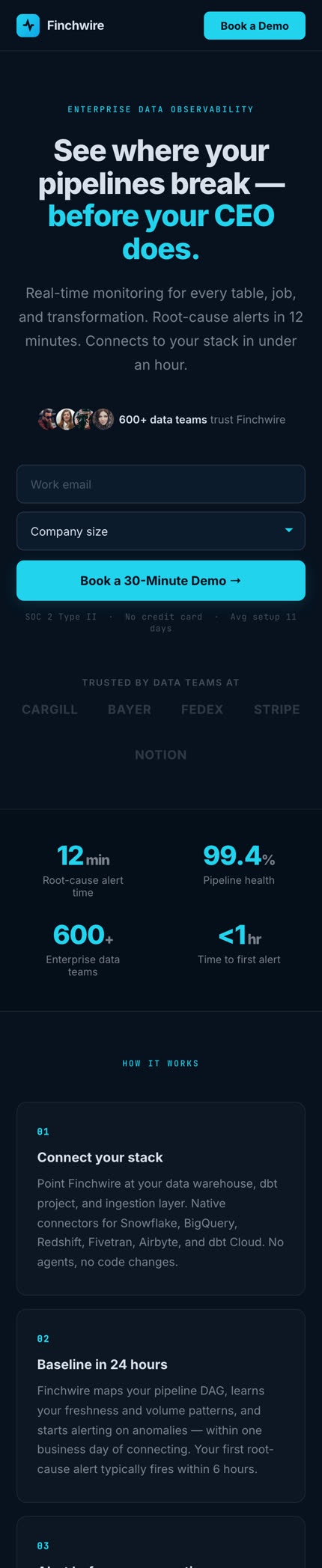
Enterprise Demo Booking

"Create a demo-booking landing page for Finchwire, an enterprise data observability platform. Corporate feel — deep navy background, off-white typography, cyan accents..."

Finchwire Data Observability

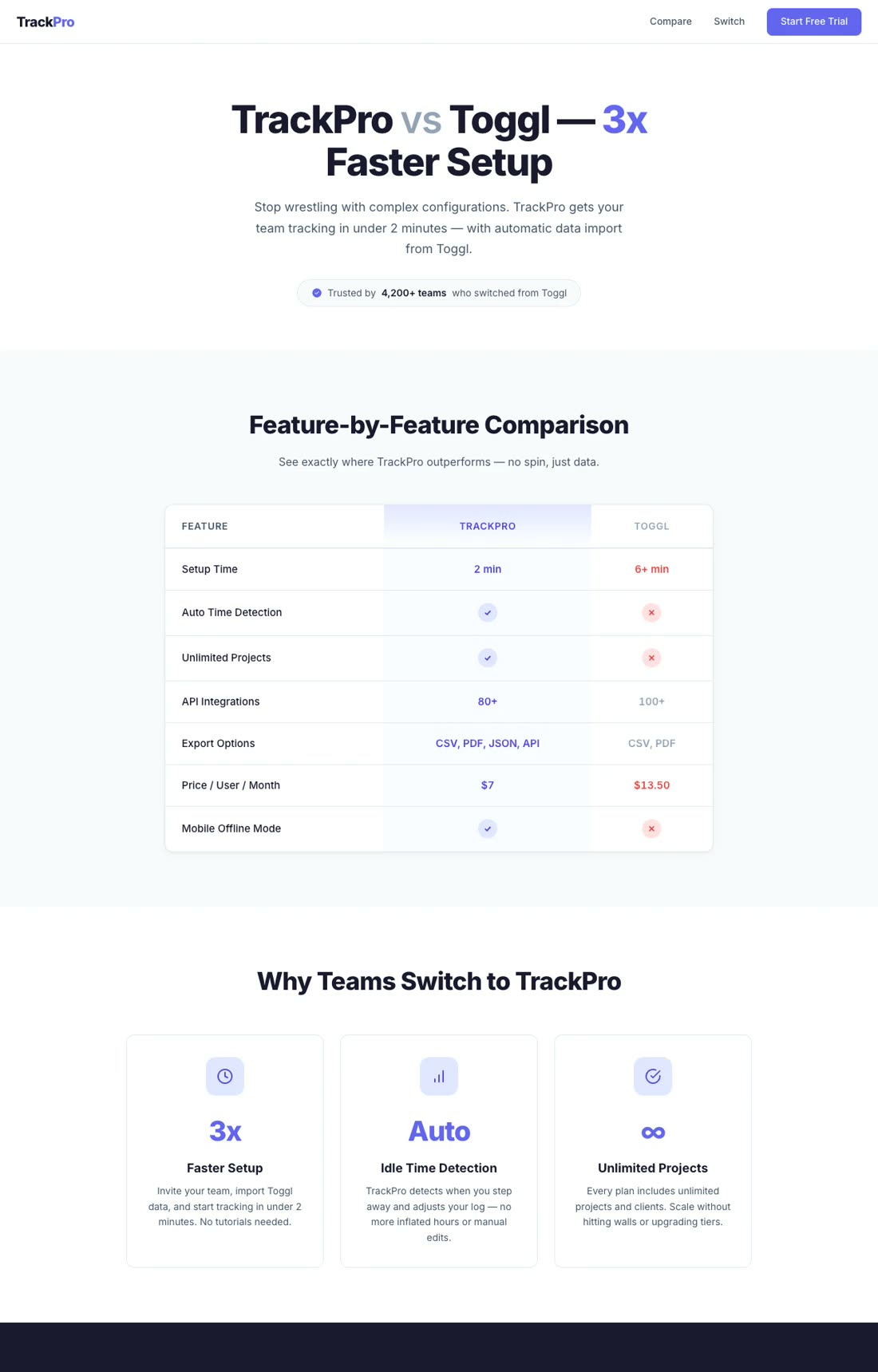
Competitor Comparison

"Build a comparison landing page for Apex CRM positioning against HubSpot. Bold category-disrupt feel — high-contrast white background, black headlines, electric blue accent..."

Apex CRM vs HubSpot

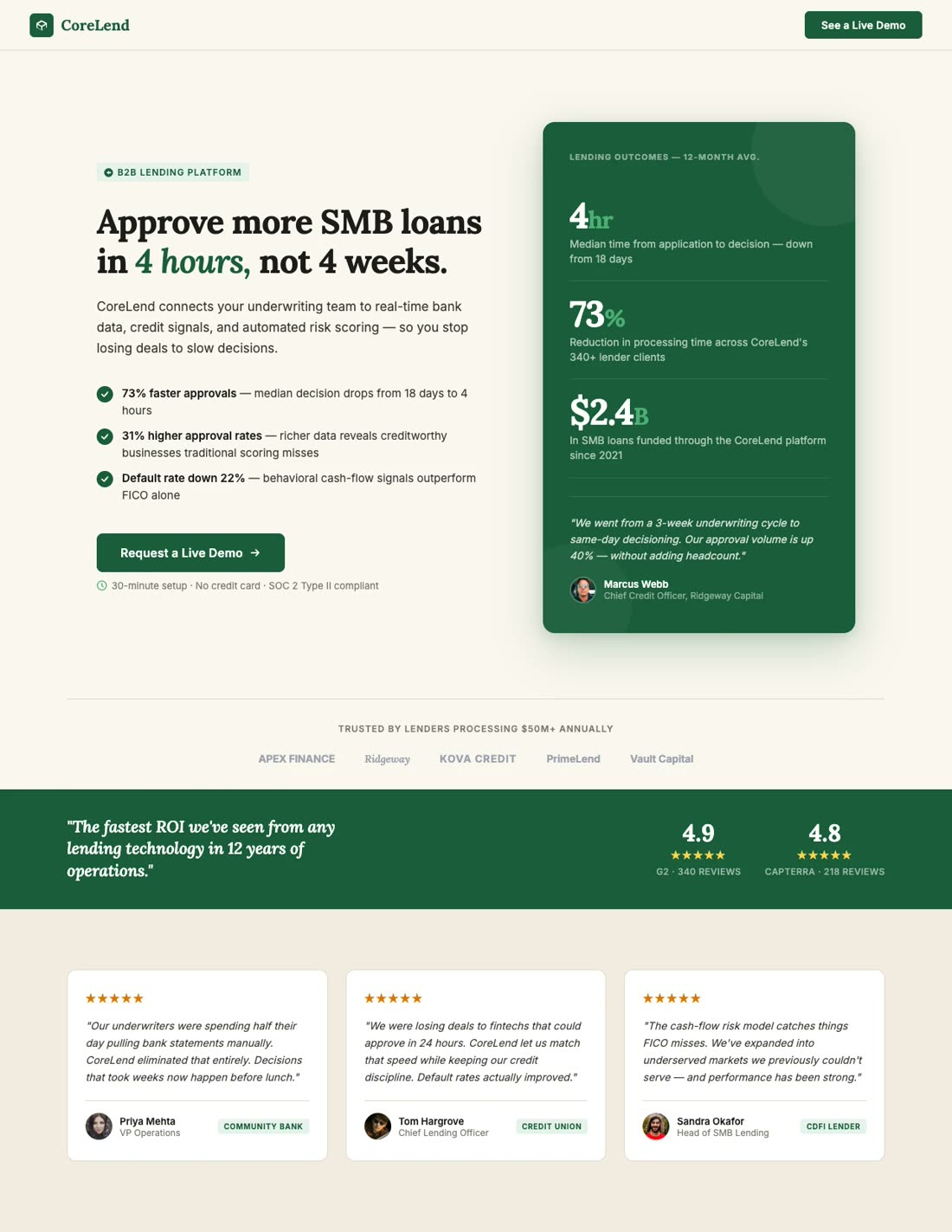
Case Study Lead-Gen

"Build a case-study-as-landing-page for CoreLend, a commercial lending SaaS. Editorial feel — cream background, deep green accent, serif headlines..."

CoreLend Regional Trust Story

B2B Free Trial

"Design a free-trial landing page for PulseHR, a mid-market HR platform. Clean professional feel — soft blue background, white cards, rounded sans-serif..."

PulseHR Free Trial

ABM Personalized

"Create an account-based marketing landing page for Velocity Ops, a DevEx platform, targeting engineering leaders at named enterprise accounts. Modern athletic feel — dark background, vivid orange accent..."

Velocity Ops ABM Campaign

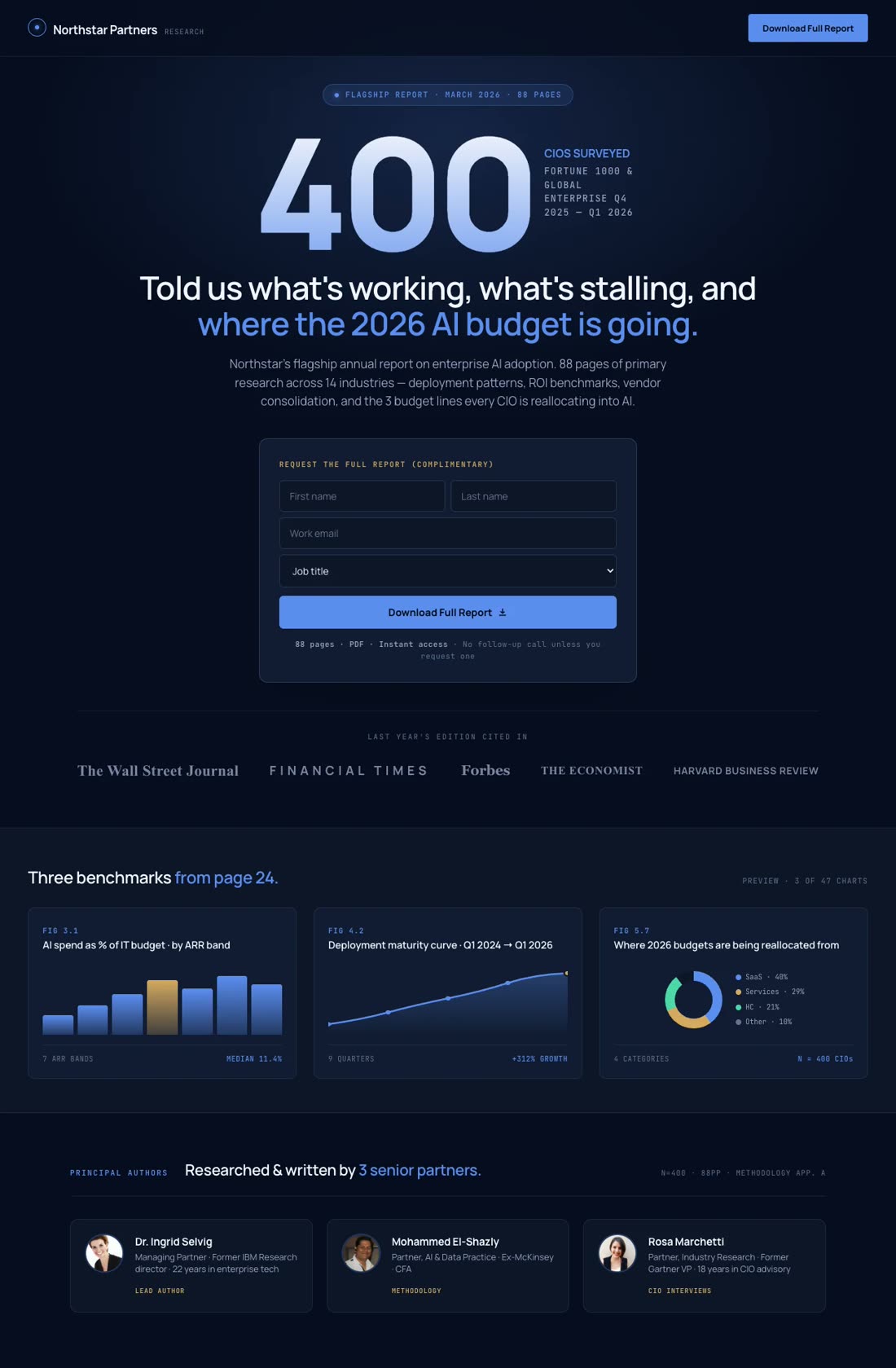
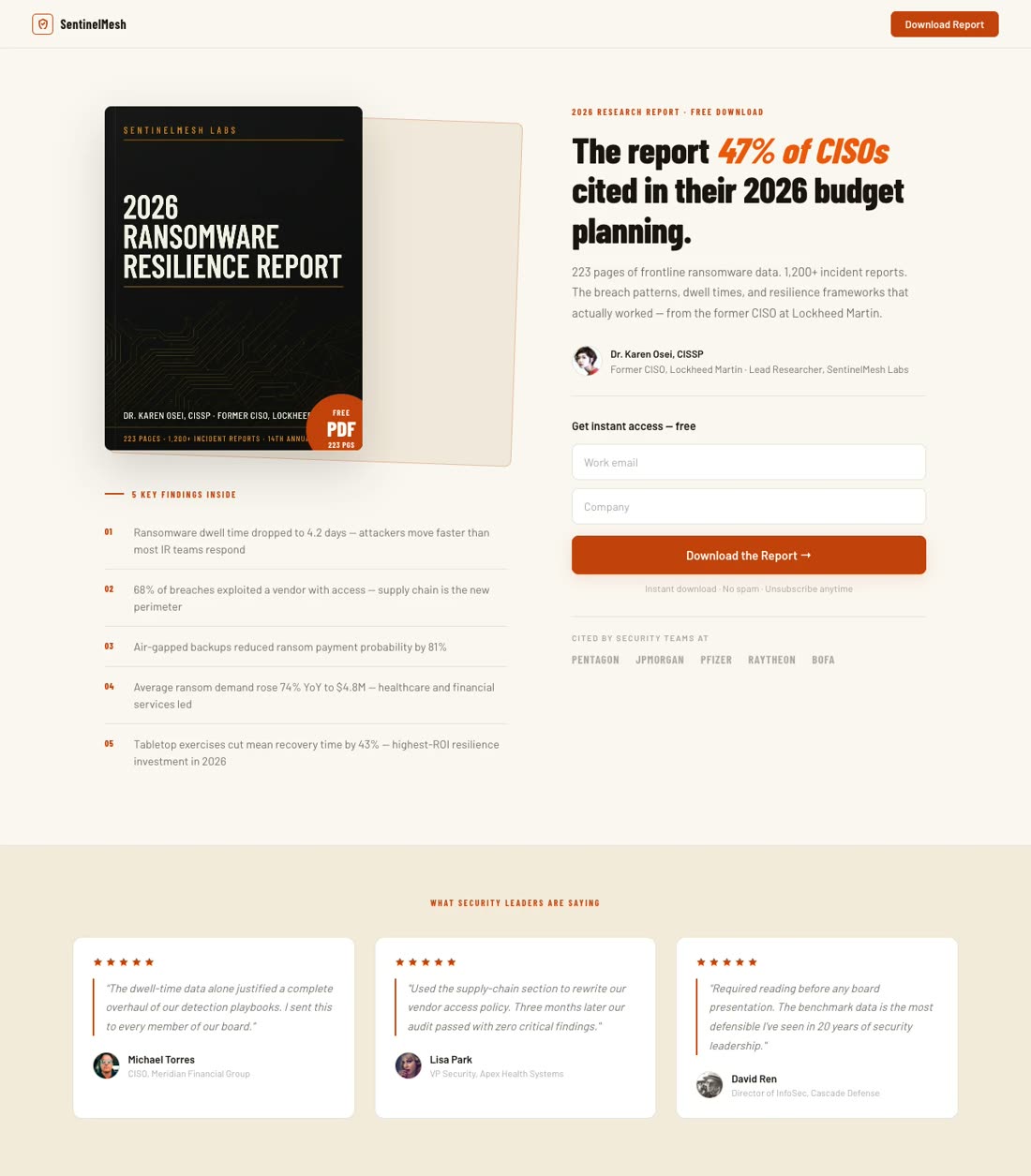
Gated Whitepaper

"Design a gated-content landing page for SentinelMesh's 'The 2026 Ransomware Resilience Report.' Authoritative feel — black background, muted amber accent..."

SentinelMesh Ransomware Report

Build Your B2B Landing Page

No Credit Card Required | Try for Free

How It Works

How to create a B2B landing page

01

Describe Your Product, ICP & Campaign Goal

Share your B2B product, target buyer (role, company size, industry), and campaign goal — demo bookings, gated downloads, trial signups, or ABM account engagement. Paste your existing product page or upload a one-pager.

02

Match Your Brand Style

Pick a design preset or let the AI pull your brand identity automatically from your website — colors, typography, logo, photography style.

03

Watch Swipe Pages AI Create Your B2B Page

The AI builds the complete page — hero, positioning, trust bar, value props, social proof, qualification form — structured to convert enterprise and mid-market buyers.

04

Edit & Publish

Chat with the AI to swap customer logos, adjust the ICP copy, change the form qualifier, or A/B test a second headline. Hit publish — the page goes live on a global CDN in seconds, ready for your ABM campaigns, LinkedIn ads, and email outreach.

Worth reading before you build

Why B2B companies need landing pages

important!

B2B marketing in 2026 runs on a paradox. The buying committees are larger, the sales cycles are longer, the deal sizes are bigger, and the margin for error is smaller — but the landing pages most B2B companies send their paid traffic to look exactly like they did in 2018. Generic product pages with seven CTAs, buried pricing, no specific ICP targeting, and trust signals limited to a rotating logo carousel.

Here's what the data says. According to 2026 benchmarks compiled across First Page Sage, Genesys Growth, and Martal Group, B2B landing pages have an average conversion rate of 13.28% — more than double the 6.6% median across all industries. Dedicated landing pages convert at 5-15% on average, while full B2B websites sit at 2-3%. The delta is stark: a landing page built for a specific campaign will outconvert the homepage by 4-6x, even with the same traffic and same creative. Sending paid B2B traffic to a homepage instead of a dedicated landing page is the single most expensive mistake in B2B marketing.

Enterprise and SMB funnels behave differently. Enterprise conversion is lower at every stage — enterprise software typically sees 1-2% landing page conversion because the buying committee has 6-10 people and the evaluation cycle is 6-9 months. Financial services, where compliance-driven clarity and regulatory trust matter, see the highest B2B benchmark at 8.4% — 27% above baseline. Cybersecurity sits at 1.0% because the gate between "interested" and "trusted vendor" is months of procurement. You can't fight these fundamentals, but you can absolutely fight whether your landing page converts at the top end of your category or the bottom.

What actually separates top-quartile B2B pages from the rest? A few consistent patterns. The best B2B pages lead with a specific outcome tied to a named customer ("How Regional Trust cut loan processing 10x"). They show a product visual above the fold — not a stock photo of hands shaking. They put real customer logos in a trust bar near the top. They use multi-step qualification forms that filter enterprise leads from kickers. They write headlines for a specific role ("For RevOps leaders managing 200+ reps") instead of generic "business leaders" framing. And they treat the CTA as a conversation, not a transaction — "Book a 30-minute demo" beats "Buy Now" by 40% in enterprise categories. You can see this pattern in action on pages like Shopify's Start Online Store signup page, ActiveCampaign's marketing automation platform page, and Gleap's Intercom alternative page in the Swipe Pages inspiration gallery.

Channel matters too. For enterprise buyers, email converts at 3.1% and paid social at just 0.2-0.1% according to Martal Group's 2026 benchmarks. That doesn't mean paid social is dead in enterprise B2B — it means it builds awareness rather than direct conversion. Your landing page strategy has to match the channel: retargeting pages for paid social visitors, gated content pages for cold LinkedIn traffic, demo booking pages for warm SDR outreach, and case study pages for late-stage buying committee review. One page per audience per stage beats one homepage trying to do everything, by a factor of 5-10x.

The B2B companies winning in 2026 treat landing pages as the unit of campaign strategy — one page per campaign, per segment, per buying stage, per channel. The ones still using their homepage as the paid traffic destination are losing deals to competitors who figured this out. For deeper breakdowns of what today's best B2B and SaaS pages get right, see 12 Best SaaS Landing Page Examples of 2026 on the Swipe Pages blog.

Features

Everything B2B marketers need. Nothing they don't.

Create a demo booking page for my B2B SaaS

Every B2B Page Type — One Prompt Away

Demo booking pages, gated content pages, case study pages, ABM campaigns, free trial pages, webinar registration, whitepaper gates — the AI creates any of these aligned to your brand in minutes.

Brand Match
Colors
Font Newsreader

Personalization at Scale

Build 10 pages for 10 ICP segments in the time it used to take to build one. Match your message to each buying committee persona.

Audit Complete

Idea: Change CTA text to "Start Free Trial" to lift conversions by ~12%.

Apply
Dismiss

CRO AI Agent

Analyzes your live B2B page and suggests data-backed tweaks — headline framing, form length, CTA copy — to lift qualified demo requests.

Competitor Search
G
G2 Reviews
S
SimilarWeb
Pricing Intel
$49 - $199

AI-Powered Research

Competitor positioning analysis, ICP messaging research, social proof extraction. Feed the AI a competitor's landing page and it pulls the hooks, framing, and trust patterns that convert enterprise buyers.

SP

CRM & Marketing Automation

HubSpot, Salesforce, Marketo, ActiveCampaign, Zapier, and more. Leads flow directly into your MQL-to-SQL handoff with full field mapping — no manual exports, no dropped leads.

Winner
14.2%
Variant A
vs
8.5%
Variant B

A/B Testing, Analytics & Attribution

Server-side split testing with zero flicker. Test headlines, CTAs, form length, social proof placement. Built-in analytics show statistical significance instantly. GA4, GTM, Meta CAPI, LinkedIn Insight Tag, and Google Ads conversion tracking for full-funnel MQL/SQL attribution.

99

Blazing Fast

Sub-second load times on a global CDN. Your ABM traffic lands on a page that renders before the tab loses focus.

Startup
$29
Marketer
$69
/mo

Pricing That Makes Sense for B2B Marketers

Plans start at $29/mo. Launch 10 ABM campaigns or one enterprise page — flat pricing, no per-lead fees, no traffic penalty on your LinkedIn Ad burst.

What's your goal?
Generate Leads
Sell Products

Multi-Step Qualification Forms

Build forms that qualify by company size, role, buying authority, and use case. Your sales team gets qualified leads, not raw inquiries. Progressive profiling reduces abandonment while capturing the data you need.

Social Proof

Trusted by 7,000+ teams worldwide

4.8
★★★★★
G2
4.9
★★★★★
Capterra
300+ reviews
B2B Agency Scale
★★★★★

"A Game-Changer for my digital marketing agency! The amount of time this remarkable SaaS has saved me equals hundreds of paid man hours saved!"

Graham

TrustPilot

Client Campaigns
★★★★★

"Great tool for our agency to build high-performing landing pages for 30+ clients. We mainly use it for lead generation, priming, giveaways etc."

Marc D.

Capterra

Speed
★★★★★

"The builder is very intuitive to use yet doesn't lack any power. The pages load blazingly fast because their code is very clean and they use a premium CDN."

Suraj S.

Managing Director · G2

Stability
★★★★★

"Swipe Pages enables us to run hassle-free landing pages that don't need maintenance without worrying about malware nor site defacement."

Leo K.

Writer and Code Wrangler · G2

Multi-Step Forms
★★★★★

"Easy A&B test (more than 2 variants are possible). Built-in multi step forms."

Barry R.

Founder · Capterra

A/B Testing
★★★★★

"Server side A/B testing: allowing to compare different versions of a page to determine which performs best."

G2 Reviewer

G2

Integrations
★★★★★

"Swipepages is incredibly easy to use and has powerful integrations with the tools we use most."

Kamonasish Aayush M.

Co-Founder & CEO · Capterra

Team Scaling
★★★★★

"The simplicity and ease of use of Swipe Pages allow my team to focus on servicing our clients and developing our business without having to worry about coding."

Josh B.

Founder/CEO · Capterra

Long-Term Stability
★★★★★

"It's been almost 2 years since our first published page and all updates since then haven't impacted old pages, which is important for any agency workflow to reduce double work."

Vance W.

Digital Marketing Head · Capterra

FAQ

Frequently asked questions

Most B2B companies send paid traffic — Google Ads, LinkedIn Ads, retargeting, cold outbound — directly to their homepage or a generic product page. That single decision is the biggest unforced error in B2B marketing, and the cost is staggering once you run the numbers.

Here's what the 2026 benchmarks show. Dedicated B2B landing pages convert at an average of 13.28%, according to First Page Sage's 2026 industry report. Full B2B websites convert at 2-3%. That's a 4-6x difference on the same traffic and the same campaign. For a B2B company spending $100,000/month on paid acquisition with a homepage conversion rate of 2%, moving to dedicated landing pages at 10% adds $400,000 of pipeline value per month without spending another dollar on ads. That's the leverage.

The reason landing pages outperform so dramatically in B2B comes down to specificity. A homepage has to serve your existing customers logging into the product, journalists doing research, investors checking metrics, job candidates browsing your culture page, and — somewhere in the mix — the VP of Engineering you paid $450 to reach through LinkedIn Sponsored Content. A dedicated landing page serves exactly one person: that VP. It strips the navigation, removes the distractions, matches the ad creative, and focuses every pixel on a single action — book a demo, download the report, start the trial, or request a sales conversation.

The other dynamic unique to B2B: buying committees. Enterprise deals involve 6-10 people, each with different concerns. Procurement cares about pricing clarity. IT cares about security and compliance. End users care about usability. Executives care about ROI and strategic fit. A homepage tries to address all of these shallowly; a dedicated landing page per buyer persona addresses one of them deeply. The B2B companies winning in 2026 build 5-10 variants of the same campaign — one for each persona — and route traffic accordingly.

Finally, B2B sales cycles are long and landing pages are the most measurable part of the funnel. Every cost-per-MQL, cost-per-SQL, and cost-per-opportunity depends on what happens on the landing page. Optimizing the landing page is the shortest path to improving every downstream number.

Top-quartile B2B landing pages follow a specific skeleton. Skip any element and the conversion gap opens immediately.

Hero with a specific, outcome-tied headline. Not "Transform your operations" but "How Regional Trust cut loan processing from 11 days to 28 hours." Not "Better data analytics" but "See where your pipelines break before your CEO does." The formula is: specific persona + specific outcome + specific mechanism or timeframe. Generic benefit language ("streamline," "optimize," "transform") is table stakes — it tells the visitor nothing about whether the product solves their actual problem.

Product visual above the fold — not a stock photo. B2B buyers want to see the product. A dashboard screenshot at a slight tilt, a mockup of the interface, a short product demo loop, or a feature preview. Stock photography of people in business attire shaking hands is an anti-signal — it tells B2B buyers the company hasn't thought about the product, and they're selling the idea of the product instead of the product itself.

Trust bar with real customer logos. Above the fold, or immediately below. Real logos from recognizable companies in your ICP's industry. If you don't have Fortune 500 logos, use industry-relevant SMB logos — but always use real ones, never generic "as seen in" placeholder rows. Logos from your specific vertical outperform logos from outside it by a wide margin, because relevance matters more than brand size.

Three to five specific value propositions. Not "scalable, secure, enterprise-ready." That's generic. Instead: "Deploy in 11 days, not 6 months" / "SOC 2 Type II and ISO 27001 certified" / "$4.2M average first-year ROI across 40+ enterprise deployments." Specific, measurable, verifiable — each claim tied to a proof point. The Swipe Pages blog analysis of top SaaS landing pages of 2026 flagged this specificity pattern as the single biggest conversion driver for B2B.

Customer quote or mini case study above the fold. "We cut our annual security audit prep from 4 weeks to 2 days" from a named customer with their role and photo beats any generic testimonial. If you have a recent case study, pull the headline metric into the hero and link to the full story below.

Multi-step qualification form. For enterprise B2B, a 5-7 field multi-step form outperforms a 10-field single-page form. Progressive disclosure keeps the visitor committed — they've answered 2 questions, so they'll answer 3 more. Ask for company size, role, use case, and buying timeline. These fields are gold for your SDR team — they're the difference between a junior analyst and a VP with budget.

Pricing clarity (or clear "contact sales" signal). Enterprise B2B often hides pricing behind a sales conversation, which is fine — but be explicit about it. "Starts at $X/month for mid-market" with "Enterprise pricing available" beats a vague "Contact us for pricing" that looks like you're hiding something. Transparency builds trust even in categories where you can't publish a full price list.

Single primary CTA with one optional secondary. "Book a 30-Minute Demo" is the primary. A secondary "Download the Buyer's Guide" works for early-stage visitors who aren't ready to talk to sales. But not five CTAs — the page has to commit to a primary action or the visitor will take none of them.

Social proof stack near the bottom. Case study carousel with 3-4 recent wins, review platform badges (G2, Capterra, Gartner Peer Insights), security/compliance badges (SOC 2, ISO 27001, GDPR ready), and partner/integration logos. B2B social proof is layered — visitors need to be convinced across multiple trust dimensions, not just one.

These aren't generic principles. They're specific, tested patterns that separate top-quartile B2B pages from the bottom 75%.

Write for one buyer, not the buying committee. Every great B2B landing page picks one primary reader and writes to them directly. A page "for RevOps leaders at 500-2000 person SaaS companies" converts better than a page "for business operations professionals." Pick the person who champions the deal, not the committee that approves it. The committee reads your page after the champion sends it to them — and a page that resonates deeply with the champion does more work than a page that tries to placate everyone.

Use ICP-specific numbers in the headline. "Cut data pipeline debugging from 4 hours to 12 minutes" for data engineers. "Reduce onboarding time from 6 weeks to 3 days" for ops leaders. "$2.1M average first-year ROI" for CFOs. Specificity is table stakes in B2B. Generic outcome language ("improve efficiency") gets ignored because every competitor says the same thing.

Show the product in the hero — not a concept. B2B buyers are saturated with conceptual marketing. They want to see the product before they commit to a demo. A dashboard screenshot, a product mockup, a short loop of the UI in action. This is the fastest way to pre-qualify visitors — the ones who like what they see will convert; the ones who don't will self-select out, which is actually a good outcome for your sales team.

Make enterprise buyers feel enterprise. Security badges (SOC 2, ISO 27001, GDPR, HIPAA where relevant), enterprise customer logos, "Enterprise plan" in the pricing tier (even if the page is mid-market focused), and language like "SSO and SCIM support" in the feature list. Enterprise buyers need to see signals that you handle enterprise concerns — procurement, compliance, security review, dedicated support — before they'll even book the first demo.

Multi-step forms always beat long single-page forms. Every additional form field reduces completion rate. Break qualification into 3-4 steps. Ask for email first, then company, then role, then use case. Each step feels smaller and commits the visitor further into the flow. B2B pages with multi-step forms typically see 20-40% higher completion than single-page forms with the same field count.

Kill the nav bar. Same rule as every other vertical, but more brutal in B2B because each link is an exit into a content rabbit hole. No Products, Solutions, Resources, Company, Docs. If you absolutely need a logo, make it non-clickable or scroll to the top — never link out to the main website.

Add a calculator or interactive element when possible. ROI calculators, team-size-based pricing estimators, security readiness scores, or similar. Interactive elements increase time on page, collect micro-commitments, and give the visitor a number they can take back to their buying committee. They're also inherently measurable — every calculator interaction is a conversion signal.

Build a page per campaign, per channel, per persona. Top-performing B2B companies don't have "a landing page." They have 15 — one for LinkedIn cold traffic, one for Google retargeting, one for the whitepaper gate, one for the demo request, one per vertical, one per ICP segment, and variants of each for A/B testing. This is only possible on AI-native builders; on traditional web platforms, building 15 pages manually is a six-month project.

B2B landing page measurement is more complex than B2C because the conversion is just the start — what matters downstream is pipeline value and closed revenue. Here's the framework that enterprise-grade B2B teams actually use.

Primary KPI: Conversion rate to target action. Visitors ÷ conversions. Benchmark: 5-15% for dedicated B2B landing pages, with top performers at 15-25% on warm traffic. Below 5% for cold traffic or below 10% for warm means there's a structural problem — usually message match, weak social proof, or a broken form. Fix the basics before you A/B test the headline.

Secondary KPIs that actually matter: Cost per MQL and cost per SQL — ad spend ÷ MQLs (or SQLs). These are the numbers your CMO actually reports up. Landing page optimization is the fastest way to improve both without renegotiating ad buys. Form completion rate — if visitors start the form but don't finish, it's too long or asking for data they're uncomfortable sharing. Above 30% drop-off means something specific is broken. Lead quality scoring — not all conversions are equal. A $50 CPL on enterprise VPs is excellent; a $50 CPL on freelancers is useless. Pipeline value per lead — requires closed-loop attribution from landing page to MQL to SQL to opportunity to closed revenue. It's the number that tells you whether your landing page is driving the right kind of traffic. Time-to-conversion — how long between the first visit and the form submission.

What to A/B test (in order of impact): Headline first — single biggest lever. Test specific outcome vs broad benefit. Test named customer ("How Regional Trust...") vs generic ("Cut loan processing time"). Expect 10-30% swings. Hero visual — product screenshot vs customer quote vs product loop video. Visual format often moves numbers as much as copy. Form length and steps — single-step 5 fields vs multi-step 5 fields vs 3 fields total. Progressive forms usually win on enterprise categories. Social proof placement — trust bar above the fold vs below vs both. Case study near hero vs near CTA. CTA copy — "Book a Demo" vs "Talk to Sales" vs "Request a Walkthrough." Minor wins — 5-10% — but additive over time.

Analytics setup: GA4 with MQL, SQL, and opportunity events. Meta CAPI, LinkedIn Insight Tag, and Google Ads conversion tracking for multi-channel attribution. HubSpot or Salesforce integration for closed-loop pipeline value reporting. Heatmaps (Hotjar, Microsoft Clarity) on top 5 landing pages to catch friction. UTMs on every paid campaign with source, medium, campaign, content, and term parameters. Swipe Pages handles server-side A/B testing, built-in analytics, and native CRM integrations — so you're not stitching 4 tools together with custom scripts.

B2B marketers face a specific challenge that most landing page tools weren't built to solve: they need to ship many campaign-specific pages fast, serve enterprise-grade trust signals, integrate with enterprise CRMs, and iterate on conversion performance across long sales cycles. Swipe Pages is built for exactly this profile.

AI that builds every B2B page type from a prompt. Demo booking, gated content, case study pages, ABM campaigns, free trial signups, webinar registration, whitepaper gates, comparison pages against competitors. Describe your product, your ICP, and the campaign goal — the AI drafts the full page in minutes. Headline, positioning, trust bar, value props, social proof, qualification form. Need 10 variants for 10 ABM target accounts? The AI generates them brand-consistently in minutes, not weeks.

Personalization at scale — the B2B marketer's edge. The real power isn't building one page. It's building 15 — one per ICP segment, per campaign, per vertical, per sales stage. Better message matching means better Quality Scores on LinkedIn and Google Ads, lower CPLs, and higher close rates downstream. This is the iteration speed that separates B2B companies growing pipeline from those flatlining.

AI-powered research for competitor and ICP intelligence. Point the AI at a competitor's landing page and it extracts their positioning hooks, their social proof patterns, and the messaging that converts their audience. Feed it your ICP and it pulls relevant industry stats, objections, and proof points. The research phase that used to take a week of strategy work happens in 10 minutes.

Multi-step qualification forms that feed your pipeline correctly. Build progressive profiling natively. Qualify by company size, role, buying authority, and use case. Every submitted form lands in your CRM with the data your SDR team actually needs — so they work qualified leads, not raw captures. Email-only captures are for top-of-funnel content; qualified captures are for the demo request and trial signup pages.

Native CRM and marketing automation integrations. HubSpot, Salesforce, Marketo, ActiveCampaign, Pardot, Zapier, and more. Leads flow directly into your MQL-to-SQL handoff with full field mapping — no manual CSV exports, no dropped leads, no attribution gaps. For B2B teams running complex multi-touch campaigns, this is non-negotiable infrastructure.

CRO AI agent for continuous optimization. B2B pages don't stop evolving — as the ICP, the product, and the competitive landscape shift, the page has to shift with them. The CRO AI agent analyzes live performance and suggests data-backed tweaks. Headline framing, form length, social proof placement, CTA copy. This is the conversion consultant most B2B teams can't afford on retainer; you get it built-in.

A/B testing and analytics, natively. Server-side split testing with zero flicker. Test any element and read statistical significance instantly. B2B sales cycles are long, but landing page iteration cycles should be fast — you can learn whether a headline works in a week, not a quarter.

Sub-second load times on a global CDN. Your LinkedIn Ad burst or ABM email blast doesn't trigger degraded performance. No traffic-based pricing. The Agency plan at $149/mo covers 500K visitors and unlimited domains, enough for any B2B team running multi-brand or multi-regional campaigns.

Pricing that makes sense for B2B marketers. Plans start at $29/mo with everything included — AI, A/B testing, analytics, multi-step forms, CRM integrations, tracking. No per-lead fees. No traffic penalty on your paid campaigns. Compare that to enterprise landing page tools charging $300-500/mo with usage caps.

7,000+ customers, 300+ reviews at 4.8-4.9 average, 14-day free trial with no credit card. For B2B marketers who need speed, scale, conversion, and native CRM integration — not just a page builder — this is the platform.

Start building your B2B landing page

Go from prompt to conversion-optimized B2B page in minutes. 14-day free trial, no credit card required.

No credit card required · Instant setup