The legal industry pays the most expensive clicks on the internet, talks to the slowest-converting buyer in any vertical, and operates under stricter advertising rules than any other profession. That triple constraint is the whole story.
Legal paid-search CPC is the highest of any industry. "Personal injury lawyer" averages $181 per click. Offshore-accident and maritime keywords top out at $848.70 and $580.97 — the most expensive keywords on Google Ads. Truck-accident clicks run $413.81. Brain injury $321.32. Motorcycle $274.31. Even comparatively cheaper subverticals — estate planning, business law, employment — start at $25–$50 per click and climb. Cost-per-lead by case type: auto accident $391, slip-and-fall $312, workplace injury $354, product liability $476, medical malpractice $512. Cost-per-signed-case for personal injury runs $2,500–$3,000, with monthly PPC spend of $10,000–$50,000+ in competitive metros. Lawyer landing pages are the financial ledger of every paid campaign.
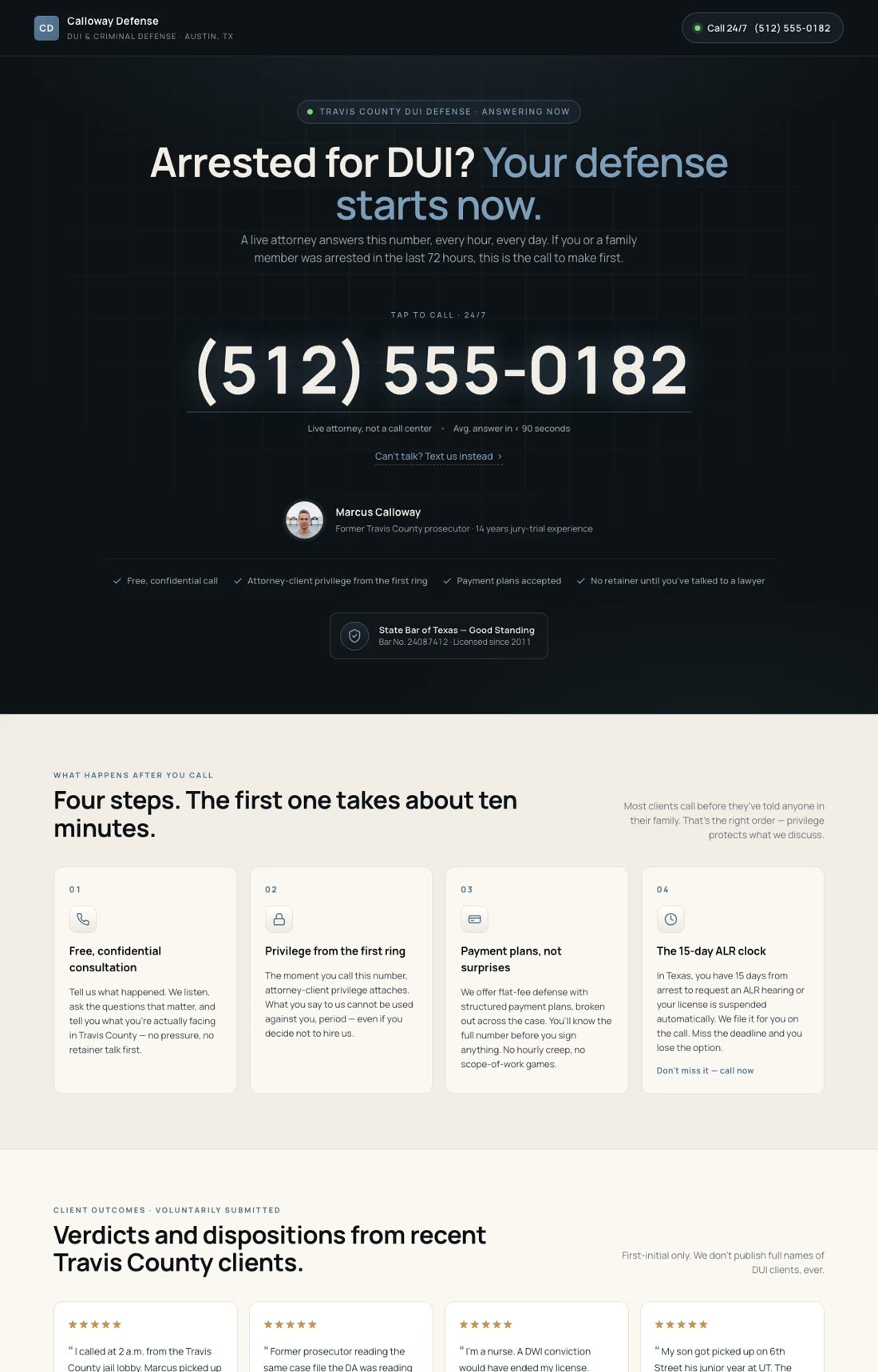
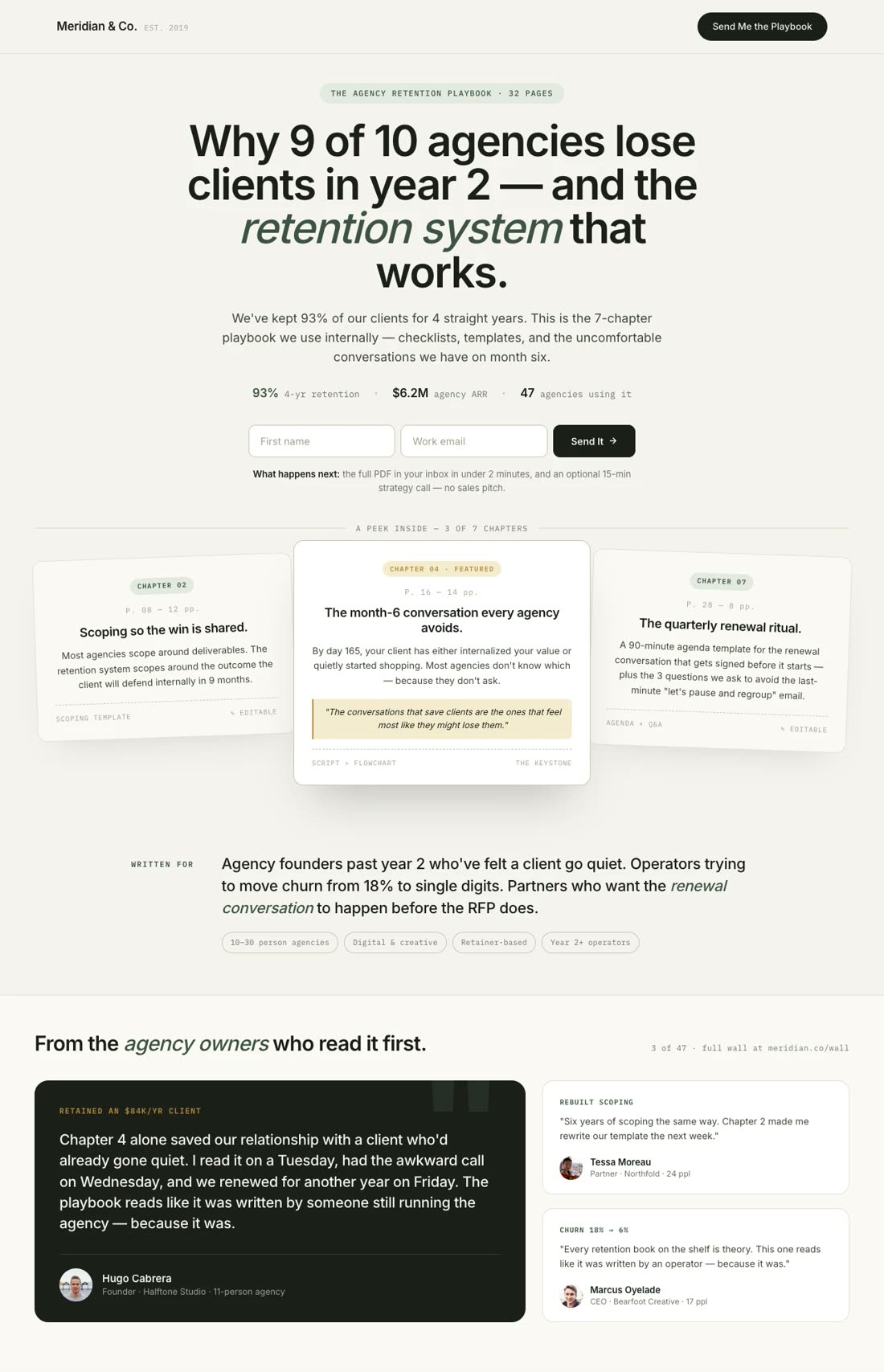
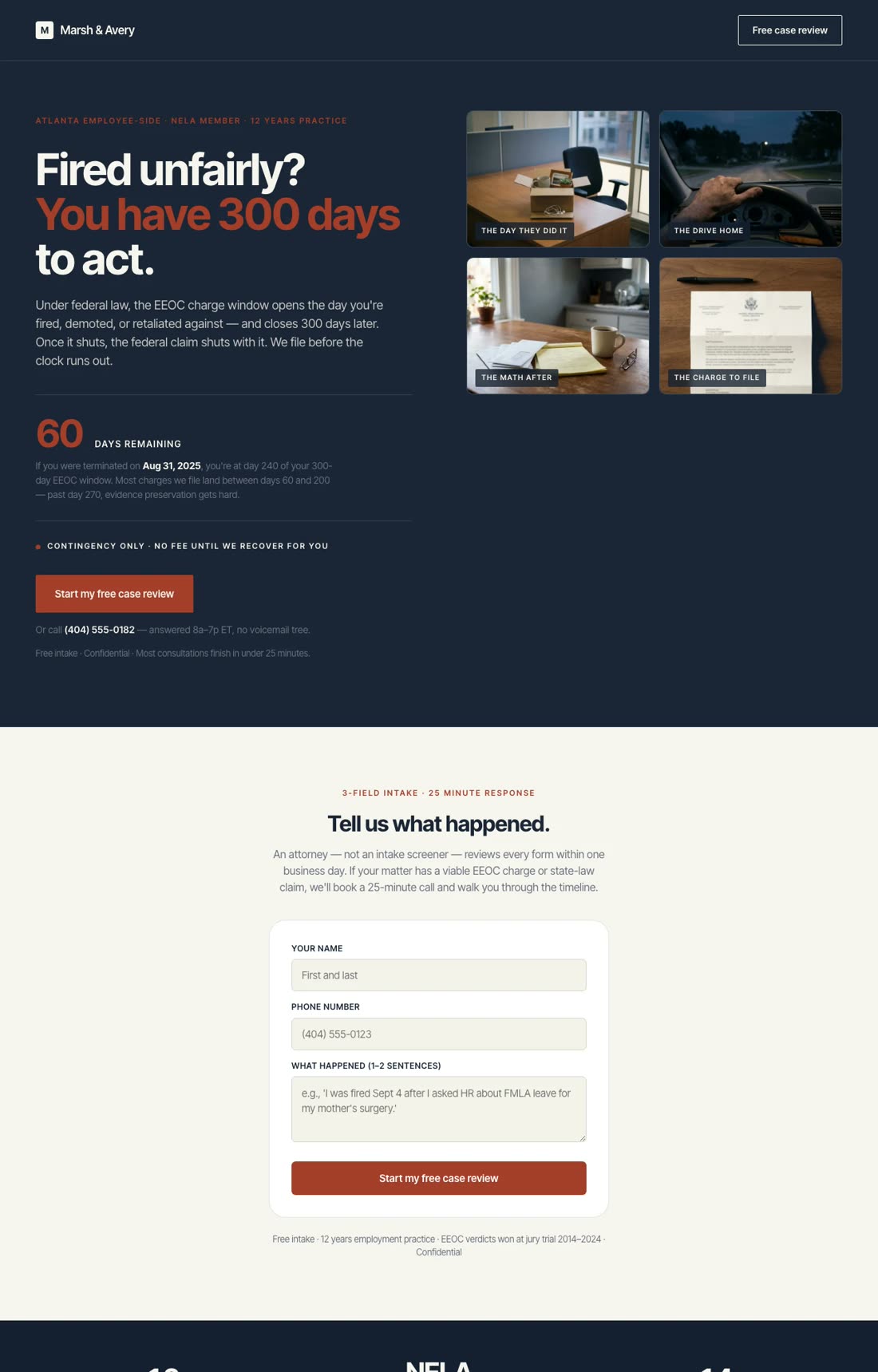
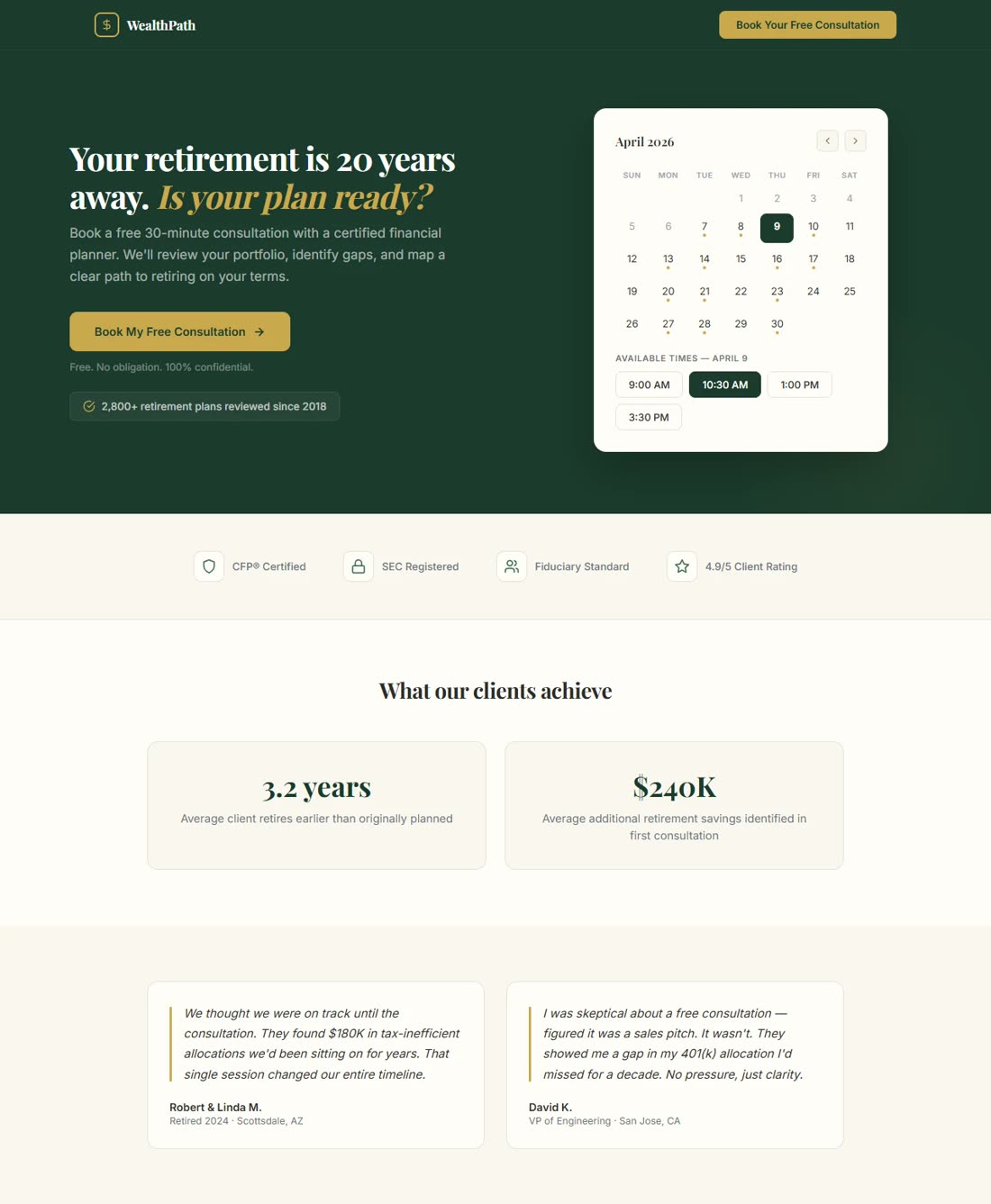
The conversion math is unforgiving and bimodal. Median legal landing-page conversion is 6.3% against an all-industry baseline of 6.6%, with the top-quartile reaching 7.4% when intent and short decision cycles align. The practice-area distribution is enormous: bankruptcy and tax convert at 13%+, family law and disability at 6.3%, immigration at 5.6%, personal injury at a 5.45% median. Paid search drives 8.3% median conversion — nearly 2x paid social and 3x email. The gap between a top-quartile bankruptcy LP at 13% and a bottom-quartile homepage at under 1% is structural — empathy-led headline above the fold, attorney face (not stock), phone number burned into the header, 3-field form sitting beside the headline, trust strip directly under the CTA, jurisdictional clarity, and a bar-compliant past-results disclaimer where applicable. A homepage gets 266% fewer leads than a dedicated LP when paid traffic is sent at it.
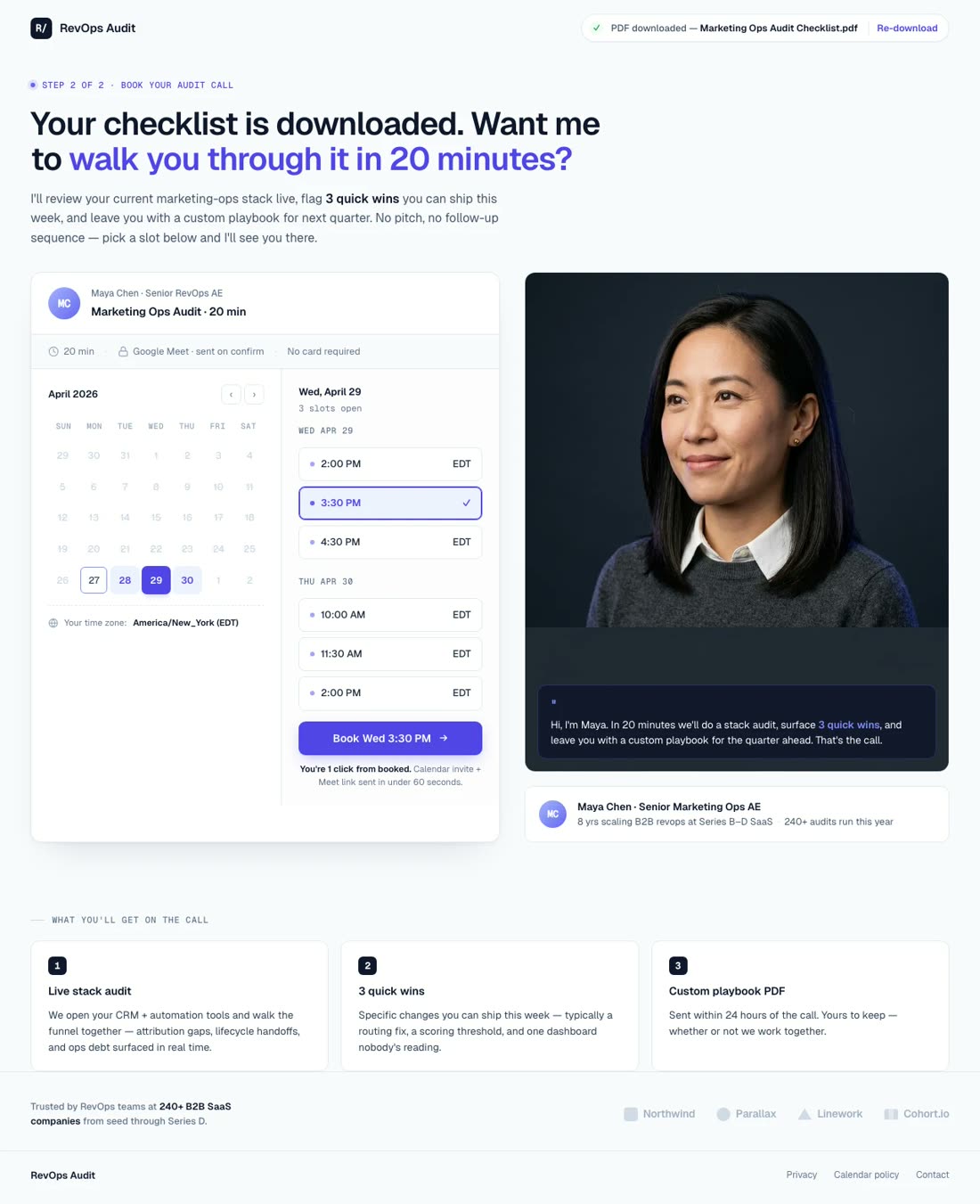
The form-vs-phone math reshapes what the LP must do. Phone-call leads convert to retained clients at 25–40%; form leads convert at ~2% — phone leads are 10–12x more efficient. On urgent-matter practice areas — PI, criminal, immigration removal-defense, employee-side urgent employment — the phone is the conversion engine. On considered-purchase practice areas — estate, business, IP, family law — the form does heavier lifting because privacy and document complexity favor the typed channel. Reducing form fields from 7 to 3 lifts submissions 86%. The LP that wins is the one calibrated to the practice area's real intake pattern: phone-first hero with sticky click-to-call for PI / criminal / immigration urgent; form-first hero with calendar embed for estate / business / IP / family. Mobile sticky click-to-call is non-negotiable on either model because mobile is 7x desktop traffic in legal — the largest gap in any industry, with 23% of clients mobile-only and 53% using both devices. 72% of consumers running a local legal search visit a firm within 5 miles; the local 3-pack gets 70% of clicks.
The speed-to-lead layer is where real revenue leaks. Firms that respond within 5 minutes see 3–4x higher conversion than firms that wait 10 minutes. The Clio 2024 secret-shopper study of 500 law firms is sobering: only 33% responded to email inquiries (down from 40% in 2019); only 40% answered phone calls (down from 56% in 2019); of email responders, only 18% gave a clear next step or cost estimate, and only 2% referenced a similar prior case. 64% of consumers report never receiving a response from a lawyer they reached out to. Meanwhile 79% of consumers say lawyer responsiveness on first contact is the most important factor in their choice. The LP itself can't ring the phone or write the email back. But it can capture lead data cleanly, fire to a CRM and an SMS-alert stack, send an automated SMS that says "We'll call you within 15 minutes" (which buys the firm the window), and tell the intake team a lead is waiting. The firm that answers in 5 minutes wins the 64% of leads its competitors are losing.
The state-bar rules are the single biggest compliance landmine on a lawyer LP, and they bend the copy in ways nothing else does. ABA Model Rule 7.1 says a lawyer cannot make false or misleading communications about their services. Model Rule 7.2 says lawyers can advertise through any medium but must include the name and address of at least one responsible lawyer or firm. Model Rule 7.3 restricts real-time, unsolicited solicitation for pecuniary gain. State rules vary widely, and Florida, New York, Texas, and California are the strictest: Florida Bar Rule 4-7 restricts testimonials, characterizations of work quality, and past-results information; New York forbids "specialist," "expert," or "expertise" unless ABA-accredited certification is held; Texas requires past-results disclaimers and forbids comparative claims without verification; California Rule 7.2 requires advertising material be retained for two years. Alabama adopted modernized rules effective January 1, 2026 that add a "One-Click Rule" — every social or online ad must link to a landing page that contains the required disclaimer. Universal don'ts: no guarantees of outcome; no "best," "top," or "#1" without verification; no "specialist" or "expert" unless board-certified; no comparative claims without basis; no past-results without the "Past results do not guarantee future outcomes" line; no testimonials without a representativeness disclaimer.
The high-CPC, slow-conversion economics also explain why a single-LP-per-practice-area strategy compounds harder for law firms than for nearly any other vertical. A firm running PI alongside criminal defense and family law cannot share one homepage and expect any of the three to convert — the trust signals required are different (Million Dollar Advocates Forum for PI; former-prosecutor cred for criminal; AAML fellow for family), the CTA verb is different (call now / call 24/7 / book a confidential consultation), the form length is different (3 fields urgent / 5 fields considered / privacy-callback), the disclaimer load is different. A firm running PI in three sub-types — car accidents, truck accidents, and medical malpractice — has the same logic at the next level down because car-accident CPC is $181, truck-accident CPC is $413, and medical malpractice has an entirely different evidence pattern and case-value range ($55K average PI settlement vs ~$1M average medical malpractice). One LP per practice area is the floor. One LP per practice-area-and-audience is the ceiling.
The build-cost math is what makes AI-assisted page building a structural advantage in the legal vertical. A traditional law-firm LP build runs 40–60 hours per page at a $150/hr blended agency rate, $6,000–$9,000 in execution cost per page. A multi-practice firm shipping six dedicated LPs burns $36,000–$54,000 in design-and-dev cost on a single Q1 campaign. AI-assisted page building collapses that into 2–3 hours per page variant at execution cost in the low hundreds. Worth reading before your next paid-search flight: Swipe Pages' High-Converting PPC Landing Pages guide covers single-CTA discipline, message-match against ad creative, and form-length calibration. The Landing Page Optimization playbook and the Lead Generation inspiration gallery cover the patient-and-client-intake patterns that overlap directly with legal-firm intake design. The lawyers, firms, and legal-marketing operators winning 2026 aren't the ones with the largest paid-search budgets. They're the ones who stopped sending $181-CPC PI clicks at outdated firm homepages, who ship a dedicated practice-area-specific LP per campaign, who put bar admissions and third-party ratings above the fold, who answer the lead in 5 minutes — not the industry's typical 45 minutes.


Trusted by 7,000+ teams — including solo attorneys, multi-practice firms, and legal-marketing operators
"From zero experience with landing page builders, i was able to create a completely working landing page using swipepages in less than a day!"
Peter L.
BDM · Capterra
"Swipe Pages is my go-to when I need landing pages up and running quickly for my PPC clients."
David P.
Marketing Consultant · G2
"Multivariate or A/B tests can be created with the click of a button, and the analytics to determine winners/losers are clear and simple to understand."
David P.
Marketing Consultant · G2
"We typically run ads for clients, but conversion rates usually aren't satisfactory unless the landing page is well-designed for conversions. I'm happy to say SwipePages is one of the few that loads really quickly and conversions have never been higher on our client accounts."
Joshua L.
Managing Director · G2
"Even for people with no prior web design experience. Its drag and drop interface makes creating beautiful, professional-looking websites simple and fast."
Aditya S.
Proprietor · G2
"SwipePages makes it easy to go from idea to live landing page in under an hour. And now, for my lead magnets, I have a template I have customized for my brand and I can go from idea to leadgen landing page in 5-10 mins."
Bryan B.
Work Management Consultant · G2
"I have been able to create very highly converted landing pages for my courses, and feedbacks from users / students are simply unbelievable, thanks a lot to SwipePages."
Hoang P.
Director · G2
"Great tool for our agency to build high-performing landing pages for 30+ clients. We mainly use it for lead generation, priming, giveaways etc."
Marc D.
Capterra
"Support is the best that I've ever seen. They will get back to you with an answer, usually within 24 hours. THEY GAVE ME DETAILED INFORMATION whenever I had an issue."
David S.
President/CEO · Capterra